
“I’m living the dream,” Gestur says a few moments after we climb into his big, old off-road vehicle. The car is from 1991 and it looks well worn. A proper 4×4, exactly the kind you need in Iceland’s remote regions. Gestur is almost 60 and was born, raised and deeply rooted in Siglufjörður. We drive around the little town for a good hour, and I am grateful for experiences like this, which I get to have here and there on my trips to Iceland. Readers often ask me for hidden gems in Iceland: here comes one of them, of the very finest quality!
Curtain up for Siglufjörður…
Siglufjörður: Iceland’s Herring Capital
The history of Siglufjörður is closely tied to the fish of the fjord. Around the year 1900, industrial fishing began here and quickly grew into a major source of income. For almost two decades, one of the largest herring processing factories operated in the fjord until it was destroyed by an avalanche in 1919. The resulting flood wave also destroyed many of the boats in the harbor on the opposite shore.
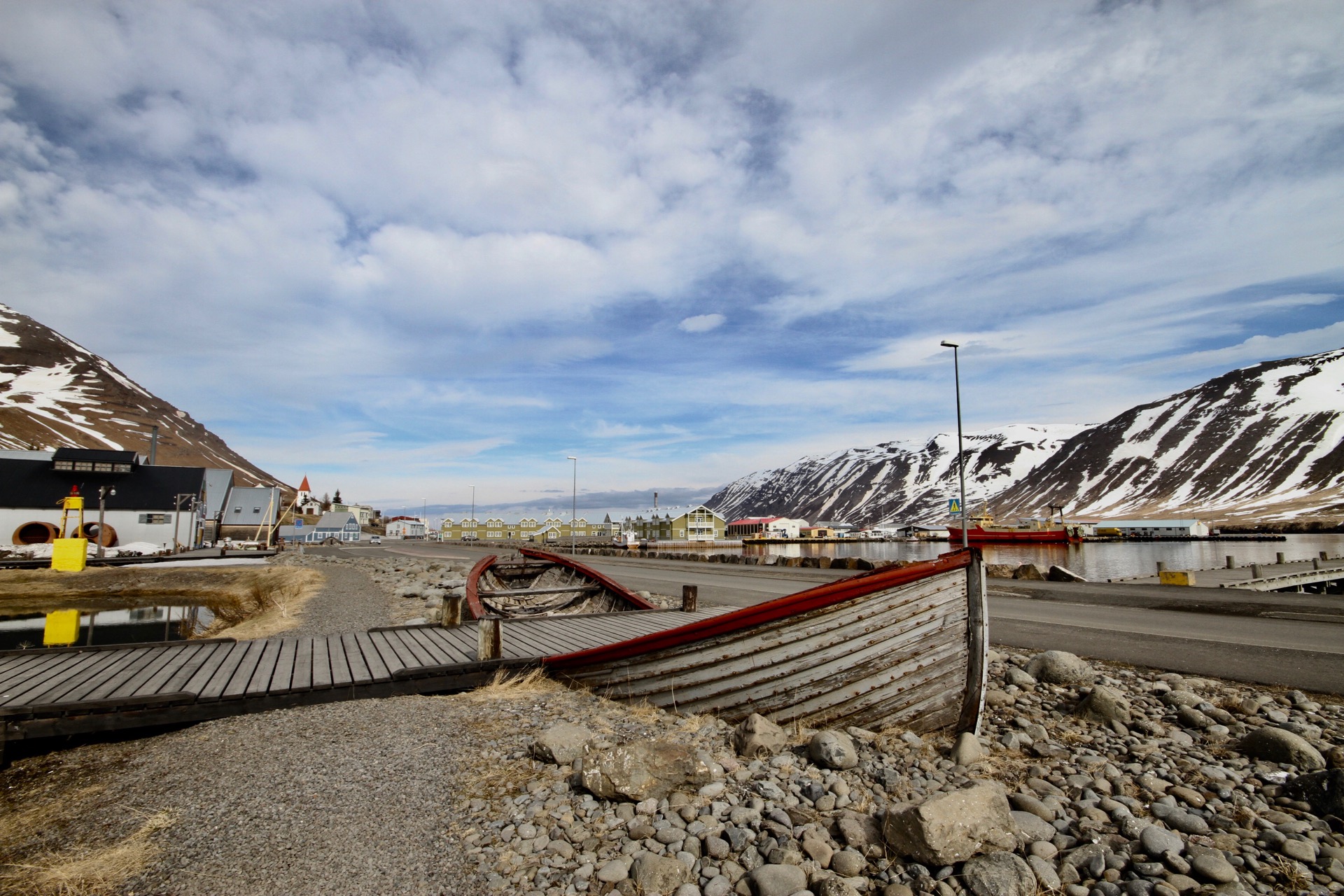
Everything was rebuilt and the fishing continued. Almost every can of herring in Europe came from Siglufjörður. At the local herring museum, you can not only trace the entire history of this industry down to the smallest detail but also experience it in a very realistic way.
In 1968, it became clear that the herring had been overfished, and the source of income dried up. The village has been shrinking since the fifties: of the more than 3,000 people who lived here back then, just over 1,000 remain today. Many left to study in Akureyri or Reykjavík and never came back.
Robert Gudfinnsson Dares a Fresh Start for Siglufjörður
So how did I even come across such a small town, and why am I driving out here?
At the end of 2017, I read about Robert Gudfinnsson for the first time, and I find not only his own story fascinating but above all his vision for his hometown: he is investing well over 26 million euros in building up and transforming the little town. He wants young people to come here, stay and build something. He believes in a Siglufjörður where museums, tourism, biotech companies and much more can thrive. In 2014, he was named Businessman of the Year for it, even though not all the boxes have been counted yet, as they say in Iceland.
But for his courage to invest and his persistence in seeing his projects through, he has definitely earned that award already.
On April 16, 2018, I meet Jón, with whom I had already been writing for weeks about a podcast. “Hallo, wie geht es dir?” he says, and I am surprised at how good his German is. He had sent the odd German phrase in his e-mails before, but a computer could have helped with that. It turns out that Jón was born in Siglufjörður but left the town during his school years, and shortly afterwards left Iceland as well to study in Berlin. Jón is an engineer and studied at TU Berlin. We talk briefly about the big B on the Spree, how he misses döner kebab and Club Mate, and how he finally managed to import the latter cult drink after all.
Some time ago, Jón got a phone call in Berlin. It was Robert, asking: wouldn’t you like to come to Siglo — that’s what the locals call the town — and build up a company? Jón thought it was a joke. Leave booming Berlin, with probably the most exciting startup culture on the continent, for a community of 1,200 souls just below the Arctic Circle?
Over Christmas, he flew to Siglufjörður with his young family to spend the holidays there, met Robert and decided to stay. Today he is the managing director of Genis, a nutritional supplement company that grew out of a research department and is currently working hard on its first market-ready products. The company now employs a few dozen people, mostly engineers, providing jobs you probably wouldn’t find here otherwise.
The Siglo Hotel – If You Want to Treat Yourself
One of these projects is the Siglo Hotel in Siglufjörður. A beautiful old harbor building right by the sea. In front of the house lies a boat that is used for whale watching from time to time. Right next to it, guests soak in the hot pot or use the hotel’s own sauna. Every room has a breathtaking view, whether out to the sea or up into the mountains.
This is where I met Jón, and a little later Gestur, who showed me the town from a local’s perspective. The hotel is directly opposite the Herring Era Museum and behind the barriers that protect the town from the frequent avalanches coming down from the mountains. Everything is furnished in a modern style, the rooms have very high-quality furniture, and on the ground floor the hotel’s own bar and restaurant take care of your creature comforts.
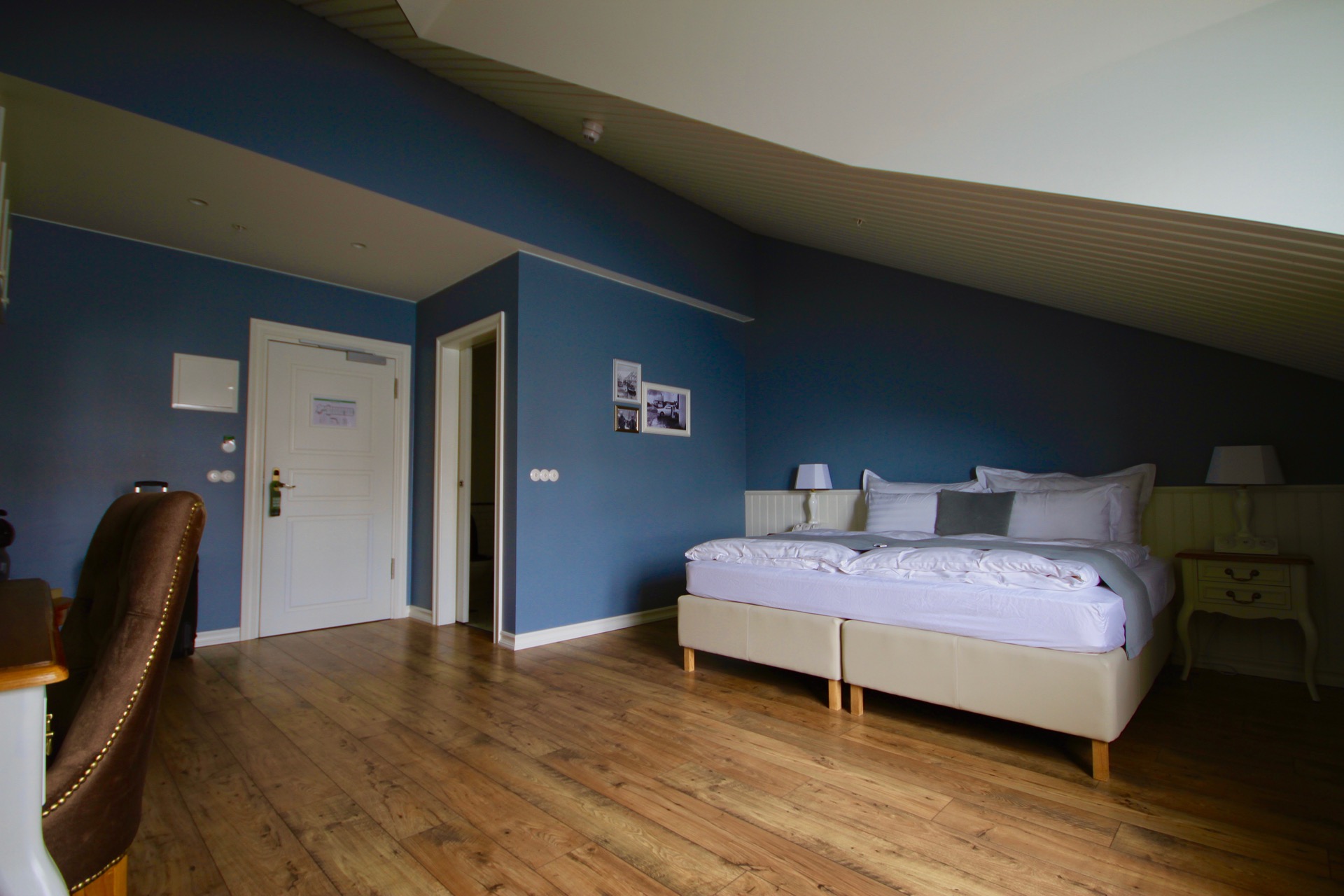
The hotel is especially popular with winter sports enthusiasts in the cold season, because Siglufjörður is one of the best ski areas in the country and apparently an insider tip for skiers: it doesn’t always have to be the Alps, and if you can combine your winter trip to Iceland with a ski trip, that is definitely a great combination.
But more and more visitors are finding their way here in summer too, because winter sports are not the only thing on offer…
Activities in Siglufjörður: Hiking, Kayaking, Skiing & Whale Watching
I was very lucky to have Gestur Hansson, an experienced Siglufjörður local, at my side: Jón told me I absolutely had to meet him if I was here and wanted to learn something about the town. How right he was!
Gestur is almost 60, a mechanic, diver, kayaker, snowmobile rider, member of the local mountain rescue team — and the list could go on forever. He grew up here, knows the herring era from his parents’ stories, but has experienced the town all his life as one of those places in Iceland that young people leave. Both of his daughters have moved away, but they drop by for a visit now and then.
He never gets bored: he lives with his wife and two dogs, an old Labrador and a young and very lively dachshund, in a small house with a blue roof, a large veranda and a hot pot. In summer, he runs all kinds of activities. His company Top Mountaineering offers everything you can and should experience in Siglufjörður.
Hiking, boat tours and kayaking are the most popular offerings. By boat, you can explore the fjords from a special perspective, and in good weather you can even head far out to the surrounding fjords. Hikes can be done throughout the valley, between the mountains or up to their ridges. The untouched nature is a highlight, and the views from the mountain ridges must be breathtaking in summer. The kayak tours are particularly interesting to me, because you can reach many special places in the fjord: a shipwreck lying in water only a few meters deep is naturally especially interesting for me as a diver, but paddling along the coast is certainly a special experience in its own right.
The Herring Era Museum
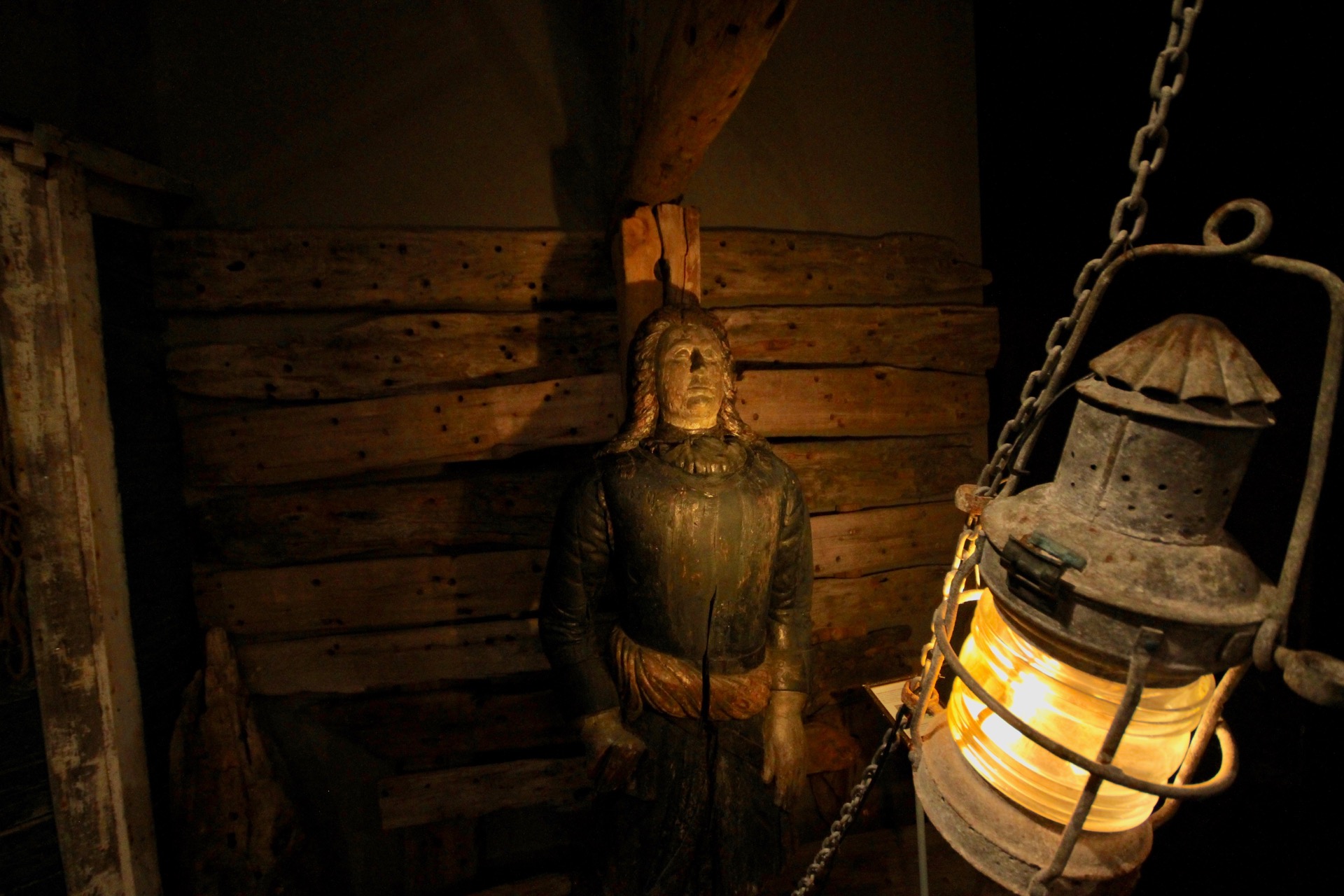
The museum opened in 1994 and has won many awards since then — and rightly so. I have rarely seen such an elaborately designed museum in Europe. There is history in every crack, in every wooden beam. From room to room, I kept asking myself where they even found all these old artifacts, and I felt very realistically catapulted into the world of the herring fishermen and processors.
The museum reminded me a little of the Vasa Museum in Stockholm, because it all starts in the boathouse with an old ship that you can also explore from the inside. History you can touch. Here you get a good overview of the industry in the middle of the century.
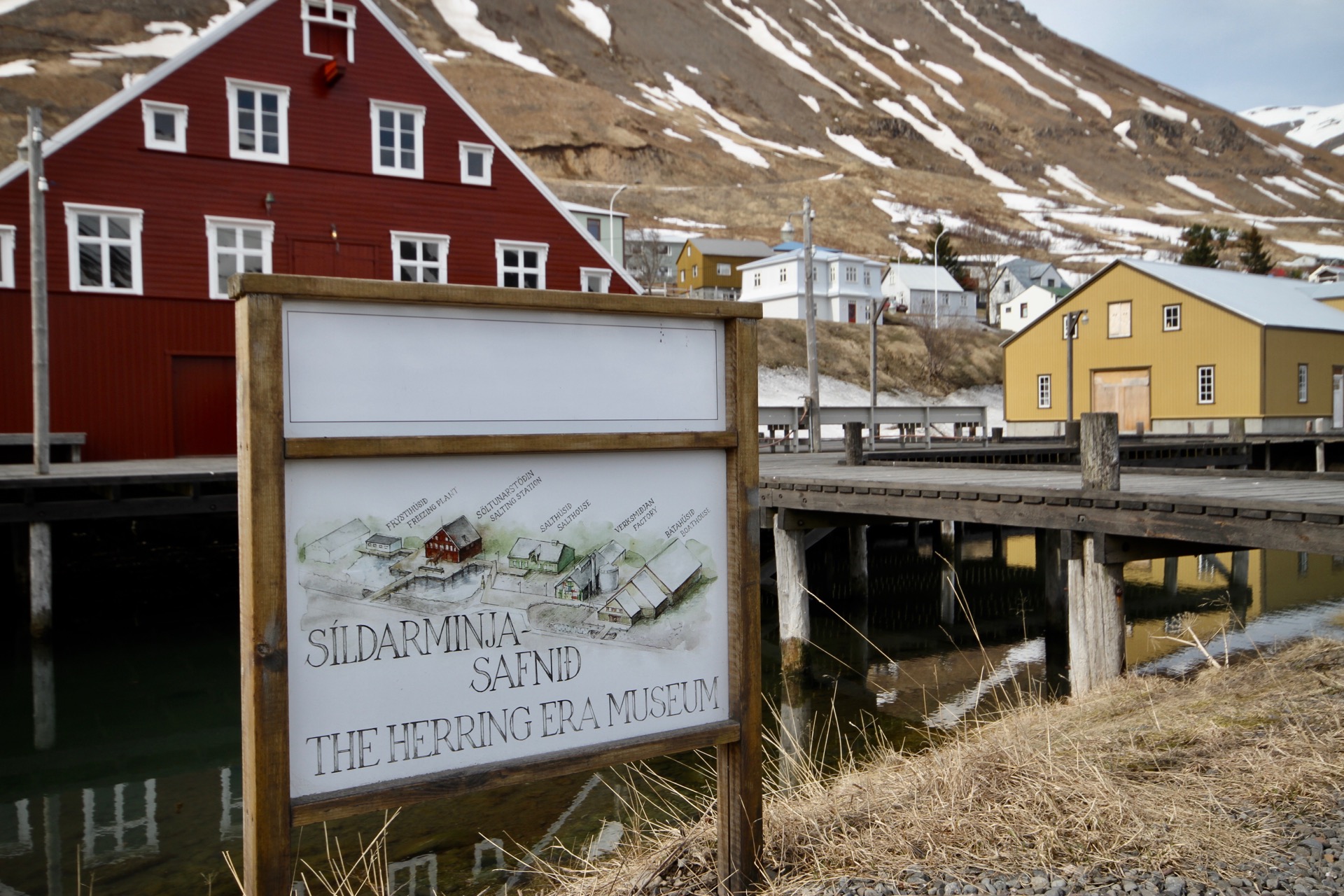
Then you head over to the factory, where you can see how the herring was processed. The huge machines, some of which look downright brutal, paired with the smell of oil and old metal, create the authentic feeling of being right in the middle of it all.
The salting house and the salting station show how the herring was preserved. What I found particularly interesting here were the living quarters of the women who did this work. Back-breaking work, by the way, because sacks weighing many kilos often had to be hauled, and the work went on all day long. These ladies did not have an easy life, which makes it all the more impressive to look at their quarters: no luxury whatsoever, and beds on which I couldn’t even fit my upper body completely. In the corner stood an ancient typewriter; in the next room, a radio from the fifties was playing away.
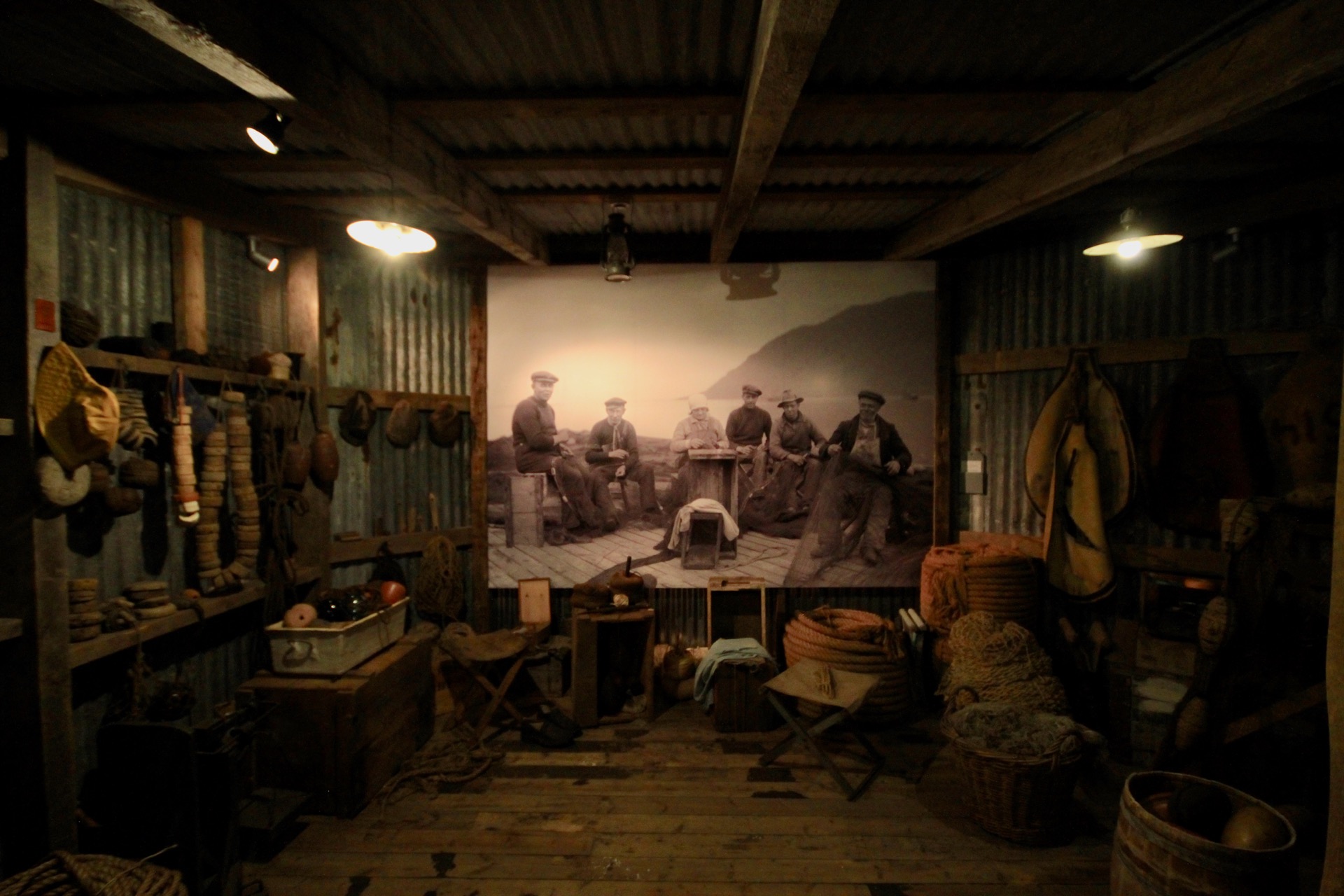
The entire museum is put together with so much love and such attention to detail that it is no wonder new visitor records are set every year: more than 250,000 people have visited the award-winning museum since it opened. Still far too few, in my opinion!
Conclusion: Siglufjörður, an Up-and-Coming Town a Little Off the Beaten Track
Places like this, experiences like exploring the town with Gestur, and the great conversations and hospitality of Jón are what make traveling in Iceland so special to me. On this trip in April 2018, I noticed like never before how much I am now drawn away from the tourist trail, and how much I long for places with an interesting history — one that may even be getting rewritten right now.
Fascinating, I think, and this was certainly not my last time here. I would love to come back in summer, when the sea is calmer and I can do a kayak tour through the fjord. Maybe even with dive equipment… 🙂
Have fun in Iceland!
No Comments Yet