
Silfra… During my multi-day diving tour of Iceland, I was lucky enough to have two dives take me to Þingvellir. This historic place is surrounded by four active volcanoes, namely Hrómundartindur, Hengill, Prestahnjúkur and Hrafnabjörg. The valley is part of Iceland’s Golden Circle and has been a UNESCO World Heritage Site since 2004. It is home to the meeting place of one of the oldest parliaments in the world, where Vikings gathered every year as early as 930 to discuss and enforce their laws.
The gorge itself sits right on the fault zone between the North American and the Eurasian lithospheric plates (tectonic plates).
This is where the earth is – quite literally – being torn apart.
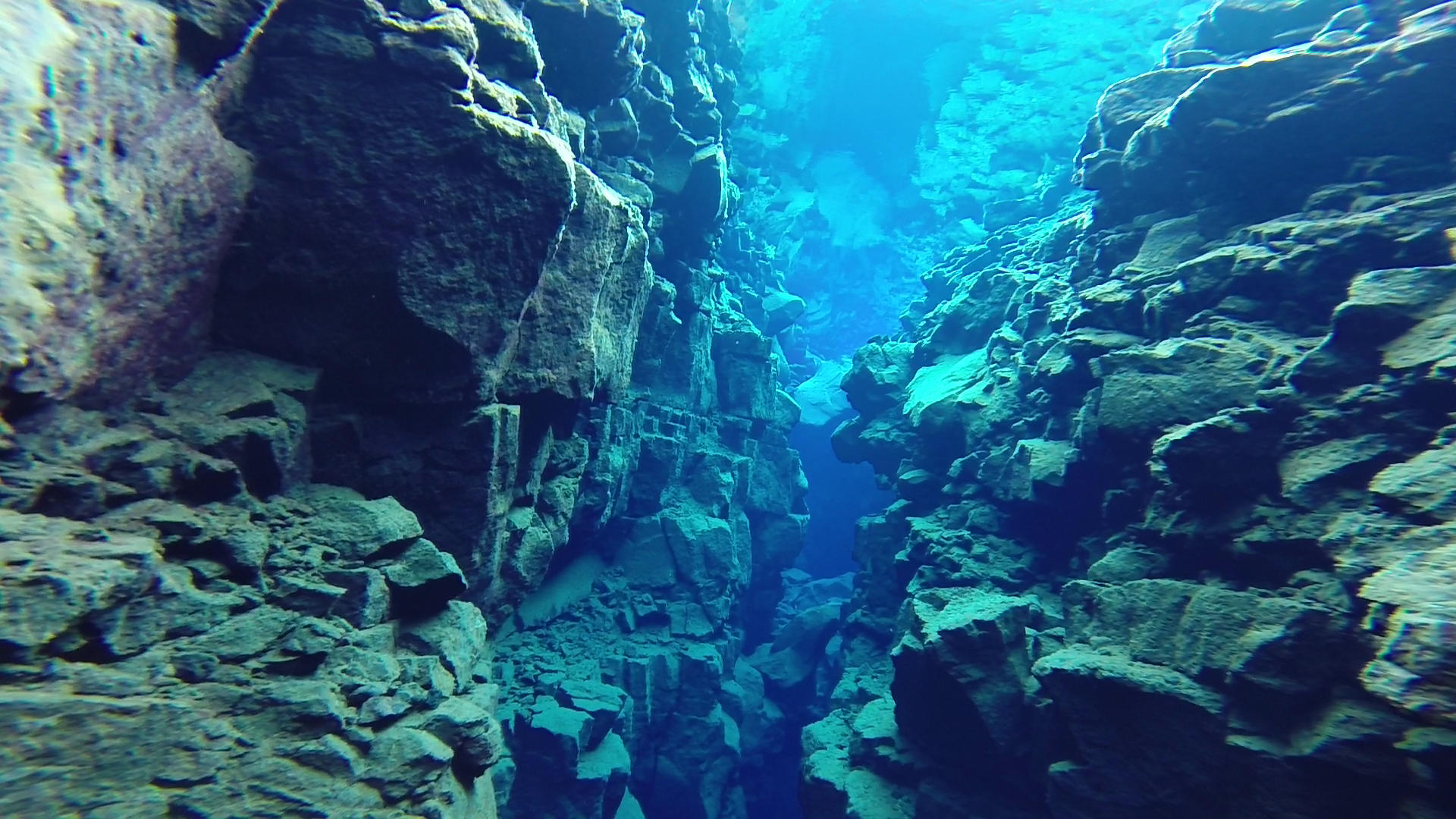
And right here, I was about to experience what is probably the most spectacular dive of my young diving career so far. It all started when, shortly after finishing my diving certification, I searched the internet for the best dive spots in the world and stumbled across Silfra by chance. Eight weeks later I would be jumping into the cold water.
The Silfra fissure runs through the entire Þingvellir National Park and ends in lake Þingvallavatn. Large parts of it are filled with earth, but at one point water emerges that has been on a decades-long journey from a glacier more than 50 km away. Along the way, the water is pressed through gigantic amounts of lava rock, filtering out any suspended particles and impurities. And even though the water travels for so long and ends up so far from the icy glacier, it stays at the same temperature as at the start of its journey: around 2°C.
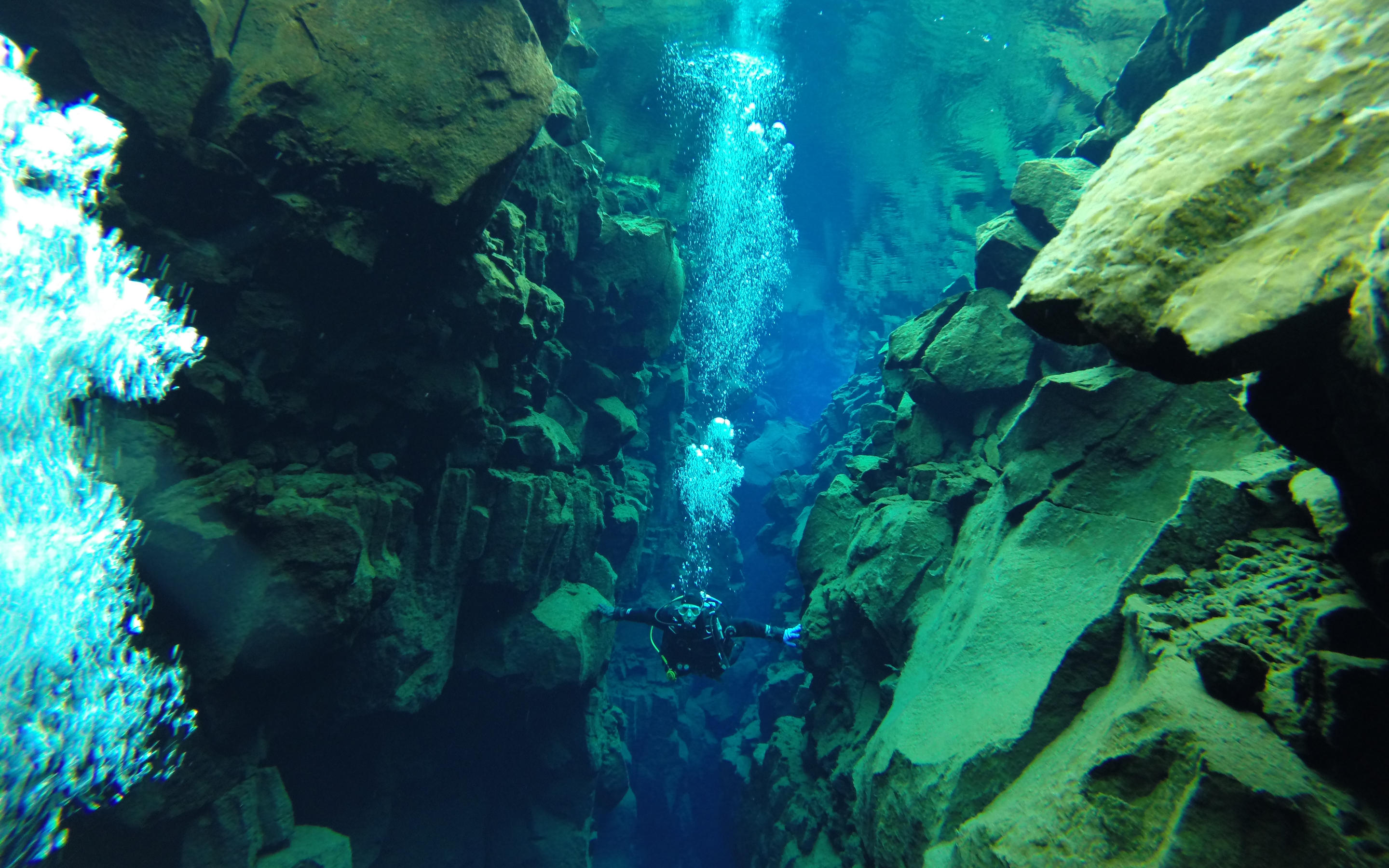
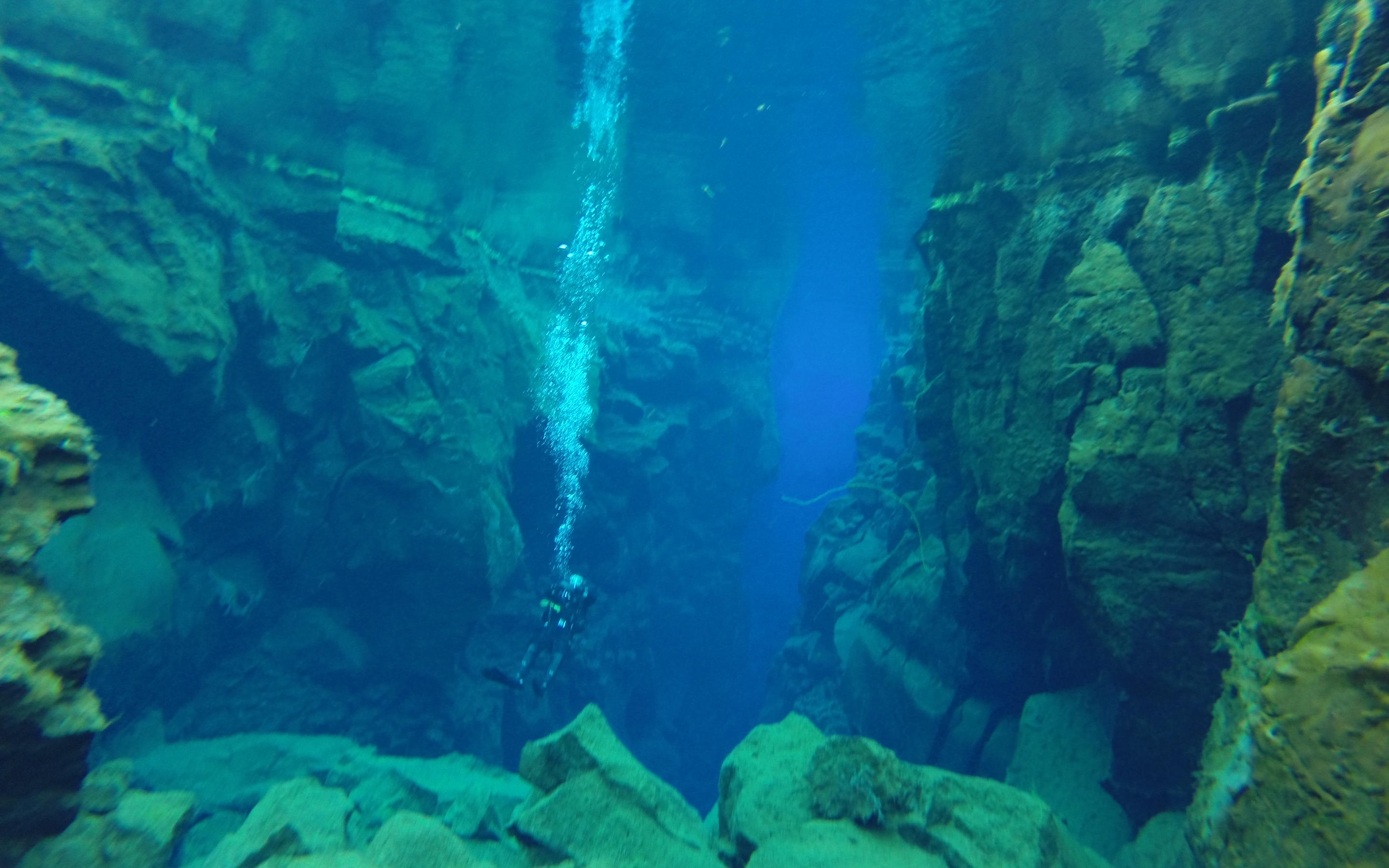
When people talk about good visibility in tropical waters, they usually mean 20, maybe 30 meters. That already feels like being able to see as far as your eyes will allow. In Silfra, the visibility is more than 130 meters. The water is so crystal clear that the moment you are deep enough to look up, you can no longer tell where the surface actually begins: the space below it is reflected so perfectly and seamlessly that you are faced with the illusion of an infinite space. There is a sense of infinity to this place, so breathtaking that at some point you wonder, as a diver, where your air bubbles have gone. Until you breathe again.
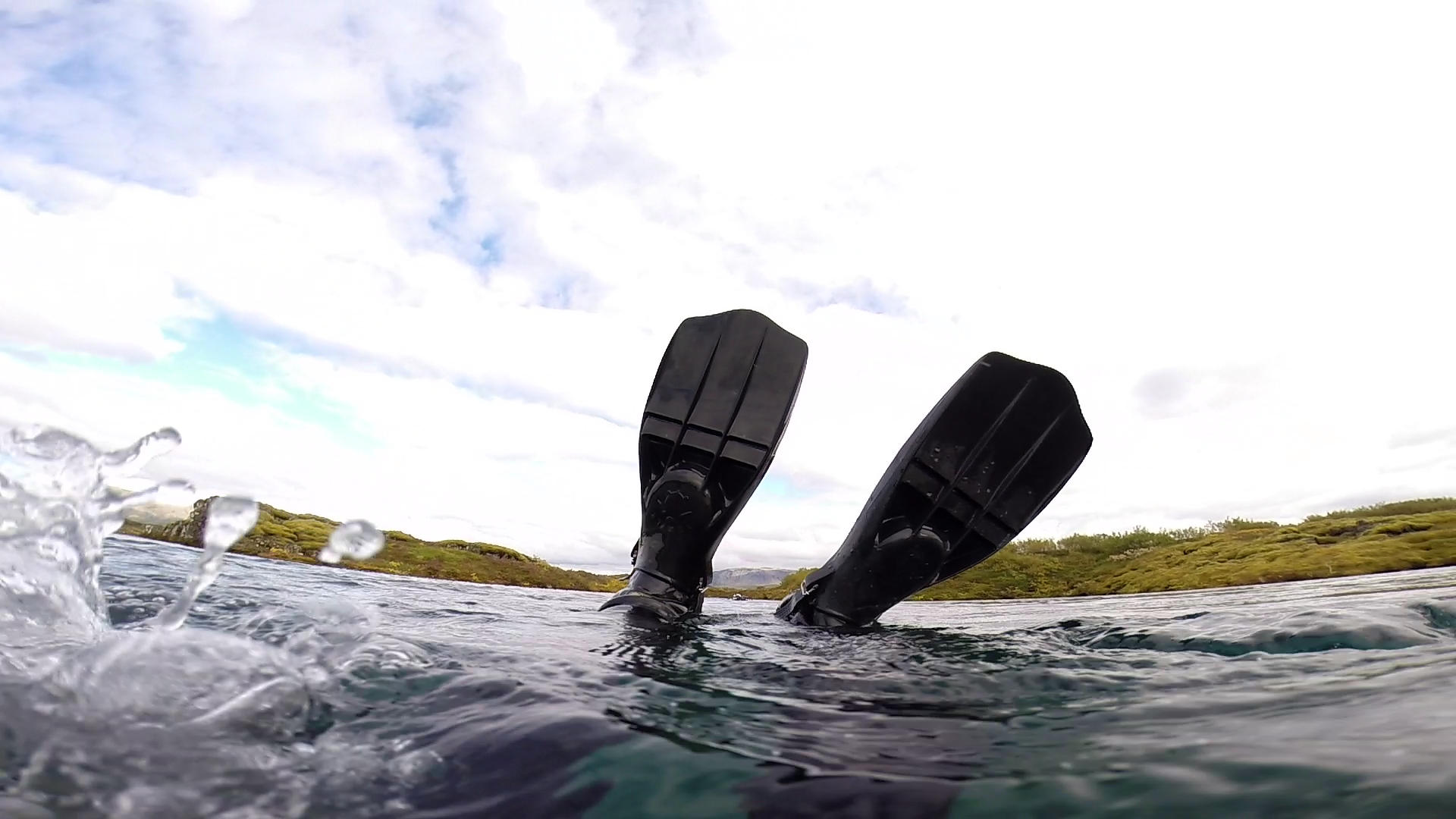
But let’s start at the beginning: We drive across the ridge of the North American plate into the valley of the national assembly and stop briefly at a tourist information point so we can put on our undergarments while still dry. From here we continue to the Silfra entry point, which the locals also call „toilet“ – I resist the urge to ask why. The drysuits are on quickly, and shortly afterwards we make our way to the entry point, a few hundred meters from the parking lot. Here, a steel staircase leads down into water that looks unremarkable from above. We put on our gloves, spit into our masks and start the cameras.
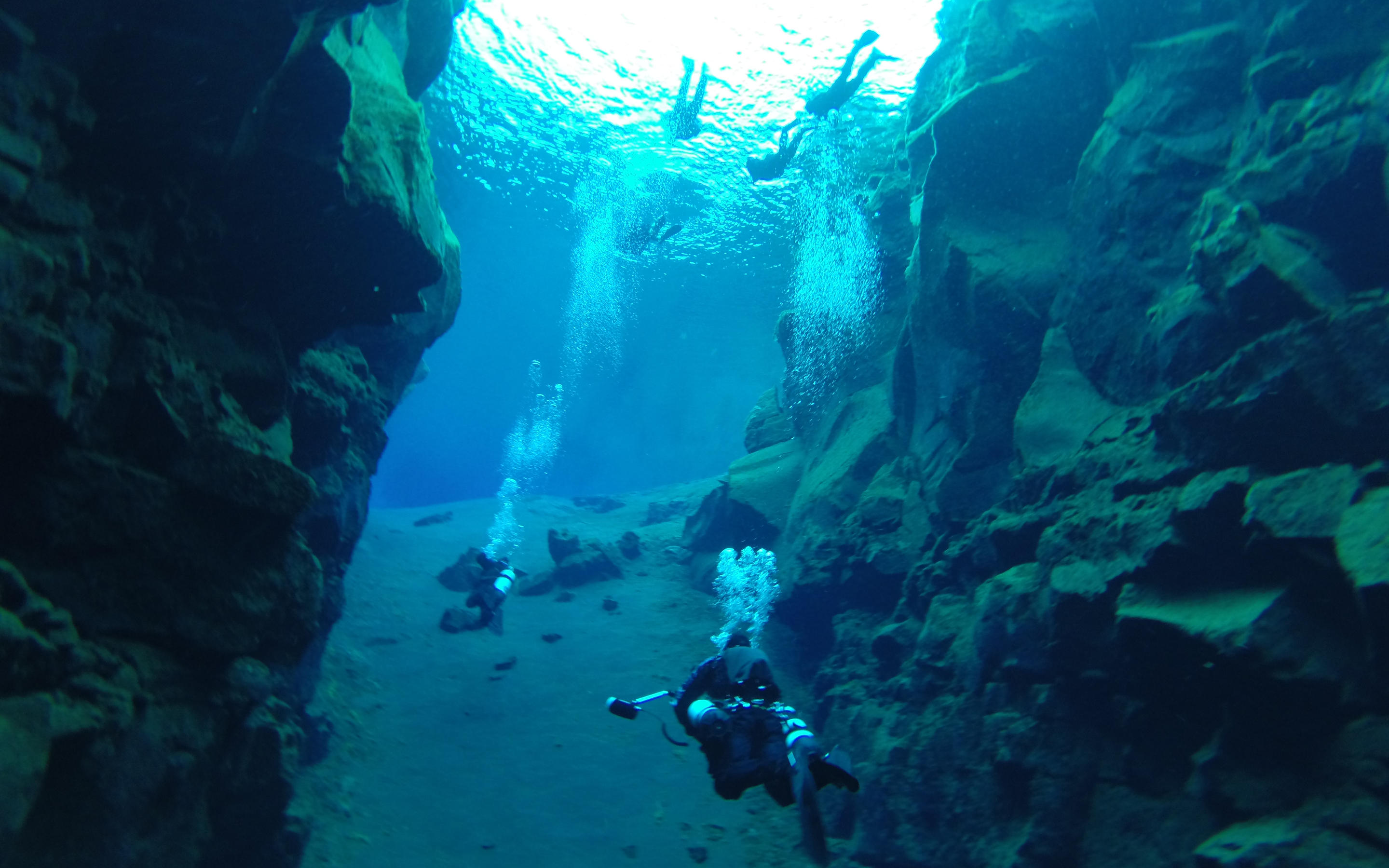
As we get in, the air hisses out of the drysuits and one after another, feet, legs, stomach and chest turn cold. Only the air in the BCD is keeping you afloat now. I wait eagerly for the others and don’t risk a glance down – I want to save that for the moment we actually descend. While one diver after another enters the water, I gaze in awe at the rock walls towering beside me. Here you become aware that the very foundations of the earth hang on these walls, platforms our world rests upon. This is where they come together – or rather, drift apart.
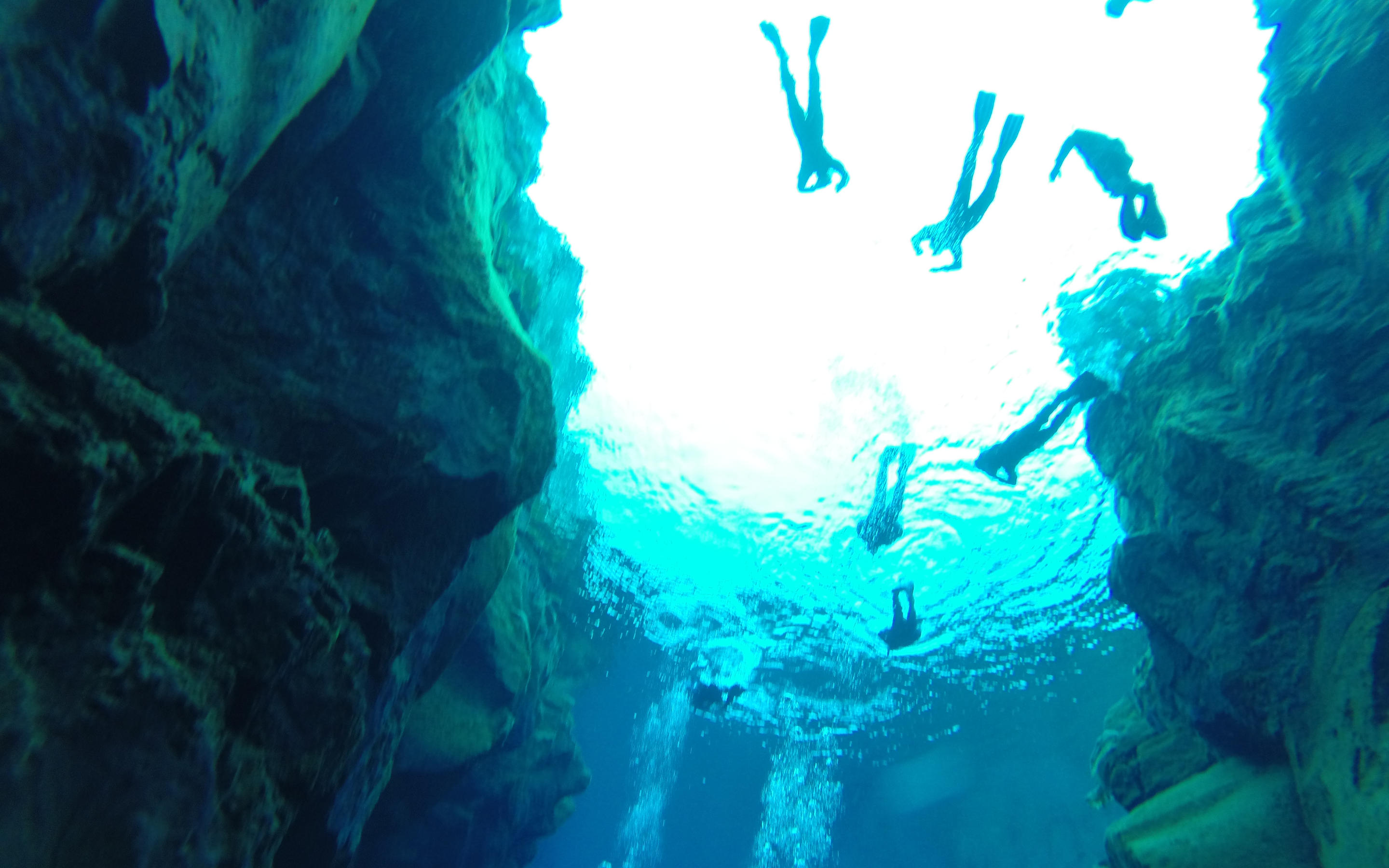
Once we are all together, we raise our inflator hoses and with every forceful hiss we slowly sink deeper, until the color temperature cools down just like our lips and cheeks. The view is cold, blue and breathtaking. Even here, in the small entry pool, you quickly realize just how special this dive is going to be. Even though you still have no idea what awaits you.
The dive starts in a larger basin about 15 meters deep. From here you follow the rift south for a few meters. Across a shallower section – max. 1 meter – the route then leads you into Silfra Hall. This is also where the entrances to Silfra’s cave system are located, which reaches depths of up to 45 meters. Large boulders regularly block the way and threaten to collapse with every earthquake. That is one of the reasons why diving down into the caves – and diving deeper than 18 meters in general – is prohibited here today.
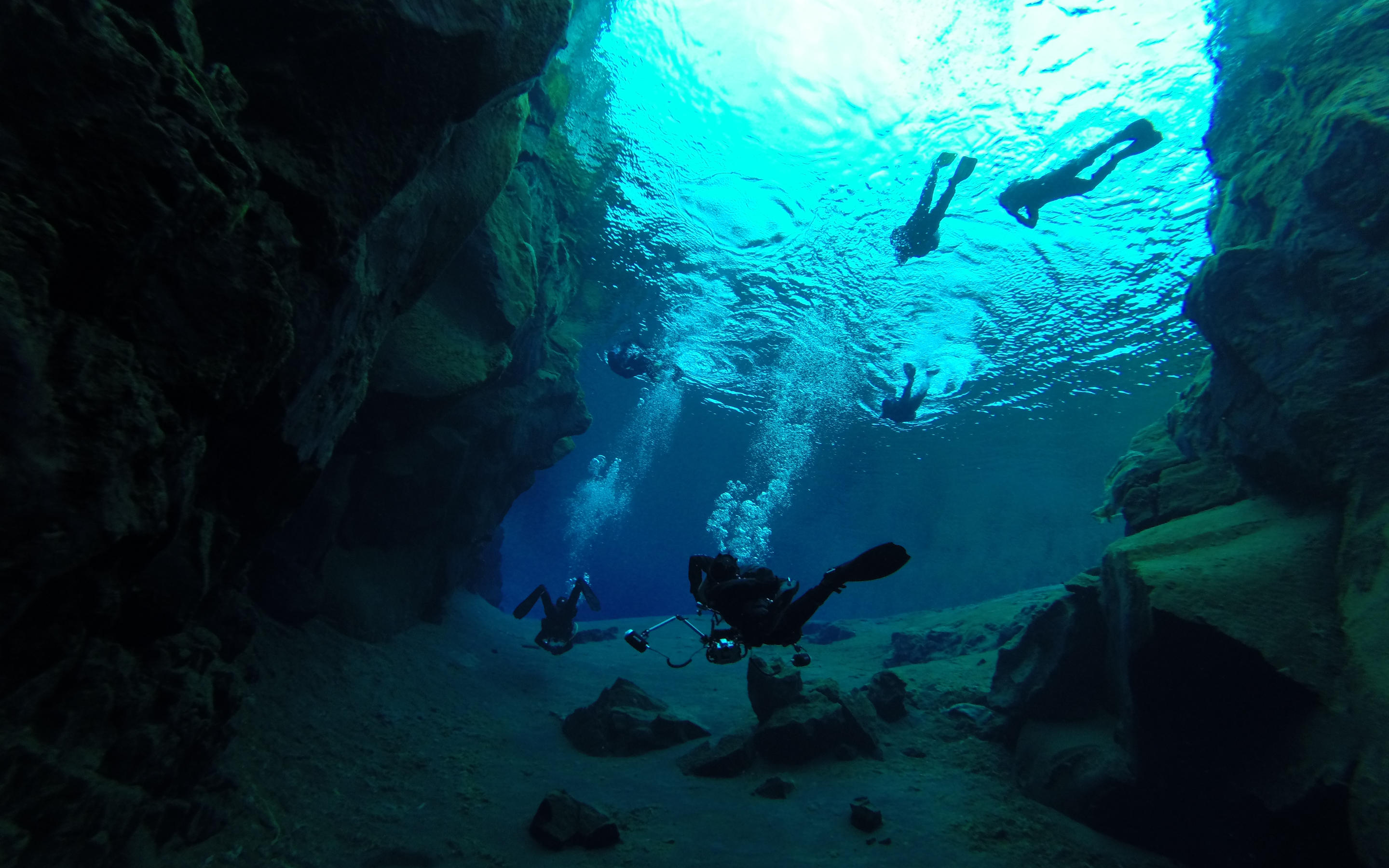
After 150-200 meters you reach the heart of this extraordinary dive spot, the Silfra Cathedral. Here, the beauty of this place unfolds over a length of more than 100 meters and to a depth of more than 20 meters. At the very first glance into the cathedral – where you can already clearly make out the sandbank at its end – many divers literally find themselves lost for breath for a moment. If you come across pictures of Silfra on the internet, in diving magazines or on TV, you can be pretty sure they were taken here.
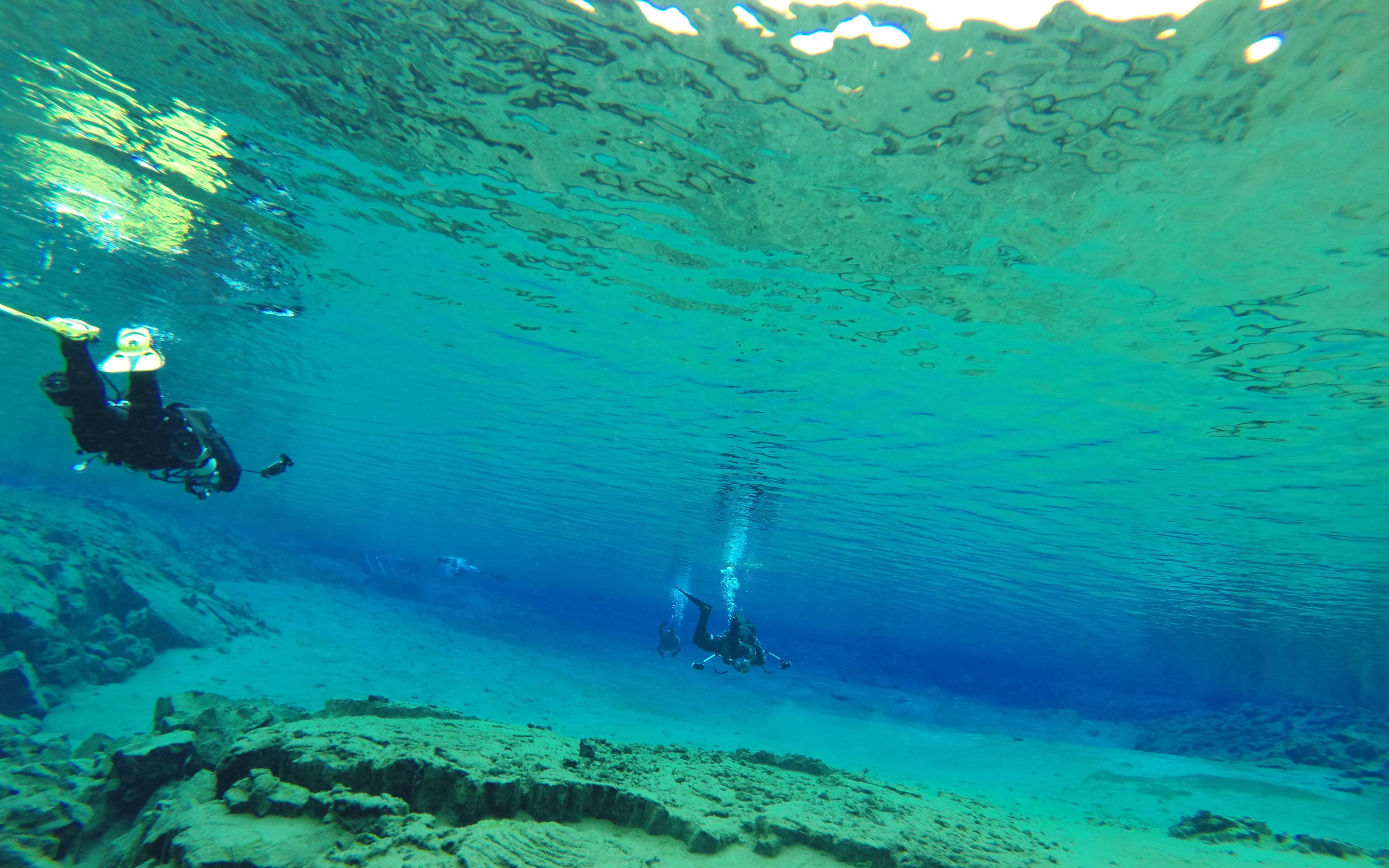
At the end of the cathedral, the route takes you to an underwater beach that leads directly into the lake to the right and directly into the Silfra Lagoon to the left. Even though the temptation to follow the current to the right is strong, I decide every single time to follow the dive group into the lagoon. Here, too, you can see all the way from the start to the exit stairs. The distance is more than 120 meters.
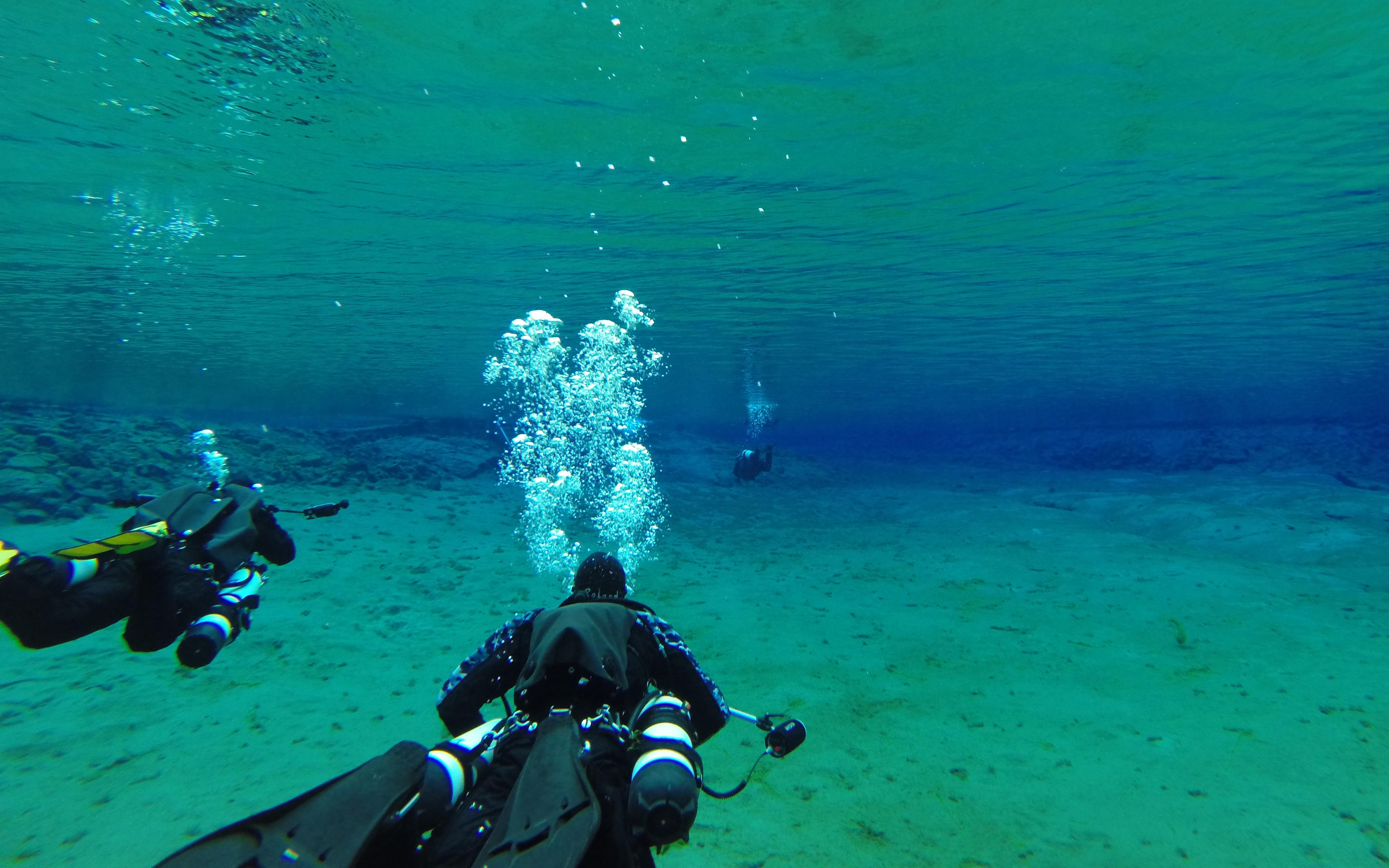
All in all, I was lucky enough to enjoy this experience four times: twice during my drysuit training dives and twice with the dive group. I probably would have cancelled all my other dives without a second thought just to descend into that blue infinity once more.
If you can’t dive or don’t want to, you can also join snorkeling tours here.
Silfra Facts
- The Silfra rift is the actual reason why islands like Iceland and the Azores exist, as they sit right on top of it
- In essence, the Silfra rift is more than 65,000 km long – it only surfaces along a few of those kilometers
- It not only separates the North American and European continents but also the South American and African ones.
- The Silfra rift widens by about 1-2 cm every year
In cooperation with Dive.IS.
[…] Silfra is certainly the highlight of any diving trip to Iceland and definitely always worth a visit. There are all kinds of tours for diving or snorkeling in Silfra. […]