
For many Iceland travelers, Landmannalaugar is the gateway to the beautiful highlands and therefore a popular destination, especially as a one-day tour. When I flew to Iceland in October, it wasn’t really clear whether the weather would cooperate or whether the highland roads (F-roads) would even be open. In the following lines I’d like to share that experience with you and give you the essential information for your trip into the Icelandic highlands.
Questions answered in this post:
- How do I get to Landmannalaugar (directions, map and trails…)?
- What can you do in Landmannalaugar (hiking, trekking, bathing…)?
- What do I need to keep in mind when driving there myself (river crossings)?
- Where can I stay overnight near Landmannalaugar (hotels)?
Here we go…
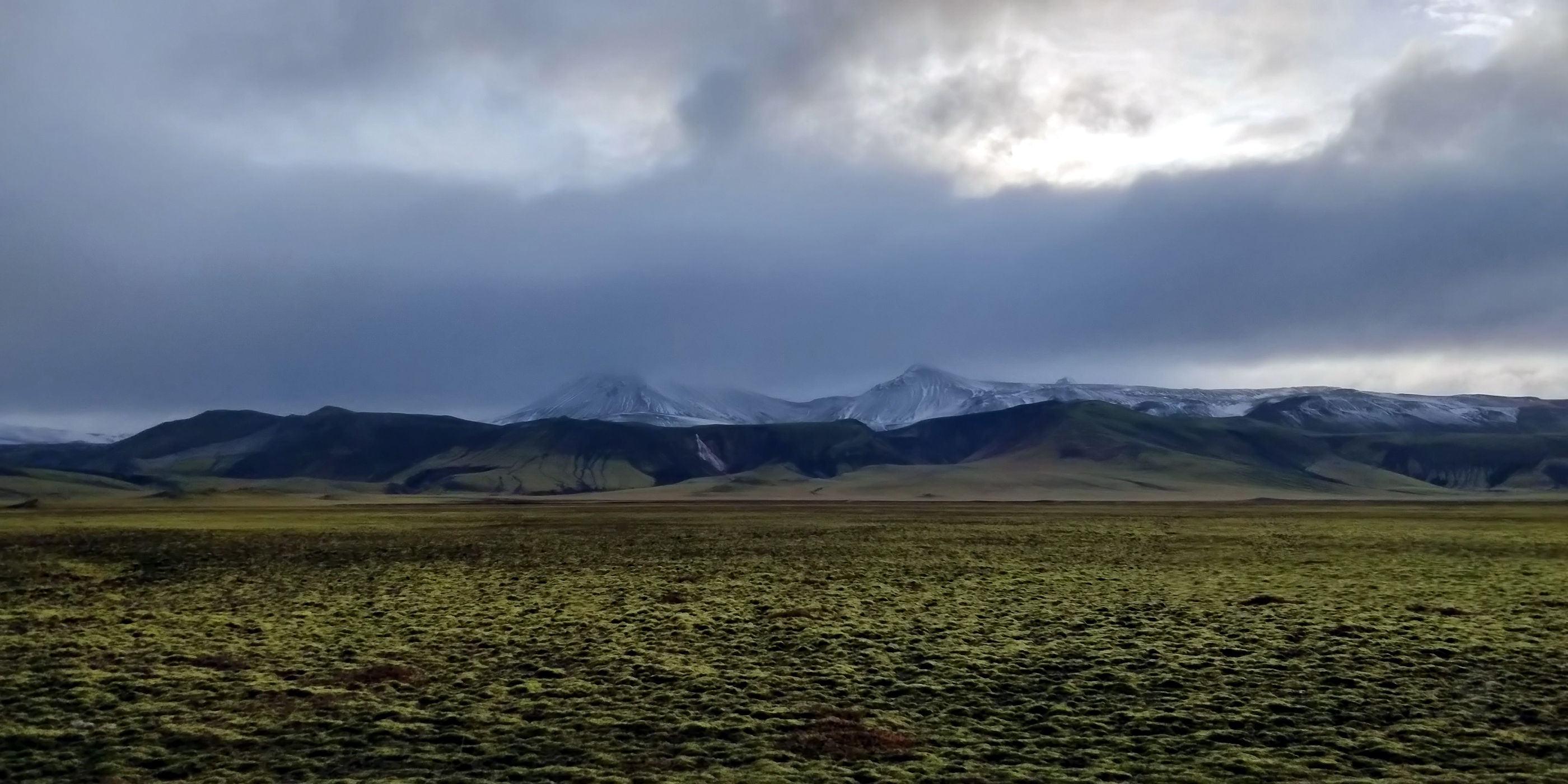
How do I get to Landmannalaugar?
Landmannalaugar lies almost exactly east of Reykjavik, in the southern part of the highlands. From every direction, the place can only be reached via highland roads (F-roads) — but relatively comfortably and with little risk (compared to other places in the highlands).
We came from Reykjavik that day, which for us meant approaching via the Golden Circle route. So my plan looked like this: a relaxed breakfast in Reykjavik, then off towards the Golden Circle with the classic stops at Þingvellir National Park, at Geysir and at the Gullfoss waterfall. All of that can be done very comfortably in one day if you plan cleverly: a little south-east of Gullfoss there is a highland center that you can reach within a few minutes. After the Golden Circle you can stop here for a meal, spend a relaxed night and set off into the highlands the next morning. Especially in summer, when you want to make the most of your time and enjoy the scenery at a leisurely pace, this is a great option.
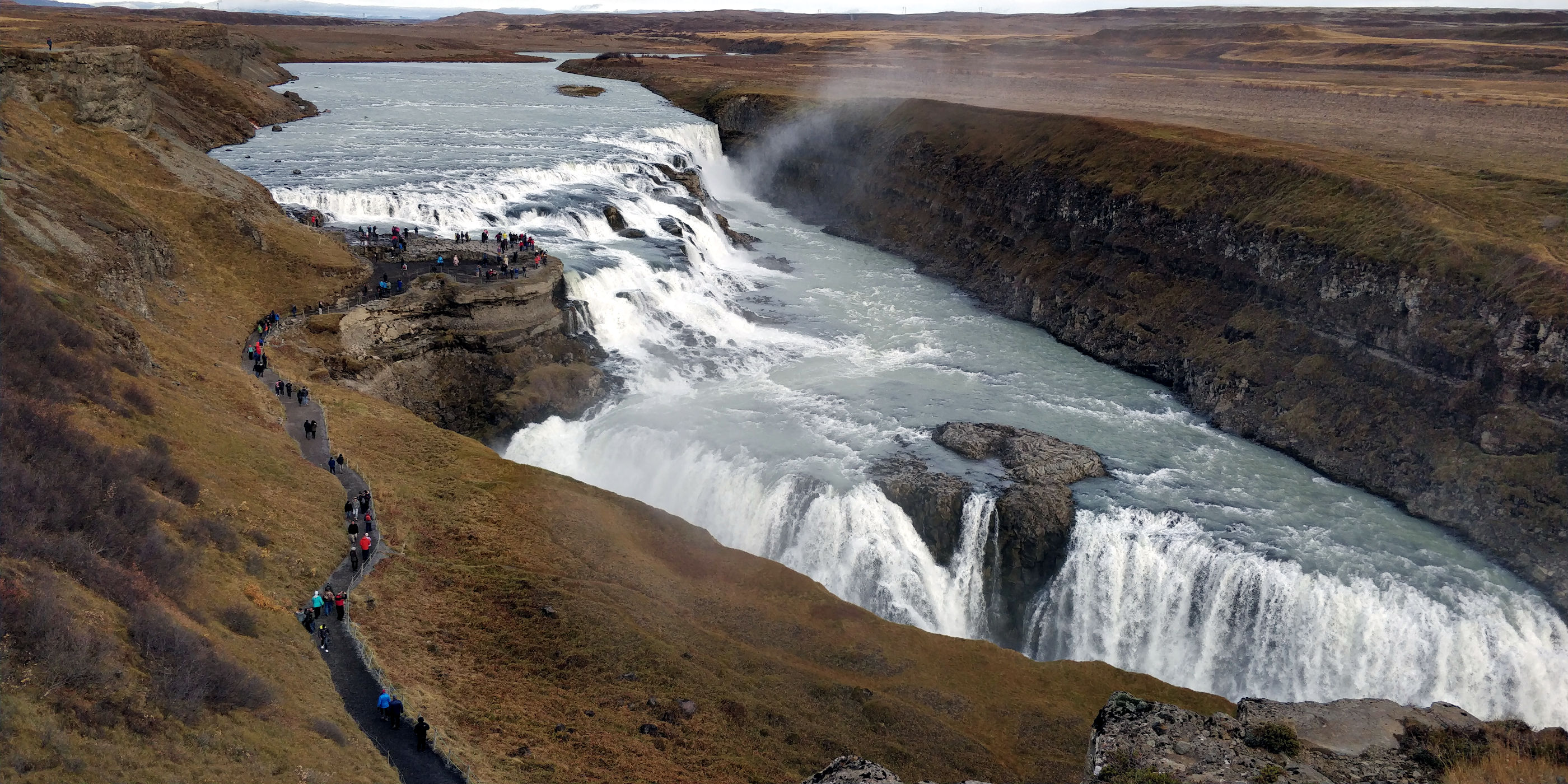
For us, the drive went via roads 36 and 35 to Gullfoss and then via the 30 / 32 to the highland center. A few kilometers before the accommodation, road 32 becomes the F26, and from here on four-wheel drive is mandatory.
The direct route to Landmannalaugar would be to take Ring Road 1 east and then road 26 north shortly before Hella: this is essentially the route we chose for the way back — with the difference that from there we continued east to the Jökulsarlon glacial lagoon.
The October weather really did cooperate, but out of caution — and because, as expected, it was actually snowing in the highlands — I shied away from experiments and picked this route for the way home. In summer I would have followed the F208 south and returned to the Ring Road at Grafarkirkja. You end up a little past Vík, which would have been perfect for us. A gentleman we later met in the hot pot confirmed my concerns: he had only barely made it north on that route and would also continue north for his journey home.
Another option is heading southwest, i.e. the F208, then the F210 and then via the F261 to Þórsmörk. This way you avoid fording the Krossá, one of the most dangerous rivers in the highlands. Whether the route is really much better / more pleasant, I can’t say.
Many roads lead to Rome, and on Google Maps they all look very easy. What you should keep in mind is covered in the next section…
What do I need to keep in mind when driving to Landmannalaugar in my own car?
It wasn’t my first time in the highlands, but it was my first time as the driver and without a passenger who knew the area. My first trip went to Þórsmörk with Jeroen, who had several thousand kilometers of highland experience under his belt and a converted Land Rover as his vehicle: I didn’t have to worry about a thing.
The right rental car for Iceland’s highlands
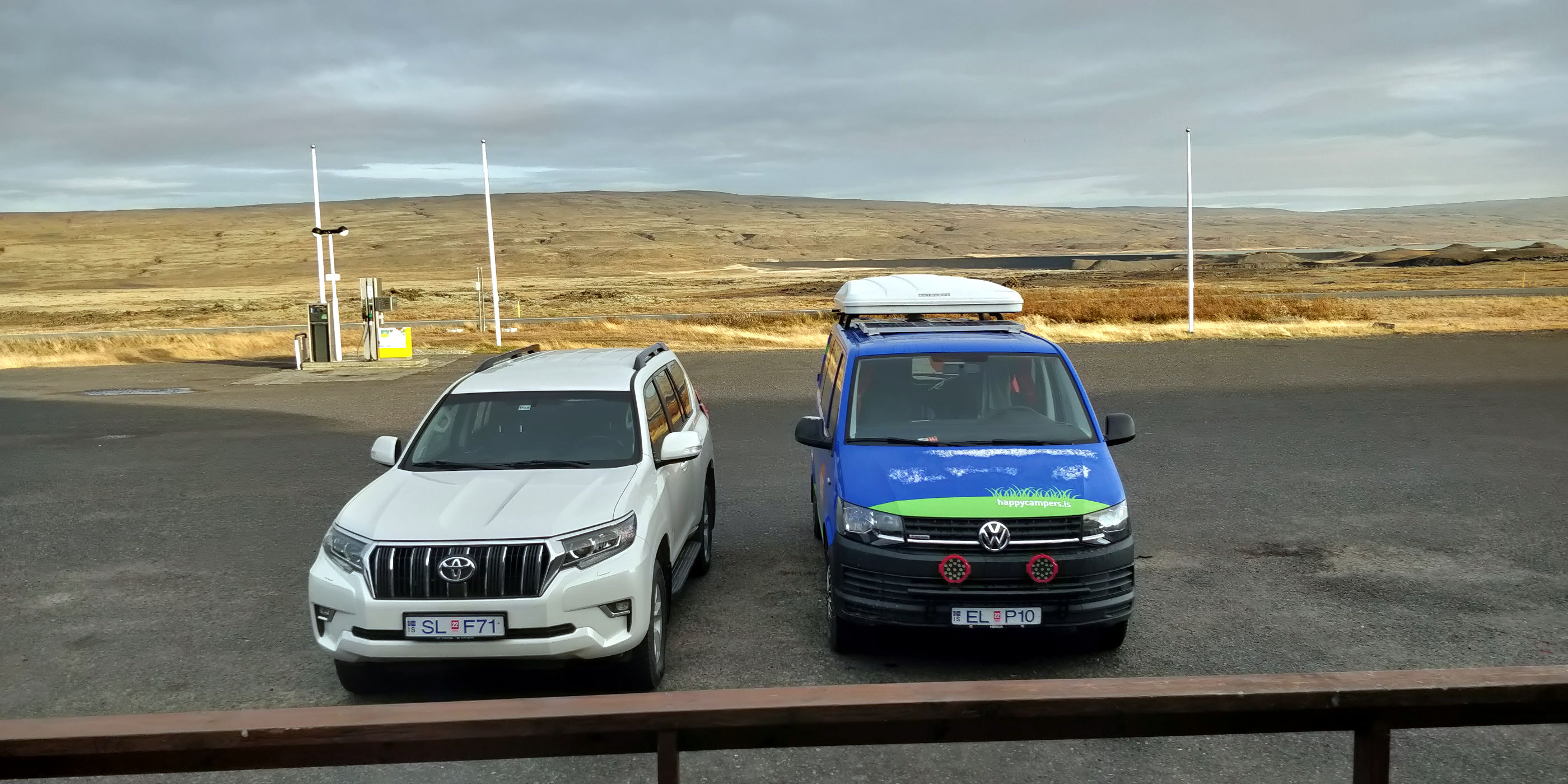
In this case we were at least very lucky: the tires on our originally booked rental car (a BMW X1) were so worn down that I refused to accept it. The rental company was immediately very understanding and gave us a Toyota Land Cruiser. I’m naming the cars here to point out the first important lesson: four-wheel drive is not the same as four-wheel drive! The X1 has a wading depth of 250mm, the Land Cruiser has 750mm — three times as much! A river in which the BMW would already have drowned, the Toyota could have crossed with ease.
Had we been stuck with the smaller SUV, we definitely would not have forded the last river and would have walked to the hot pot from there. Not the end of the world, but something you may need to know and plan for.
The wading depth is basically irrelevant for the approach described here — apart from the last river before the hot pot, we practically only drove through puddles. But the first point still matters, and another one comes on top: the BMW X1 has just about the lowest wading depth a four-wheel-drive SUV can have. Even a Dacia Duster or Suzuki Jimny offer more here. You wouldn’t necessarily expect that, but it’s true. Besides, the fact that a stream is low on the way in is no reason to feel safe: all it takes is one heavy rain shower or a delayed surge of meltwater from the mountains, and a stream quickly turns into a proper river.
And this is where the third and perhaps most important point comes into play: I probably would simply have lacked the experience to judge it correctly. A casual “well, we made it through on the way in, so it’ll work now too” might have been the beginning of a little drama. In this case I was able to draw on the knowledge of two absolute highland experts, Florian and Jeroen: a photo of the river, a photo of the car, and shortly afterwards two 👍: the journey could continue.
Again: it was the end of the season, the highland roads were only just still open and it was already snowing regularly in the highlands. Under these conditions I wouldn’t recommend anyone undertake such a tour, unless you know what you’re doing. In the height of summer things look a bit different. You should still inform yourself and be careful, but the risk is considerably lower.
The right technique for fording rivers in Iceland
Here I mainly want to point to the podcast episode with Jeroen, where we talk at length about the highlands and river crossings. I’m only just getting into the subject myself and haven’t crossed 100 rivers yet, so I’ll only give very basic tips.
In any case, you should never ford a river if you’re not 100% sure that your vehicle is up to it: ideally, get in touch with the rental company before booking and discuss your planned route.
Your car may well have more capabilities than you do — in fact, that’s extremely likely: with the Land Cruiser I could have forded considerably deeper rivers, or rather, the car would have been capable of it. Whether I would have managed it is another question. An expensive tennis racket doesn’t turn you into Boris Becker or Steffi Graf.
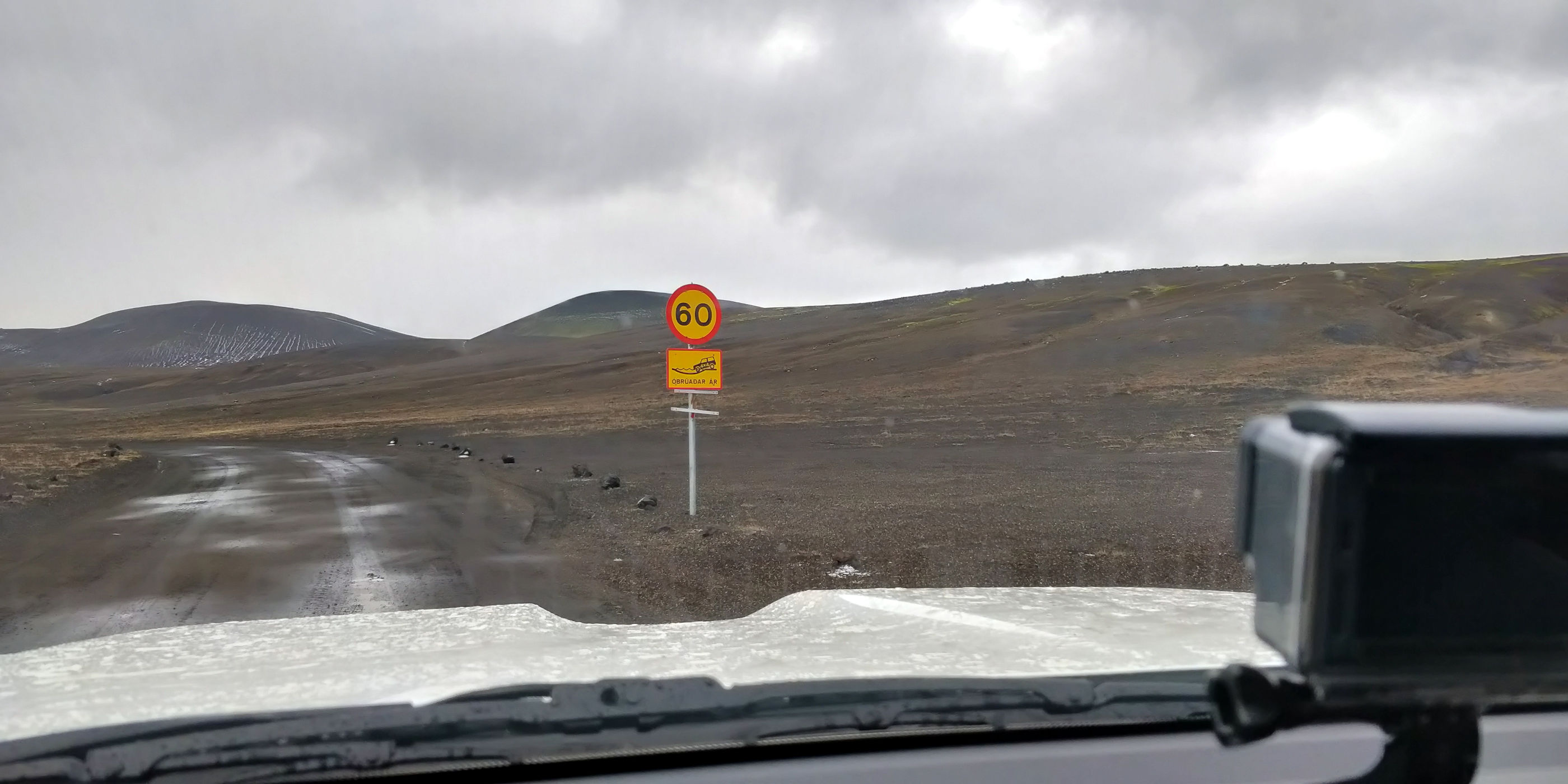
If you have the right vehicle and consider your own abilities sufficient, look for a route through the river. These are often easily recognizable from where others have entered and exited, and/or indicated by markers in the river. Take a close look at the water level — markers often show you whether a river is carrying a lot of water or not. If all parameters check out, you should drive into the river slowly but with determination, against the current. Not directly against it, but in a slight curve: your car should never be exactly perpendicular to the river; instead, drive slightly against the current at the beginning and with the current towards the end. It’s important not to stop but to keep moving. That can be at a crawl, but stopping quickly becomes a problem for getting going again because of the slippery riverbed.
At this point, one more reminder: I’m a beginner at this myself, and if you’re reading this, you probably are too. So please check again explicitly with the rental company or locally!
Where can I stay overnight near Landmannalaugar?
As described above, we decided to spend a night at the Hrauneyjar Highland Center, a bit south of Gullfoss / a bit north of Landmannalaugar. At this point I’d like to mention that I was supported on this trip by Hey Iceland.
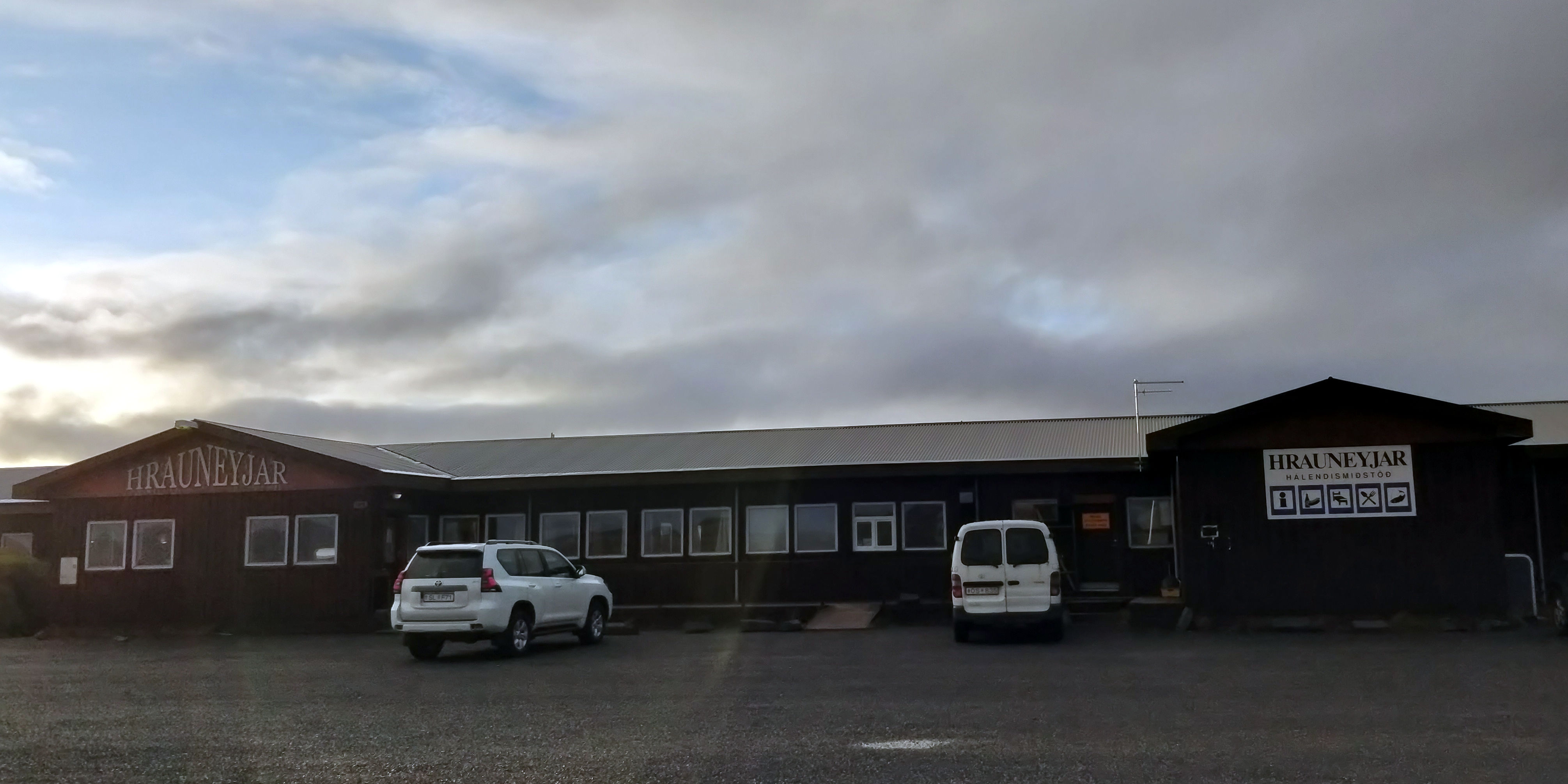
In my view, the Highland Center is the perfect starting point for a trip into the highlands, and to Landmannalaugar in particular. You drive on paved roads all the way here, you’re very close to small villages, and there’s even a petrol station on the premises. There’s warm food, a small shop where you can stock up on snacks, and a really extensive breakfast in the morning. The owners gave us a few tips regarding the drive, and in the evening you could swap stories with the other travelers. In our case, most of them had just returned from Landmannalaugar — all the other highland roads were already closed.
On the way home we then took the southwestern route mentioned above and picked out a hotel along the way with the Iceland app. I actually use the app myself, and in a way it was born out of my own “need”: there were a few things I really wanted, but there simply were no apps that covered them. So I built the app myself, and apparently it now helps many others too 🙂
That’s how we came across the Landhotel, which at the time was apparently quite new, or had only recently opened. The location is absolutely perfect for this route, and the amenities were great as well. The only small downside was that the price of dinner would probably have exceeded the room rate, so we drove one village further for our meal.
What can I do in Landmannalaugar, what sights are there?
Sights in the sense of buildings or statues are of course rare here, but the area offers other special attractions. The starting point is usually the tourist information…
Hiking in and around Landmannalaugar
For many, Landmannalaugar is the start or end point of a long hike through the southern highlands. The Laugavegur trail leads from here to Iceland’s south coast and can be hiked over several days. By the way, trekking enthusiasts recommend the route from south to north because of the elevation profile.
We opted for the short, 2-3 hour version and basically just walked a few kilometers south — but even on this short stretch you get a taste for more. The mountains on the horizon and the steaming hillsides are beautiful, and not just in winter. Especially in summer and autumn, when the mosses change color, they give the region its characteristic hues.
If you want to hike the whole trail, you should inform yourself early and thoroughly, and book the huts if necessary. Wild camping is, as everywhere in Iceland, not allowed. At the huts, however, there are sufficiently large camping areas.
The hot pot of Landmannalaugar
A highlight of the region: a completely natural and relatively large hot pot. There’s a wooden structure where you can get changed and leave your clothes. If it’s raining or snowing, that unfortunately doesn’t help much, hence my tip: bring a plastic bag. That’s something you should always have in your backpack in Iceland anyway, in case you spontaneously find hot water and fancy a soak 😉
You can even make yourself comfortable here with a large group — 20+ people fit easily into the small basin. The hot water comes from the small hills and mixes with the cool water of the stream. It never gets really hot, more like lukewarm. With a bit of luck, though, it’s an almost perfect spot for the northern lights!
The explosion crater Ljótipollur
Ljótipollur was formed during a series of volcanic eruptions in the 15th century and holds a small lake of groundwater in its interior. There are even fish living here. Depending on the sunshine and the angle, the water sparkles in a wonderful turquoise or a deep blue.
A small detour that we unfortunately skipped, but one I definitely want to recommend to you. Plan maybe an extra 30-40 minutes for it. It’s worth it!
The Gjáin valley, Gjárfoss and Hjálparfoss
While researching this article, I found a few operators of guided day tours who include a detour to this beautiful valley in their itinerary. Hjálparfoss actually lies right on the way, depending on how you approach the Highland Center, and a short detour here is definitely worthwhile. We’re talking about 15-20 minutes, depending on how long you want to linger.
Gjáin is a valley around the river Rauðá and, besides beautiful vegetation, contains a few small waterfalls and a farm. The farm was buried by a volcanic eruption, and years later a reconstruction was built with Þjóðveldisbær. It is located just a few meters from Hjálparfoss and not in the gorge itself.
The Gjáin valley is worth seeing, but I would only include it in the tour if it makes sense time-wise. On the way in, you’re sharing your time with the Golden Circle here, and depending on the season and how busy it is, fitting everything into one day can get tight. I’ll leave that entirely up to you: if you love seeing a lot and want to get the most out of the day, this is definitely a treat to take along! 🙂
The volcano Hekla
Hekla is a volcano lady and lies a little south of the Landmannaleið (F225), the road that connects Landmannalaugar westwards with road 26 — in other words, the way home to the Landhotel.
I only mention the volcano here because it’s essentially a drive-by sight. You can admire the volcano on your way home, but I wouldn’t recommend a detour to it.
The red waterfall Rauðfoss
It’s a similar story with the waterfall Rauðfoss, which you get to see after about a third of the way along the Landmannaleið, albeit in the far distance. On OpenStreetMaps the hiking trails are marked and the distance should be less than 1km, but I haven’t tried it. The waterfall is really beautiful to look at, but whether the walk is worth it overall, I can’t say.
What alternatives to Landmannalaugar are there?
I’m often asked whether there are good alternatives to Landmannalaugar: in the context of the question, usually not — because the question almost always comes up when the roads there are closed. When the highland roads get shut down, these tracks are usually the last ones to close, so by then all the other places in the highlands have long been unreachable.
In general, I would consider Þórsmörk an alternative, since it also lies on the edge of the Icelandic highlands. But especially from the south, it’s very hard to reach. However, if it’s not the weather but, say, your route planning that’s the issue, then Þórsmörk comes highly recommended. The two places are connected via the Laugavegur trail anyway, so one is basically just the other side of the same coin.
Conclusion / summary
The most important points for me, regarding a day trip to Landmannalaugar:
- Choose the right season and check the condition of the F-roads
- Book the right car for the trip and make sure you’re confident about the drive
- Build the day trip into your itinerary and make the journey there and back as relaxed as possible (see the hotel tips)
- Take a few hours on site to go hiking and bathe in the hot pot
- Also allow enough time to enjoy the route and the highlands (start early!)
Landmannalaugar is beautiful and was an unforgettable day trip for me. I hope it will be the same for you!
Have fun in Iceland!
No Comments Yet