
On the Öxi pass there is little snow at first, then more and more. No comparison to the dry Ring Road in Iceland’s south. I drive slowly and carefully across the sheets of ice, hoping that the gravel track will soon turn back into a proper road. But I might as well get used to the slower pace, because I’m on my way to the Wilderness Center, right between the Eastfjords and Vatnajökull National Park…
The story of Arna & Denni, the people behind the Wilderness Center
Denni used to be a filmmaker, shooting commercials for big companies. We chat briefly about Berlin, where he often worked. He always blocked out the summer months and turned down jobs so he could spend that time in his homeland. During the summer months, even the deserted east gets enough visitors to make something work out here.
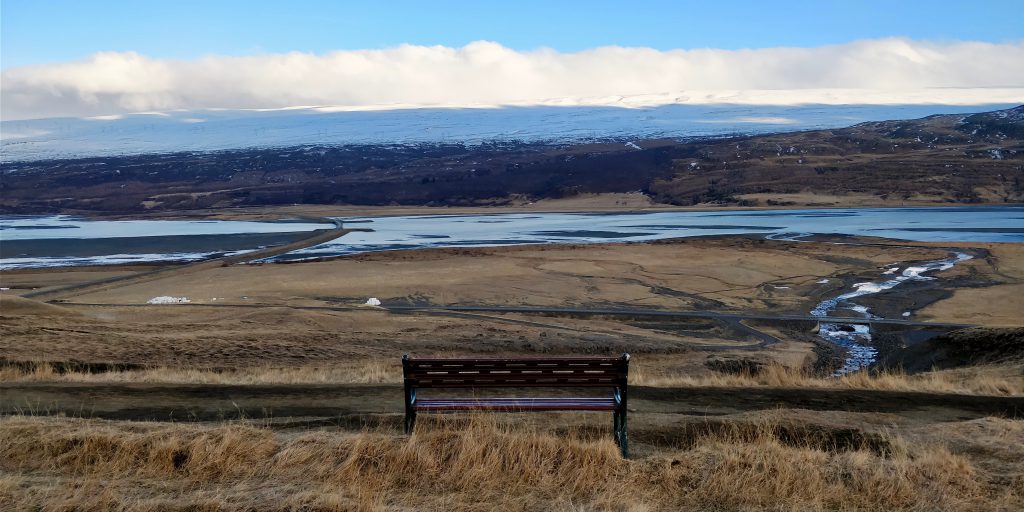
Vatnajökull National Park is only a few kilometers away, and from here you can set out on hikes, horseback rides, and excursions into the region. It hardly gets more remote than this: the Wilderness Center sits in the middle of nowhere, between two mountain ridges in a long, drawn-out valley. A small river winds its way through the rocks, and apart from a road, a few houses, and a handful of horses and sheep, there is nothing here. I’m even a little surprised that there is electricity — and internet, no less.
Yet Denni has created a true gem here: it all began with a museum and an abandoned farm, which he converted into a guesthouse. With loving care, a kind of adventure park of the finest sort has been built here over time: natural, sustainable, and authentic. I’m deeply impressed by the dedication that has gone into this project!
What is there to see around the Wilderness Center?
From the house you can take a short hike heading south: after about 45 minutes you reach a small abandoned farm building that still has furniture inside. A bizarre little spot — a lost place. Across from it, two steel cables stretch from one edge of the gorge to the other, with a large wooden basket suspended between them. A box without a lid that you can climb into and pull yourself across the river. Muscle power is required here, because even though a small power line also runs across to the other bank, the cable car is still hand-operated.
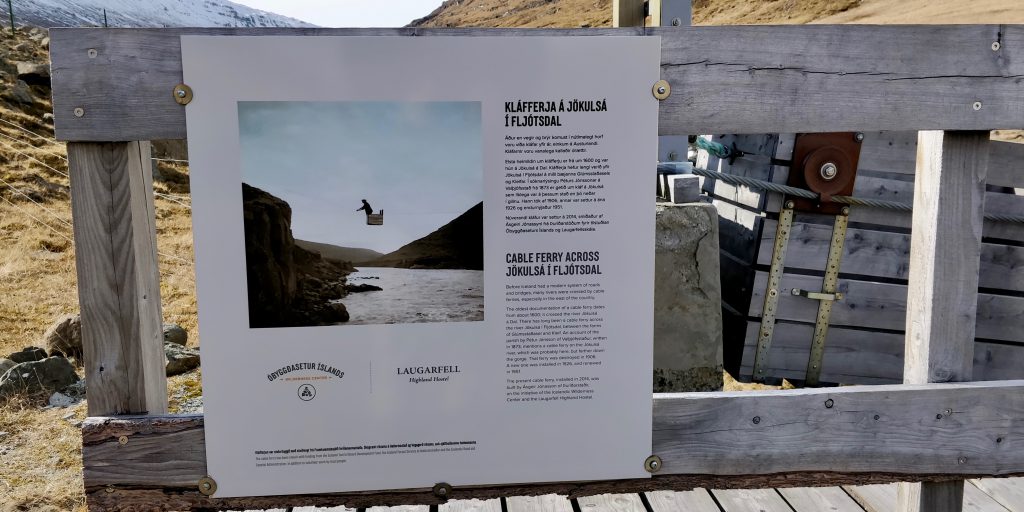
On the other side there are more abandoned farm buildings, but there is also a small cottage that is still habitable. After that, there really is nothing at all until you reach the national park.
Denni found hot water up in the mountains. Boiling hot water, that is. And what do Icelanders do when they find hot water? Of course: build a hot pot!
The hot pot project is only just getting off the ground, but in a few weeks’ time guests of the Wilderness Center should be able to sit in their own little hot pot while gazing up at the stars from the valley.
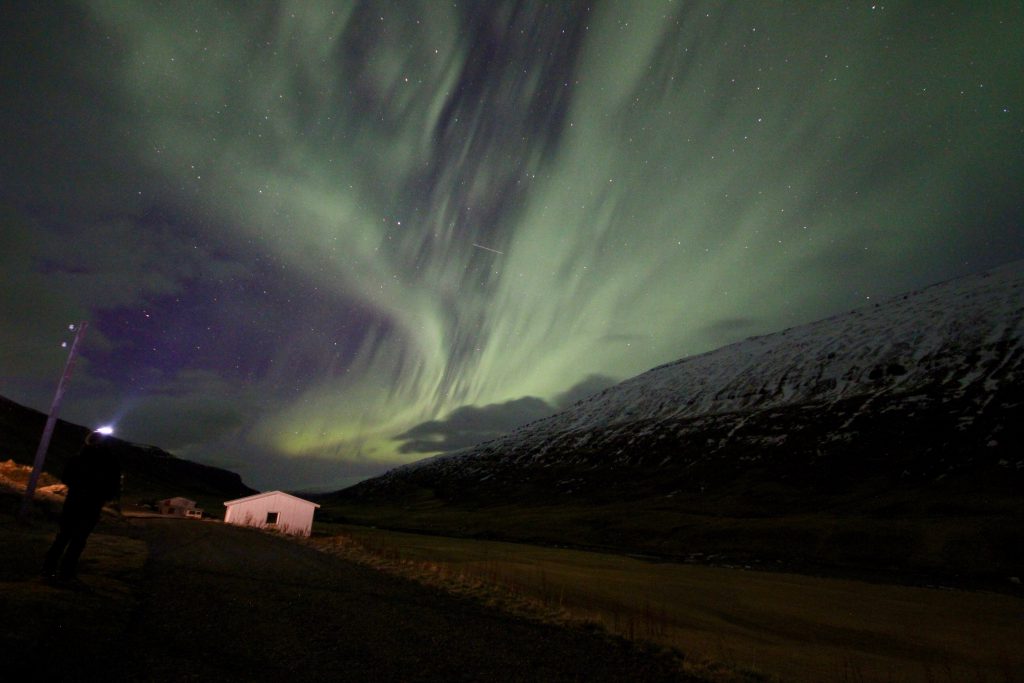
Speaking of stars: there is also a small observatory. No joke — Denni rebuilt the roof of an old barn so that it can be slid aside whenever you want to marvel at the beautiful starry sky. I can hardly stop being amazed as Denni tells me about it, and of course I immediately arrange a time for a viewing.
Just a few kilometers away are the waterfalls Hengifoss and Litlanesfoss. Both can be reached via a well-maintained hiking trail. In winter you should bring sturdy footwear, as the path can get muddy at times. It takes a good 45 minutes to reach Litlanesfoss and just under another hour to Hengifoss. The trail climbs quite steeply, but if you take it slow it’s no problem. Both waterfalls stand out above all for their basalt columns, which you can also admire at the Svartifoss waterfall at the southern end of Vatnajökull National Park.
What can I experience at the Wilderness Center?
The area is all about being out in nature — on foot while hiking, on a mountain bike, or on horseback. You can also go fishing in the small river that winds through the valley.
If you’re interested in culture, you should take a look inside the museum, which is part of the overall package and sits right next to the accommodation. Here you can learn about life in the days of the first settlers and the generations that followed.
For overnight stays there are several types of accommodation, from the dorm room to the Landowner’s suite — all the rooms have been restored as authentically as possible. Spending the night becomes part of the whole experience.
In the summer months breakfast, lunch, and dinner are served throughout, and in winter on request. As you might already guess, the ingredients are locally grown: fish, vegetables, cakes, and dairy products come from the farm next door. During my visit, Denni himself was at the stove working his magic.
When can I travel to the Wilderness Center?
The Wilderness Center is open year-round, and thanks to its location in the valley it’s easy to reach even in winter. Snow rarely settles here and the roads are cleared well.
Summer is the busier season, so it’s also worth considering the off-season — the shoulder months, for example, or indeed winter.
Activities can be enjoyed in every season as well; neither hiking nor horseback riding is limited to summer. Denni knows Vatnajökull National Park, right on whose doorstep you are here, inside out.
Verdict: The Wilderness Center
For me it was a highlight of my Iceland trip in April 2018: the Wilderness Center in Iceland’s east is something completely different, a very welcome change from the hotels in Reykjavik and along the south coast. Here you can experience Iceland in a truly original, natural, and sustainable way. You are close to nature — and not just on the excursions during the day, but throughout your entire stay. And even though most of the owners of the hotels, guesthouses, and B&Bs I had stayed at so far were Icelanders, here I felt even more in touch with the locals: people who come from this place and want to build something here.
Advertisement: This post was created in cooperation with HeyIceland; I was granted special conditions when booking my stay. My opinion remains unaffected by this.
No Comments Yet