
On August 12, 2026, something will happen over Iceland that hasn’t been seen there in 72 years: a total solar eclipse. For a good two minutes in the early evening, right in the middle of the Icelandic summer, the sky will go dark, the stars will come out and the corona will glow around the black sun. Iceland is one of the best places in the world to witness this once-in-a-century event – the point of greatest eclipse lies just about 45 kilometers off Iceland’s west coast. In this post, I want to give you the most comprehensive overview I can of the solar eclipse in Iceland: what exactly happens, when and where you’ll see it best, how to protect your eyes and what you absolutely need to keep in mind when planning.
Here we go…
What is a total solar eclipse, anyway?
A solar eclipse occurs when the moon moves exactly between the Earth and the sun at new moon. Because the moon appears almost exactly the same size as the sun when viewed from Earth, it can cover it completely – but only within a narrow strip on the Earth’s surface, the so-called path of totality. Only those standing inside this strip experience totality: the sky darkens as if at dusk, the temperature drops noticeably, birds fall silent and around the black disk of the moon the corona becomes visible – the sun’s outer atmosphere, which you can otherwise never see with the naked eye.
Just before and after totality, the last ray of sunlight flashes through the valleys of the moon – the famous diamond ring effect. For many people, this moment is the most emotional of the entire eclipse.
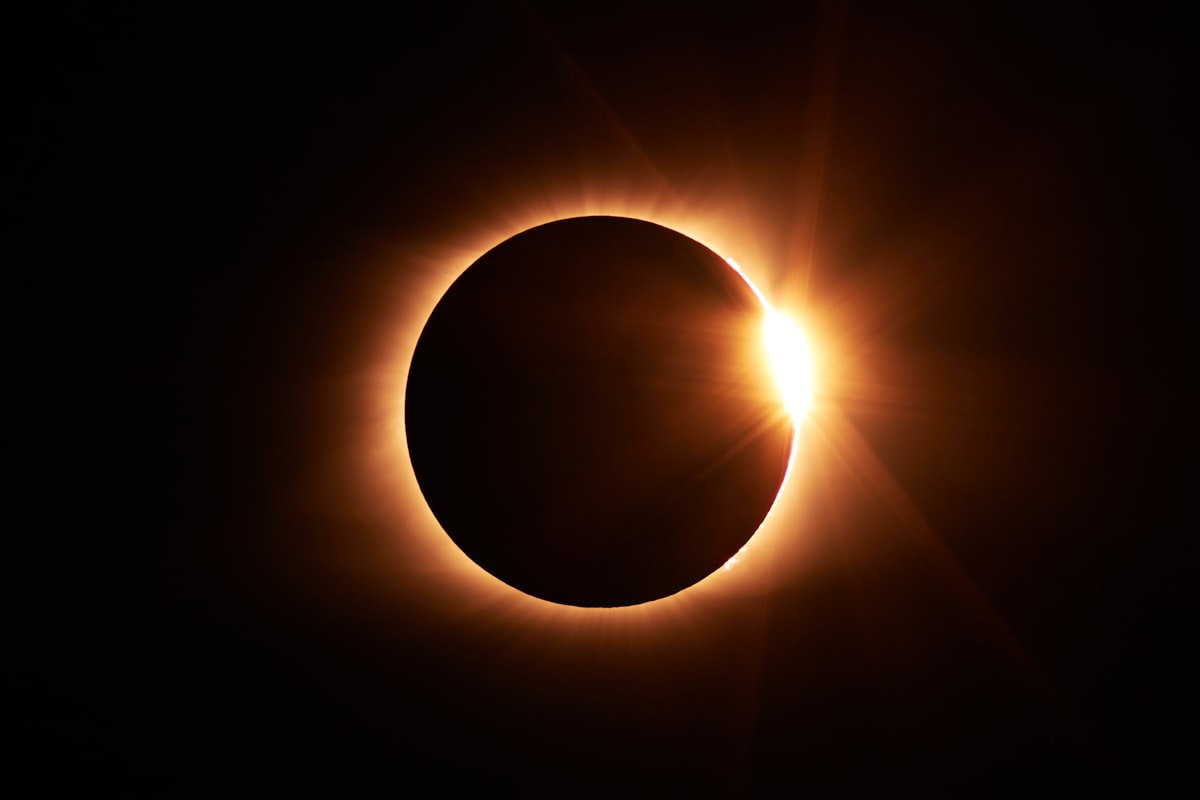
Important to understand: a partial solar eclipse, where “only” 95 or 99 percent of the sun is covered, is a nice sight – but no comparison to totality. Even with 99 percent coverage, it’s still broad daylight outside. The magic really only happens inside the path of totality. So if you have the choice: get into the path!
Why is the 2026 solar eclipse in Iceland so special?
Total solar eclipses aren’t rare as such – one happens somewhere on Earth roughly every 18 months. But it’s the exception for the path of totality to run right over inhabited, easily accessible land. And for Iceland:
- It’s the first total solar eclipse over Iceland since June 30, 1954 – that’s 72 years.
- The next one is even further away: Iceland’s turn won’t come again until 2196. For all of us, this is the only chance to experience this event in Iceland.
- The point of greatest eclipse lies only about 45 kilometers off Iceland’s west coast in the North Atlantic – it hardly gets closer to land than that. There, totality lasts a maximum of 2 minutes and 18 seconds.
- It’s also the first total solar eclipse whose umbral shadow reaches the European mainland since 2006 – and the first over western continental Europe since the legendary eclipse of August 11, 1999. After Iceland, the shadow moves on to northern Spain.
On top of that, there’s the timing: mid-August is Iceland’s best time to visit – mild temperatures around 14 to 16 degrees Celsius, all highland roads open and long, bright evenings. The eclipse takes place in the early evening, when the sun is already relatively low in the west. A low, eclipsed sun over the Icelandic landscape – that should make for a pretty unique backdrop.
When and where can you see the solar eclipse in Iceland?
The eclipse takes place on Wednesday, August 12, 2026, in the early evening. Iceland is on UTC year-round; here are the times for Reykjavík:
- approx. 4:47 pm – start of the partial phase, the moon takes its first “bite” out of the sun
- 5:48 pm – start of totality, lasting about 1 minute in Reykjavík
- approx. 6:47 pm – end of the partial phase
So the whole spectacle lasts about two hours, but the decisive moment only one to a good two minutes – depending on where you’re standing.
The umbral shadow comes from Greenland across the Arctic Ocean and hits only the west of Iceland. Inside the path of totality are:
- the Westfjords – this is where the shadow first makes landfall, at 5:43 pm
- the Snæfellsnes peninsula
- the Reykjanes peninsula around Keflavík
- Reykjavík – though only just inside the path, hence the short totality
Not inside the path of totality are the north with Akureyri (about 97–99% coverage there), the east and the south coast (Höfn about 96%). There you’ll experience a deep partial eclipse – impressive, but not totality. My advice: if you’re in Iceland around that date anyway, plan August 12 so that you’re standing in the west.
The best viewing spots: where does totality last longest?
The further west, the longer the darkness. The most important spots at a glance:
- Látrabjarg (Westfjords): 2 minutes 13 seconds – the longest totality on the Icelandic mainland, of all places at Europe’s famous bird cliff
- Hellissandur (Snæfellsnes): 2 minutes 7 seconds – the longest totality in a settlement, and also the venue of the Iceland Eclipse Festival
- Patreksfjörður (Westfjords): approx. 2 minutes
- Reykjanes peninsula: approx. 1 minute 40 seconds
- Ísafjörður (Westfjords): approx. 1 minute 30 seconds
- Reykjavík: approx. 1 minute

One point that often gets overlooked: during totality, the sun will only be about 25 degrees above the horizon in the west. On the one hand, that’s fantastic for photos with landscape in the frame – on the other hand, in the narrow fjords of the Westfjords, mountains can simply block your view of the sun. So make absolutely sure to pick a spot with a clear view to the west: stretches of coastline, hilltops or open plains. On Snæfellsnes, the north and west coasts are good options, for example around Hellissandur or – with Kirkjufell in the frame – near Grundarfjörður.
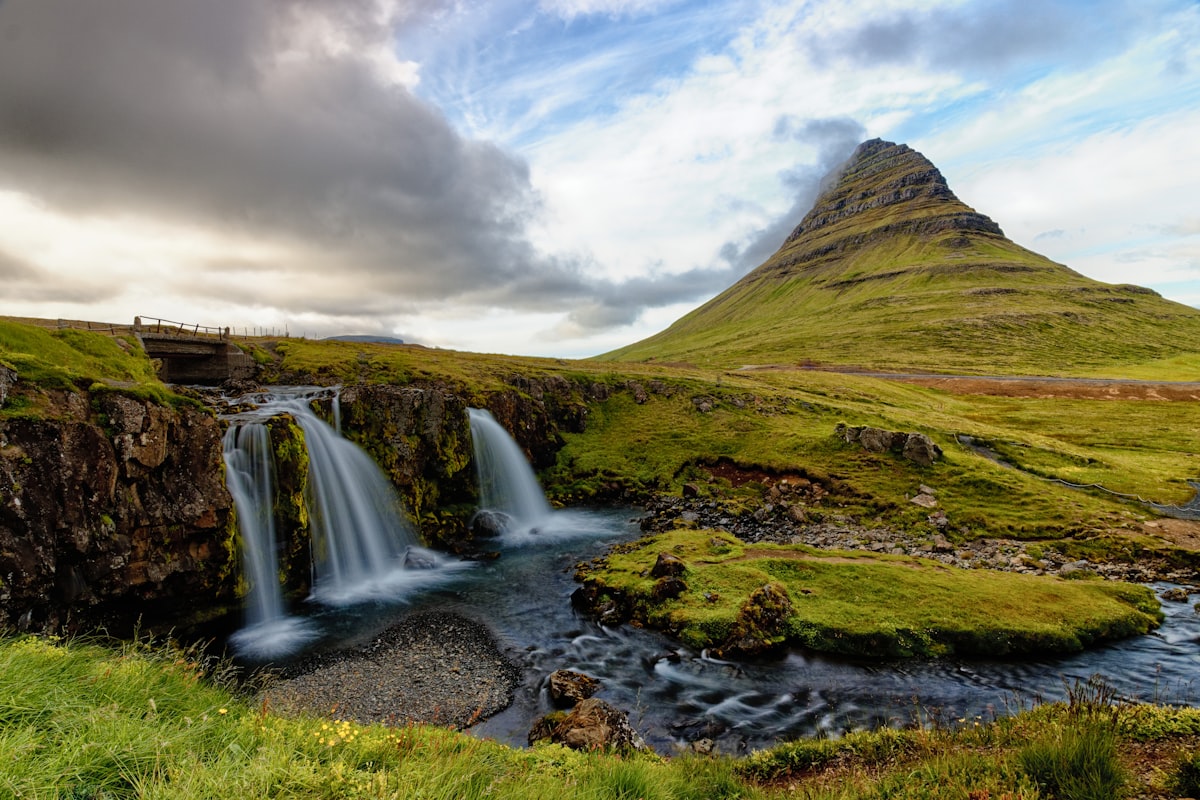
Personally, I wouldn’t blindly commit to a single spot, but rather earmark two to three locations in different regions – I’ll explain why in a moment when we get to the weather.
What are the chances of clear skies?
Now for the elephant in the room: the Icelandic weather. Statistically, the probability of cloud cover on the west coast in August is somewhere between 60 and 75 percent, depending on the source. That sounds sobering at first – but flip it around: the odds are far from bad, because Iceland’s weather is highly localized and changes quickly. While one fjord is clouded over, the sun can be shining 50 kilometers away.
Which leads to the most important rule for August 12, 2026: stay mobile.
- Rent a car – without your own vehicle, you’re at the mercy of the weather. You’ll find tips in my rental car post (book early, more on that below!).
- Check the cloud forecast the day before and in the morning on vedur.is, the website of the Icelandic Met Office.
- Keep two to three locations open. The flat Reykjanes peninsula is considered a good plan B: clouds move through faster there than in the fjords.
And if it does cloud over completely: even under clouds, it gets eerily dark during totality – it’s an experience either way. But of course we all want to see the corona. Fingers crossed!
Eye protection: how to watch the solar eclipse safely
This topic really matters, so let me be very clear: never look at the sun without protection – not even when it’s 90 percent covered. The retina has no pain receptors; you won’t notice the damage until it’s too late.
- Use only solar eclipse glasses certified to ISO 12312-2. Regular sunglasses aren’t remotely sufficient, not even several stacked on top of each other.
- The glasses stay on for the entire partial phase – that is, before and after totality.
- Only during totality itself (the one to two minutes when the sun is completely covered) may you look without glasses. And that’s exactly when you should – the corona is most beautiful with the naked eye!
- Never look at the sun unprotected through a camera, binoculars or telescope – these require special solar filters in front of the optics, otherwise you risk severe eye damage.
- Get your glasses well before your trip. Experience shows that certified glasses sell out everywhere shortly before events like this.
Photographing the solar eclipse: tips for your souvenir shot
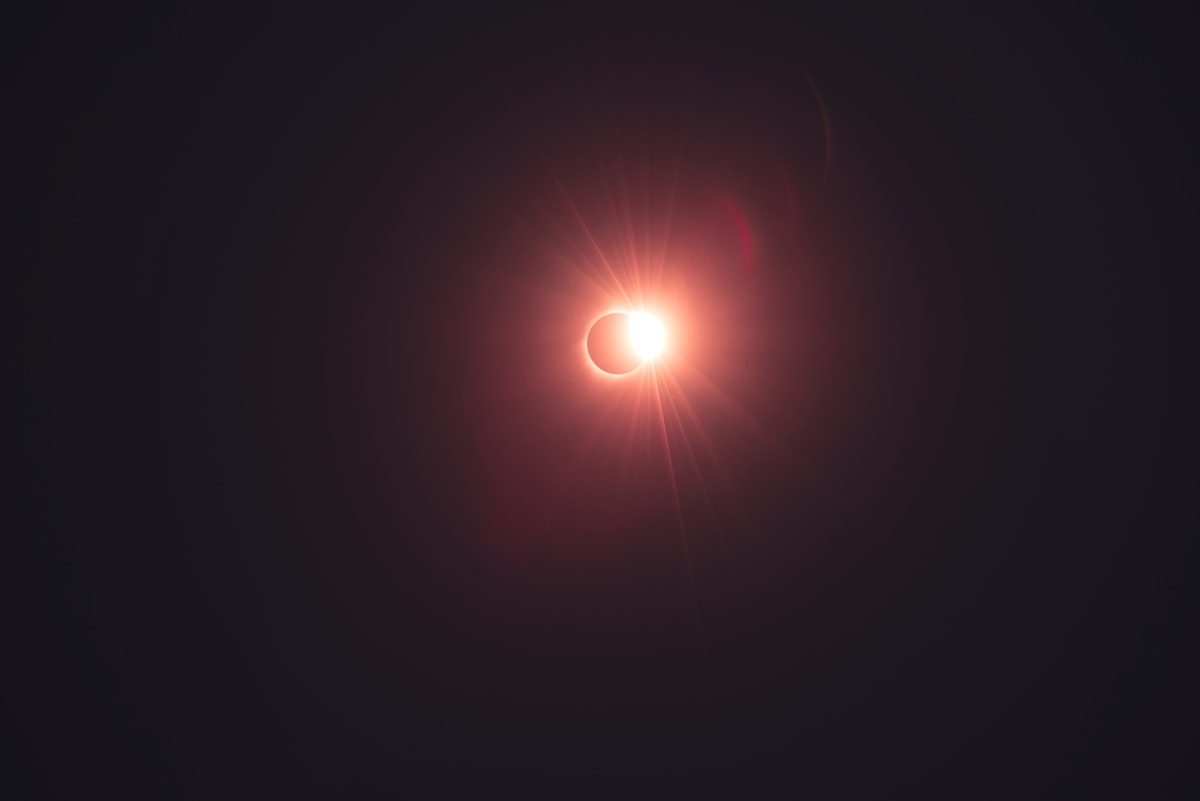
A few ground rules so that your photo turns out well and your camera survives:
- For the partial phases, you need a solar filter in front of the lens (e.g. filter foil certified to ISO 12312-2). The filter only comes off during totality.
- A tripod is a must – it gets dark during totality and exposure times get longer.
- The low sun is an invitation for your wide-angle lens: an eclipsed sun plus Icelandic landscape plus a dark horizon – you won’t get this shot again anytime soon.
- And my most important tip: don’t spend the entire totality behind the viewfinder. One to two minutes are brutally short. Program your camera in advance or take a few quick shots – and then just look up and enjoy.
By the way, you’ll find more on photo gear for Iceland in my Iceland packing list.
Getting there, accommodation and traffic: why you should plan now
I’ll be honest with you: if you haven’t booked anything yet for August 12, 2026, you’ll need luck or flexibility. Iceland is expecting a historic influx of visitors for this date:
- Accommodation inside the path of totality – Reykjavík, Snæfellsnes, the Westfjords – has largely been booked out for a long time, in some cases even campsites. It’s still worth checking regularly for cancellations, including a bit outside the path (from the south coast, the west is reachable by car).
- Rental cars and campers are also in high demand – the earlier you book, the better. A campervan is actually ideal for this event: you’re mobile and your bed comes with you.
- For eclipse day, traffic management and road closures have been announced, among others on Reykjanes, Snæfellsnes and in the Westfjords. Current information is available on safetravel.is and road.is.
- Plan to be at your viewing spot several hours before it starts, and bring food and drink for the whole day. After the eclipse, tens of thousands of cars will start moving at the same time – take it easy and plan to spend the evening where you are.
Iceland Eclipse Festival and the Perseids: double the stargazing
There’s even more happening in the Icelandic sky around the eclipse: in Hellissandur on Snæfellsnes, the Iceland Eclipse Festival takes place from August 11 to 15, 2026 – with music, art installations and talks by scientists and astronauts, right in the town with the longest totality of any settlement.
And as if that weren’t enough, the Perseid meteor shower reaches its peak on those very same nights. The nights in mid-August are still fairly bright in Iceland, but the brightest shooting stars stand a chance – and who knows, maybe the first northern lights of the season will even show up late in the evening.
Solar eclipse countdown in the Iceland app
So you don’t miss the big moment, we’ve built a dedicated solar eclipse feature into the Iceland app: the app shows you a countdown to the eclipse and the exact contact times, and reminds you in good time before it starts – so that on August 12 you’re looking at the sky, not at your watch. As always, there are also offline maps, tours and many more features for your Iceland trip.
FAQ: frequently asked questions about the solar eclipse in Iceland
Do I really need special glasses?
Yes, absolutely. Without glasses certified to ISO 12312-2, you risk permanent eye damage. Only during the one to two minutes of totality may you look without protection.
I’ll be in Akureyri on August 12 – is it still worth it?
You’ll see a partial eclipse there with around 97–99% coverage. Sounds like a lot, but it won’t get dark and the corona will remain invisible. If there’s any way you can: head west. The drive from Akureyri to Snæfellsnes takes about 4 hours – but allow considerably more because of the traffic.
How long does the solar eclipse last in total?
From the first “bite” to the end, around two hours (approx. 4:47 pm to 6:47 pm). Totality itself lasts between one minute (Reykjavík) and 2 minutes 13 seconds (Látrabjarg), depending on where you are.
What do I do if it’s cloudy?
Stay mobile! Check the cloud forecast on vedur.is and, if necessary, change location at short notice – often 30 to 50 kilometers are enough. The flat Reykjanes peninsula is considered a good plan B.
Can I watch the solar eclipse with kids?
Of course – for children, this is an unforgettable experience. The only important thing is that the glasses stay on the whole time and that you keep an eye on it. You’ll find more ideas for families in my post Iceland with kids.
When is the next total solar eclipse in Iceland?
Not until 2196. So this chance won’t come again – for any of us. If you miss it and don’t want to wait that long: as early as August 2, 2027, there will be a total solar eclipse over southern Spain and North Africa.
Conclusion: solar eclipse in Iceland 2026
A total solar eclipse over Iceland – the last one was in 1954, and the next won’t come for another 170 years. The fact that the path of totality runs right over the most beautiful corners of the west, from the Westfjords across Snæfellsnes to Reykjavík, makes August 12, 2026 a true once-in-a-century event. Yes, the weather is a risk and the accommodation situation is tight – but with good planning, a set of wheels, certified glasses in your luggage and a clear view to the west, your chances are good of experiencing one of the most magical moments the sky has to offer.
Will you be in Iceland on August 12, 2026? Where do you want to watch the eclipse – the Westfjords, Snæfellsnes or Reykjavík after all? Let me know in the comments, I’m curious to hear your plans!
Enjoy Iceland!
All photos from Unsplash. Times and dates without guarantee – check the latest advisories on safetravel.is shortly before your trip.
No Comments Yet