
Bjarnagjá is one of the most fascinating dive sites in Iceland for me.
The small rock fissure lies in the south of the island, near the town of Grindavik. Only a few meters from the Atlantic and connected to it through various tunnels, it is nevertheless mostly filled with crystal-clear spring water. Through the connection to the ocean, salt water also gets pushed into the small basin, creating fascinating haloclines (analogous to a thermocline) — those are streaks in the water like the ones you know from the air above hot asphalt. They give the place an even more mysterious charm.
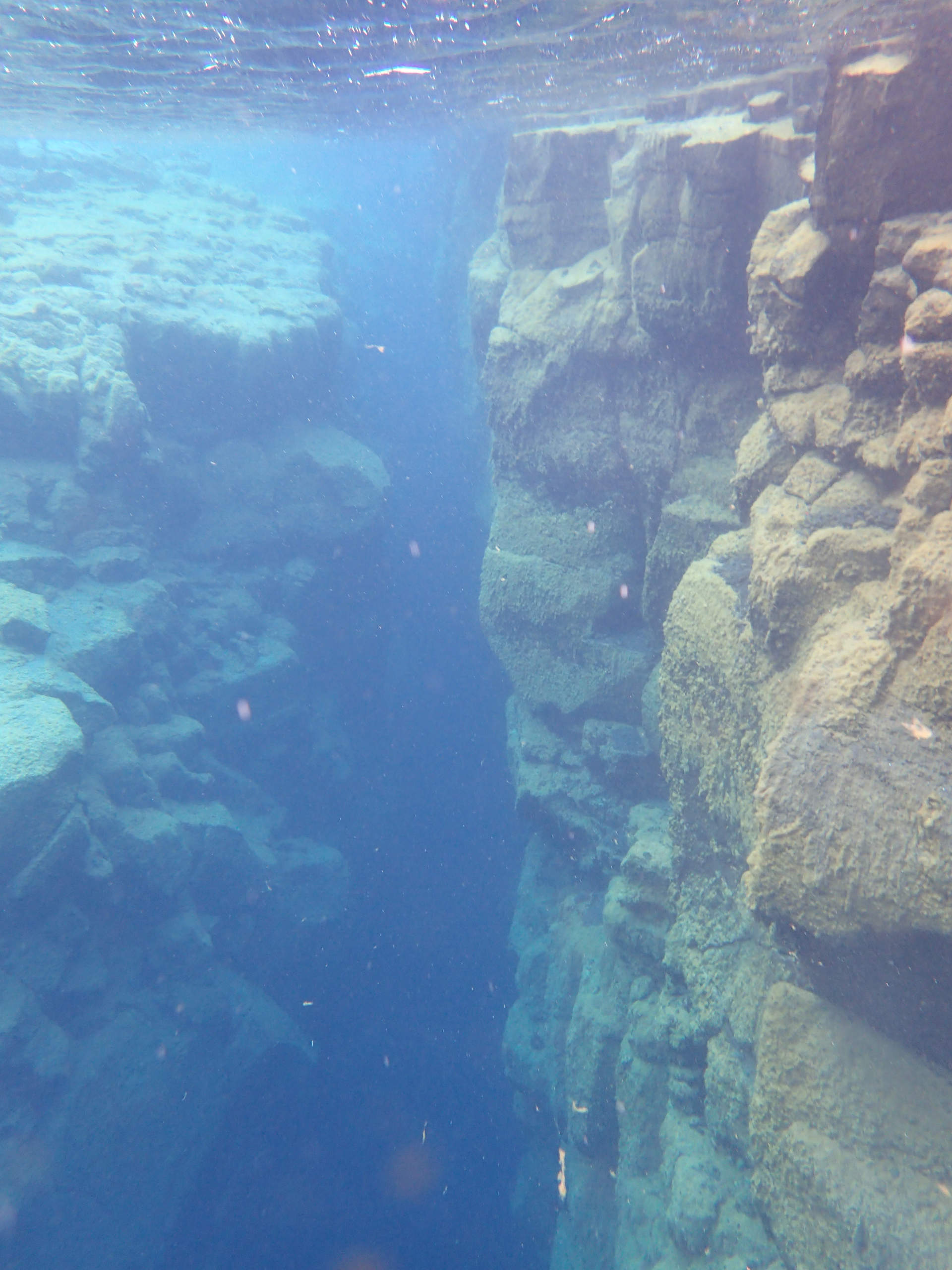
Cod used to be farmed in Bjarnagjá, but that hasn’t been the case for a long time, so divers can enjoy the bizarre views here undisturbed. Around the dive site stand two old buildings of which nothing more than the foundation walls remains. Logs washed in from the ocean lie around everywhere, bullet casings and shards of clay pigeons cover the ground — presumably courtesy of trigger-happy teenagers from the neighborhood — and the wind here pretty much always howls with brutal force and icy cold.
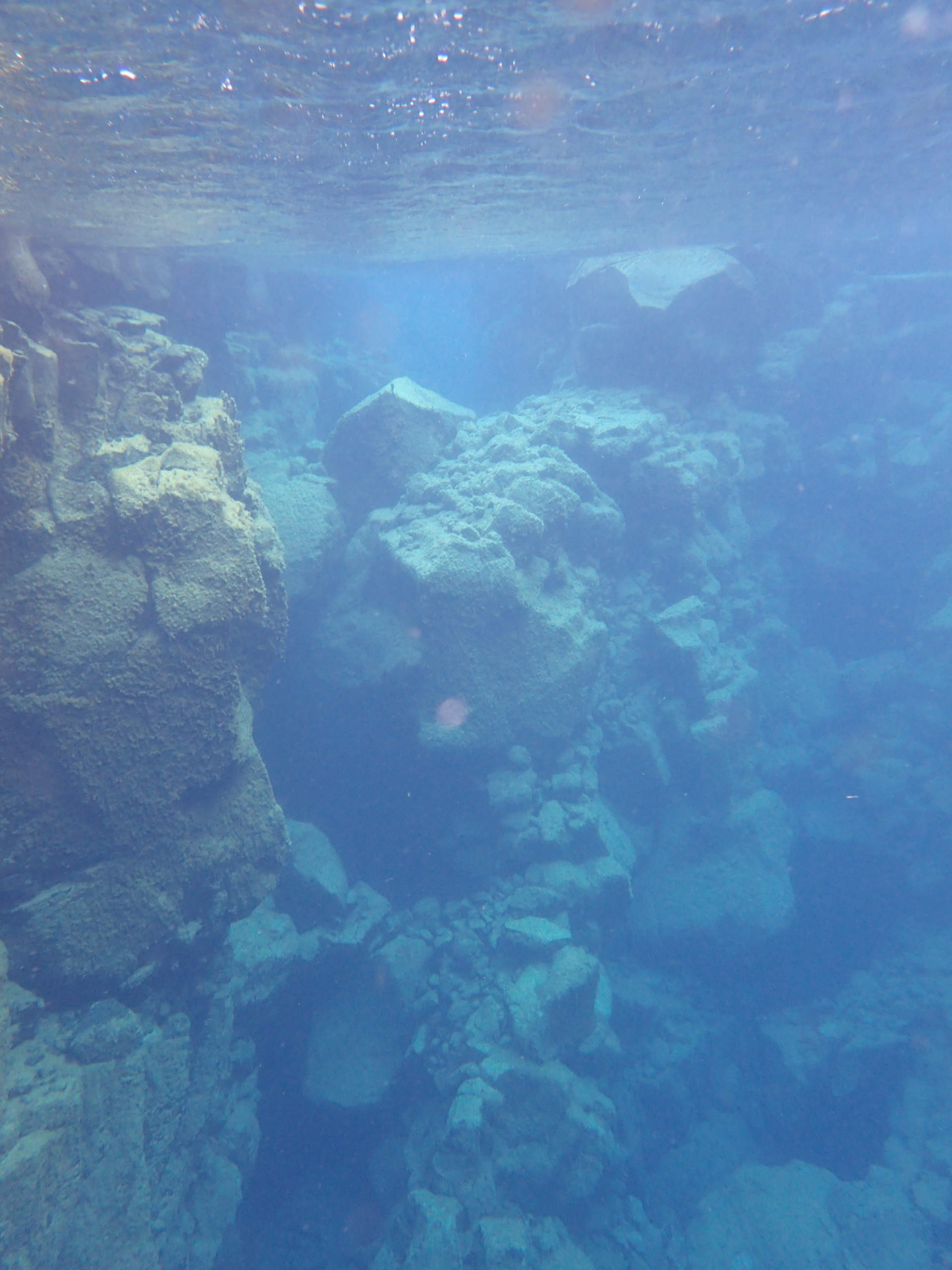
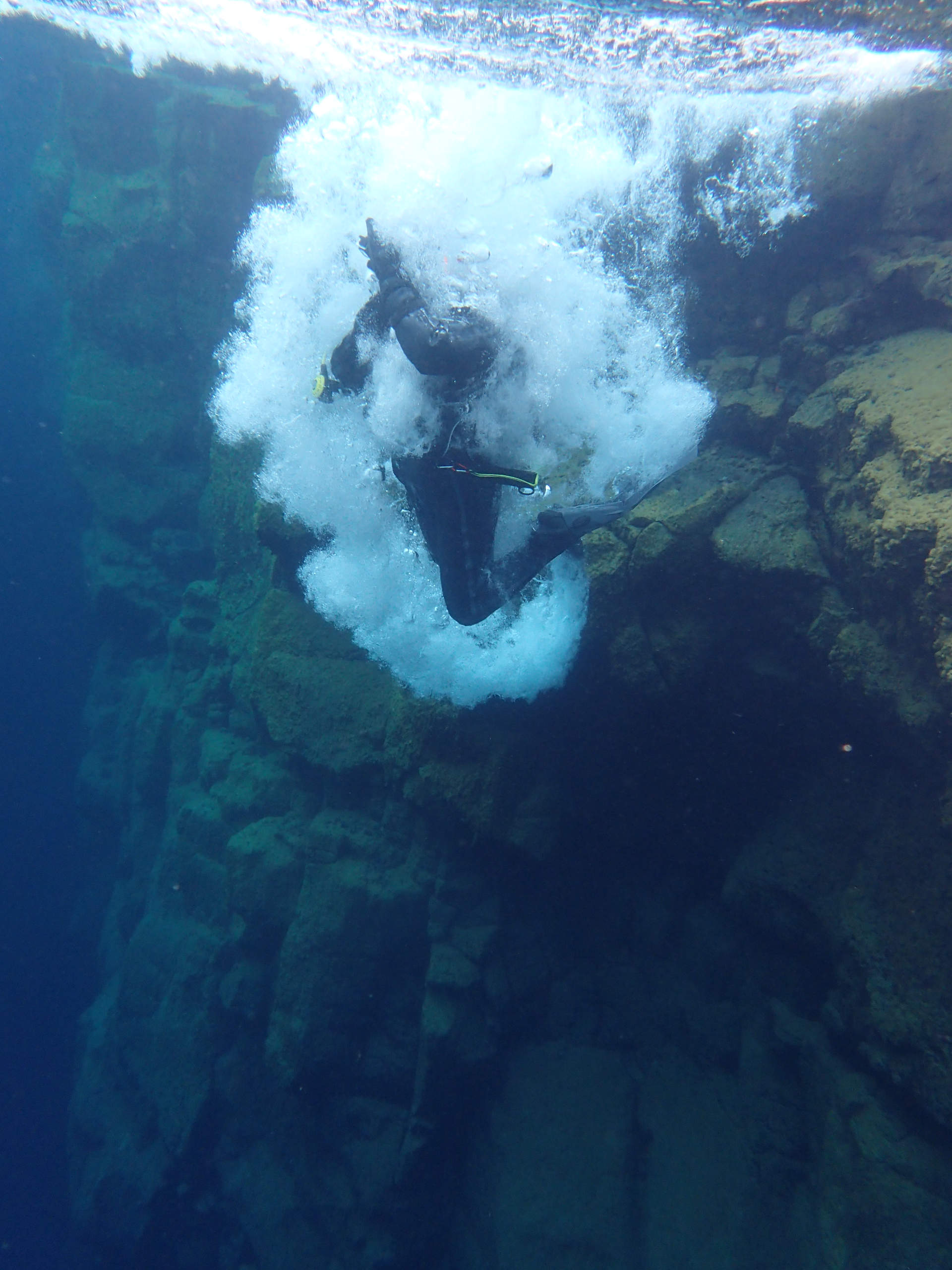
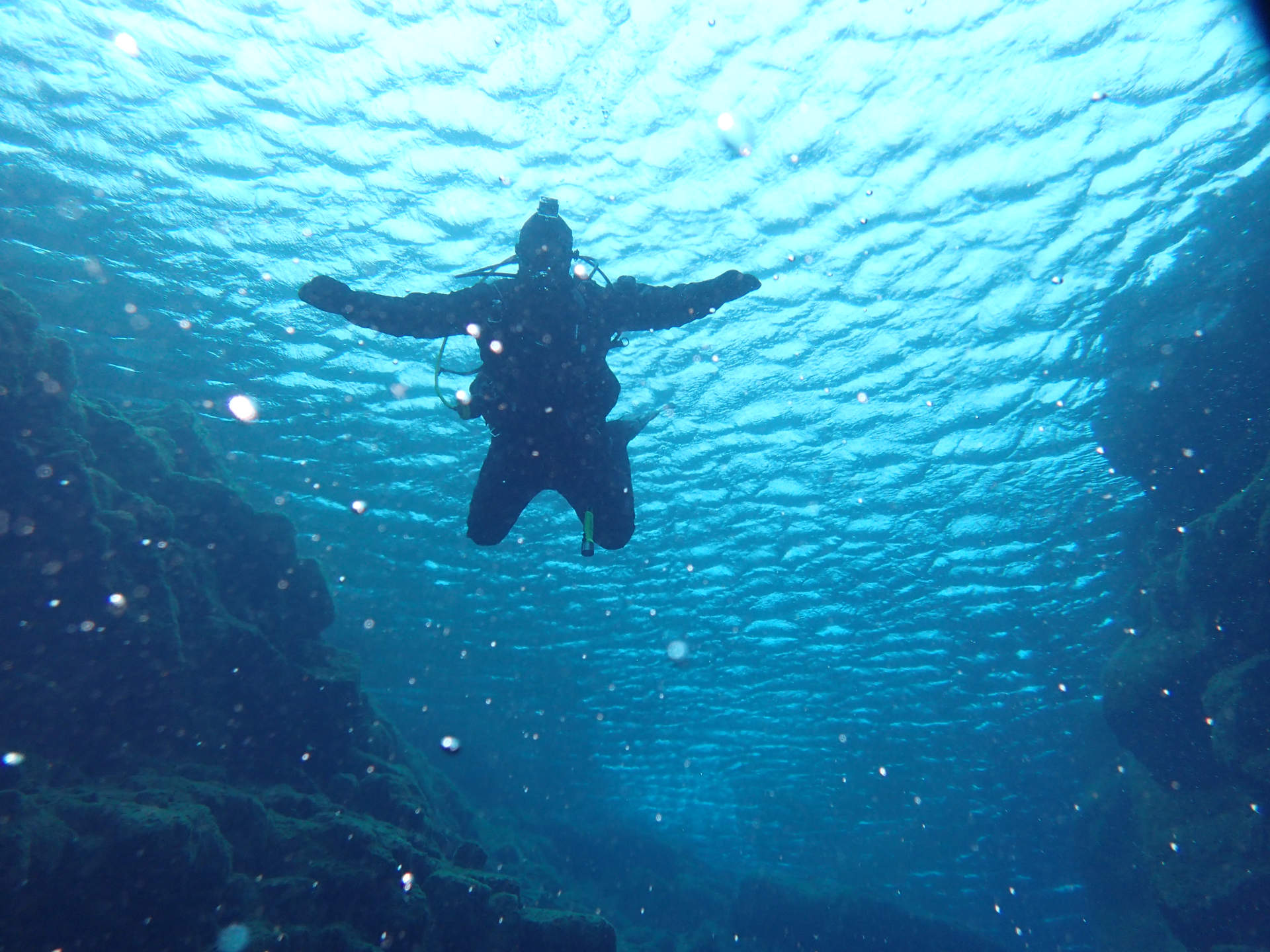
This dive site has something of a cursed place about it. Even before you take the giant stride into the water, you can feel a certain tension. It feels strange to dive here. The small pool is only a few meters long and wide, and there is no indication whatsoever that getting into the water here might be worth it. If you do it anyway, you are rewarded with a bizarre view along the rock walls down to the bottom and into the small caves at both ends of the fissure. It goes down about 20-22m to the bottom, and then you dive back and forth from one end of the fissure to the other while slowly ascending. Partly because those few meters are all you have to dive, and partly because tiny particles inevitably get stirred up, so the usual visibility of 30-40m visibly decreases until, in some spots, you can’t see anything at all.
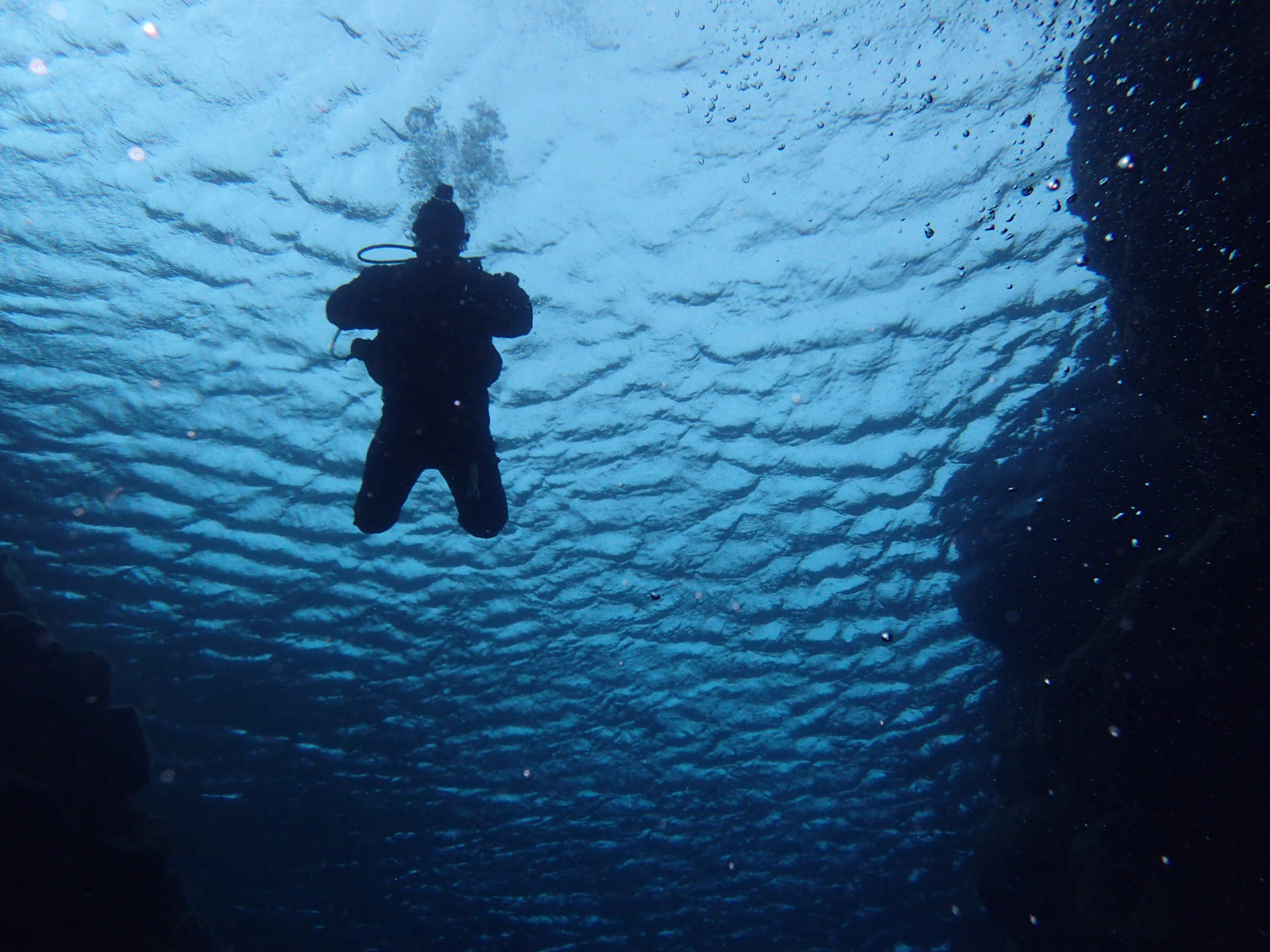
The combination of regularly well-visible halo- and thermoclines caused by the constantly mixing water gives the water an oily look, almost as if you were diving in a glass of rapeseed oil. Sometimes you can see the walls and your dive buddy crystal clear and feel like you can see endlessly far, and seconds later the clear view ends after just a few meters, or you can no longer make out objects only 2-3m away. All of this makes Bjarnagjá one of the most exciting sights in Iceland for me.
And of those there are plenty in Bjarnagjá: Even after a clean-up effort last year, the bottom is piled with scrap and leftovers from many years. A metal staircase found its way here, as did car tires, tree trunks, sneakers and a washing machine. If you’ve ever wanted to know what it feels like to dive in a garbage dump, you’ll get a pretty good idea here.
The caves of Bjarnagjá
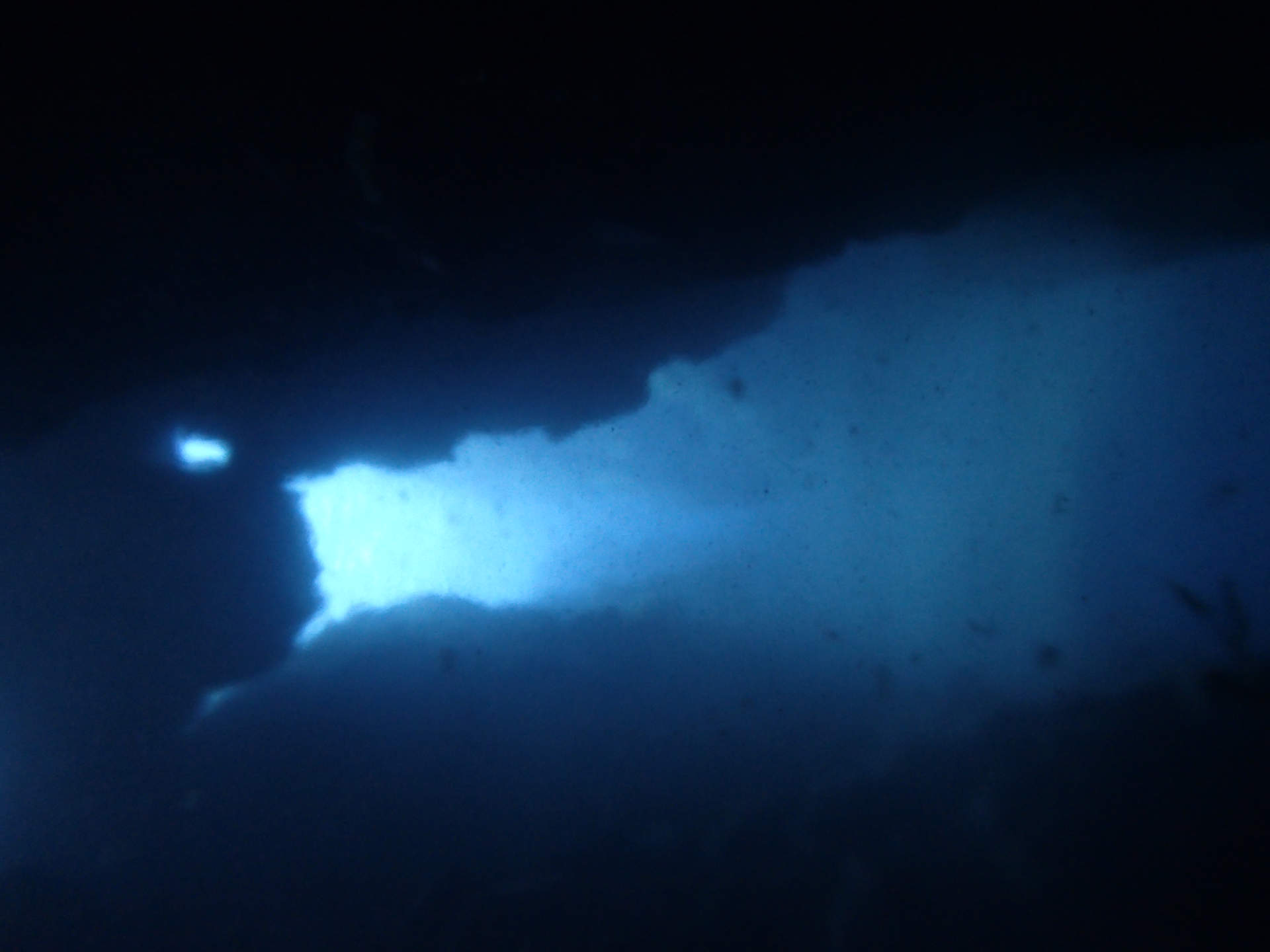
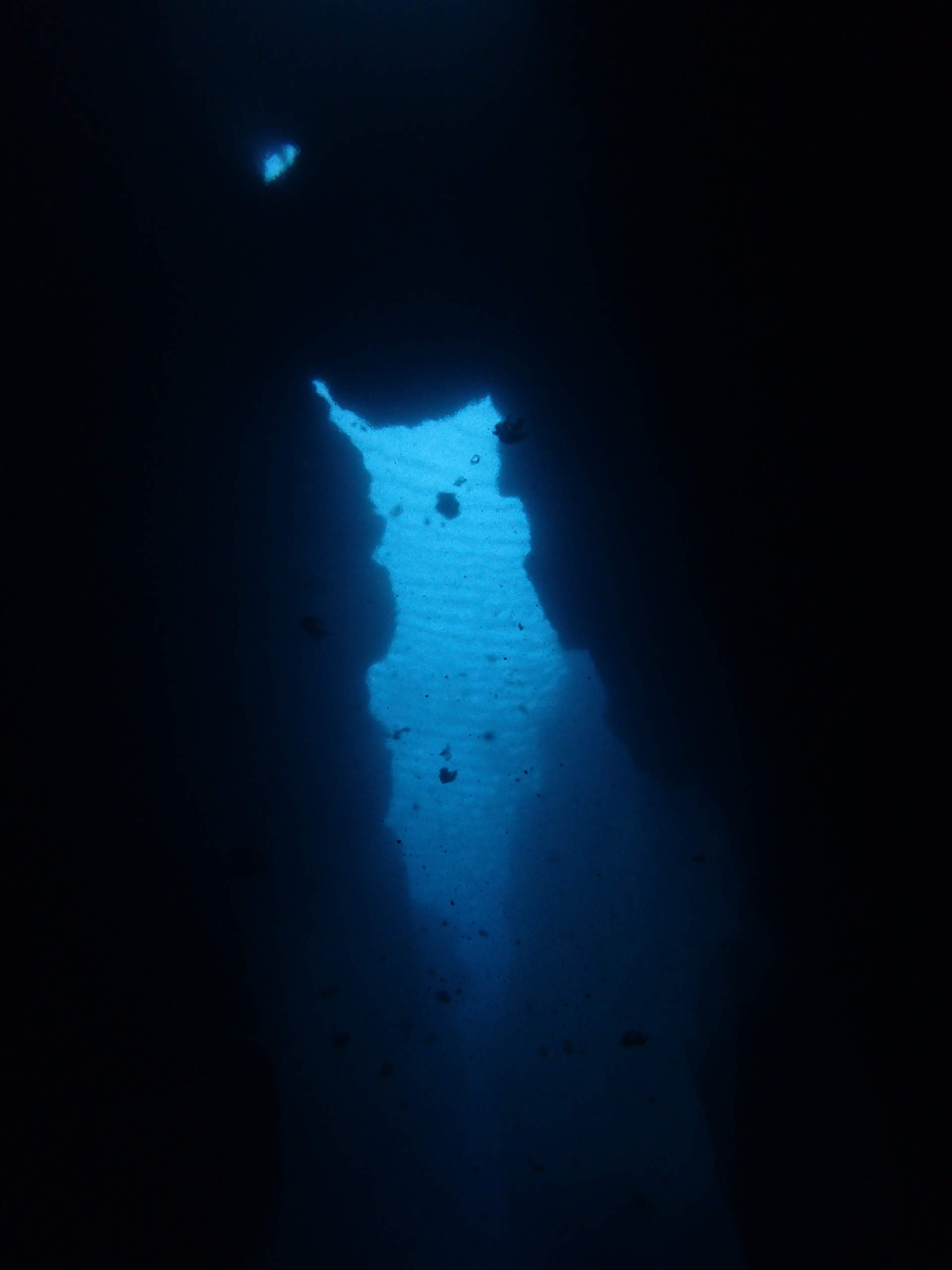
Once you arrive at the eastern end of the fissure, you’re faced with the question of whether or not you want to dive the small cave. You should only do this if you have the appropriate skills and equipment! The cave is spacious and you can comfortably enter with several people (3-4). After about 10-15m the daylight starts to fade, but even before that you should only come in here with a dive light and two backups. There is no cave line here, so you should bring one for the dive and know how to lay it. After about 30-40m the cave opens up and becomes a large, spherical rock chamber. Every now and then fish swim around in here, hiding in the corners and crevices. You can see openings in the ceiling at all times, but be aware that most of them are only a few centimeters wide. So the only way back up is through the entrance.
From here you head back west, out of the small cave and along the clay bottom toward the small recess on the opposite side. On the way you pass all kinds of junk, among other things an old washing machine resting on several layers of corrugated iron. Right next to it lie a few tree trunks and an old broom. It goes down a little deeper, and if you look up at the walls you can already see how the rising air bubbles stir up the finest particles. The visibility gets a little worse with every fin kick, which is why you start the dive at the deepest point and continue each crossing about one meter higher.
Bjarnagjá – a whale graveyard?
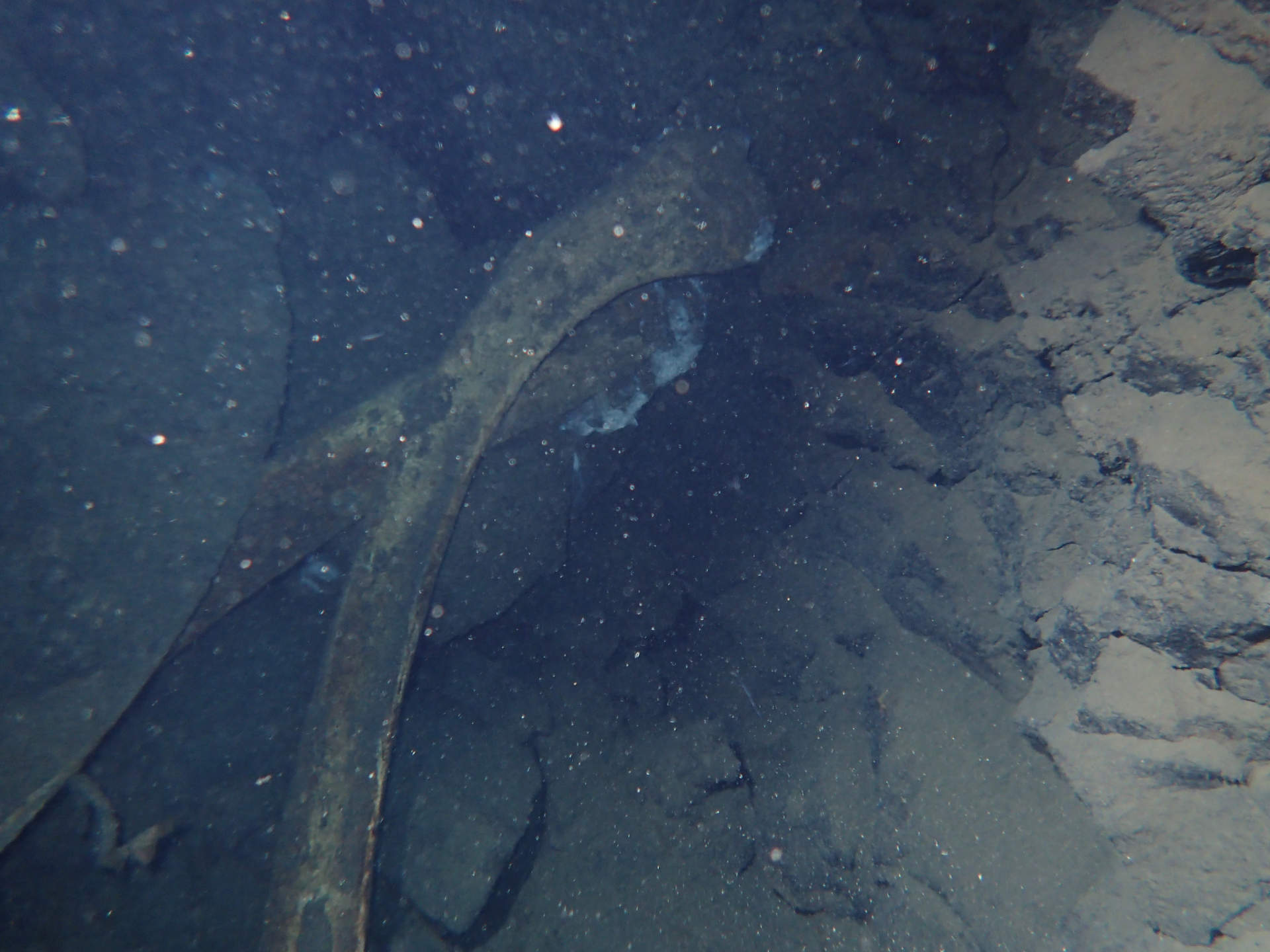
At the far end you’ll find a small recess in the wall. Old ropes hang down into it from above, so you should be very careful when diving in. Toward the back there is a tiny cave, which you can’t dive into though. But if you head down and make it all the way to the bottom, you can make another bizarre find: a rib and a few other bones of a whale lie here. How did they get here? Well, obviously no whale died in this spot — the bones were brought here by human hands. In this case as food for the crabs that sometimes stray into the fissure. They apparently like to nibble on the bones, and back in the day they were then regularly caught for dinner.
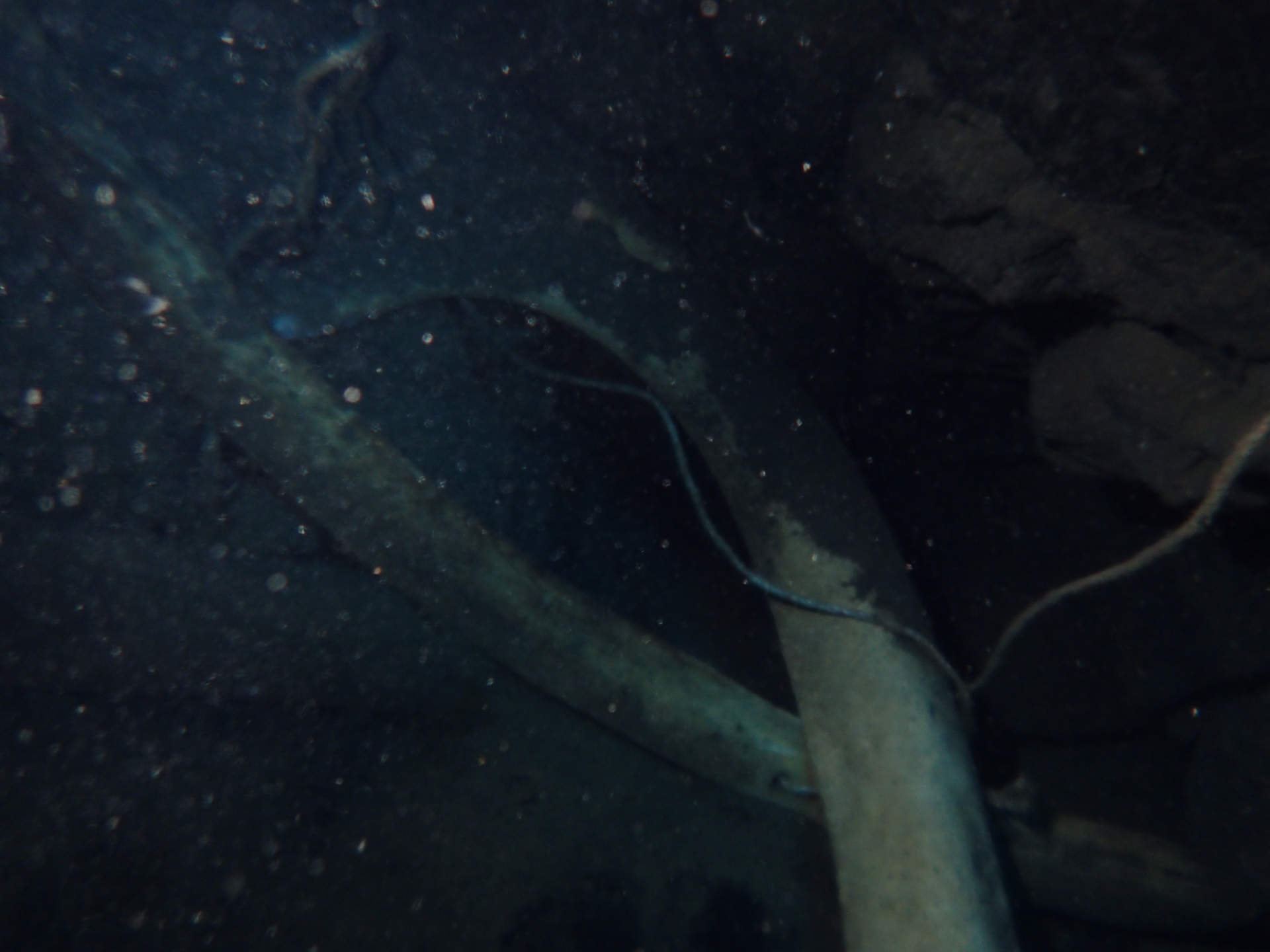
The way back takes you in the opposite direction again, and if you like you can repeat this as often as the visibility still allows for a pleasant dive. I always decided, after two full crossings at the latest, to head for the eastern end and dive around the maze-like rock formations there for a bit. You should be careful here as well, since there are a few swim throughs, some of which are really tight. Better to swim around them than to damage your equipment or even hurt yourself.
At high tide you can exit at the entry point. At low tide you should swim to the western end of the fissure and climb out over the flat rocks toward the ocean. From there it’s only a 50m detour back to the buildings. More than one dive doesn’t make sense here, so you can take off your equipment right away and get changed. For that, it makes sense to either shelter from the strong wind in the ruins or to park your car in a way that creates a windbreak.
Especially as an alternative to Gardur in bad weather, Bjarnagjá is a truly unique experience as far as dive spots go. Unusual, but definitely worth seeing!
The best dive spots in Iceland
During my three months of divemaster training in Iceland I got to see various dive sites, and here is a list of my absolute favorite dive spots:
Diving where life began: The hydrothermal vent Strýtan
Diving between the tectonic plates in Silfra, Iceland
Diving in a geothermal lake – Kleifarvatn in Iceland
Diving in the North Atlantic at Garður in Iceland
No Comments Yet