
Diving and Iceland go together like Volkswagen and Wolfsburg, or Porsche and Stuttgart. After all, the country offers everything a diver’s heart could wish for: as an island, you are literally sitting in the middle of the water — the Atlantic, to be precise. Thanks to the frequent rain and the many glaciers, there are hundreds if not thousands of small lakes, streams and rivers. The weather is… well… OK, the weather in Iceland is usually not what most divers have in mind when they think of a diving holiday. But as always, it is just a matter of equipment, and the old saying applies: there is no bad weather, only bad clothing!
In the following I want to give you an overview of the best dive spots in Iceland, introduce the local dive centers and say a few words about equipment and training.
The best places for diving in Iceland
Silfra – The fissure between the continents
The Silfra fissure is located in Thingvellir National Park and runs exactly along the rift zone between the North American and Eurasian continental plates. The water comes from meltwater of the Vatnajökull glacier, about 50km to the east, and flows through lava fields for 50 to 100 years until it reaches Silfra and flows into lake Thingvallavatn. This filtering makes the water so clear that not only can you safely drink it, it also creates visibility of well over 100m. Thanks to a constant, gentle current at a steady temperature of 3°C, the water never freezes solid and in winter it can be more than 20°C warmer than the air temperature. In summer the water can also be 20°C colder than the air temperature, although that actually happens less often than the first case.
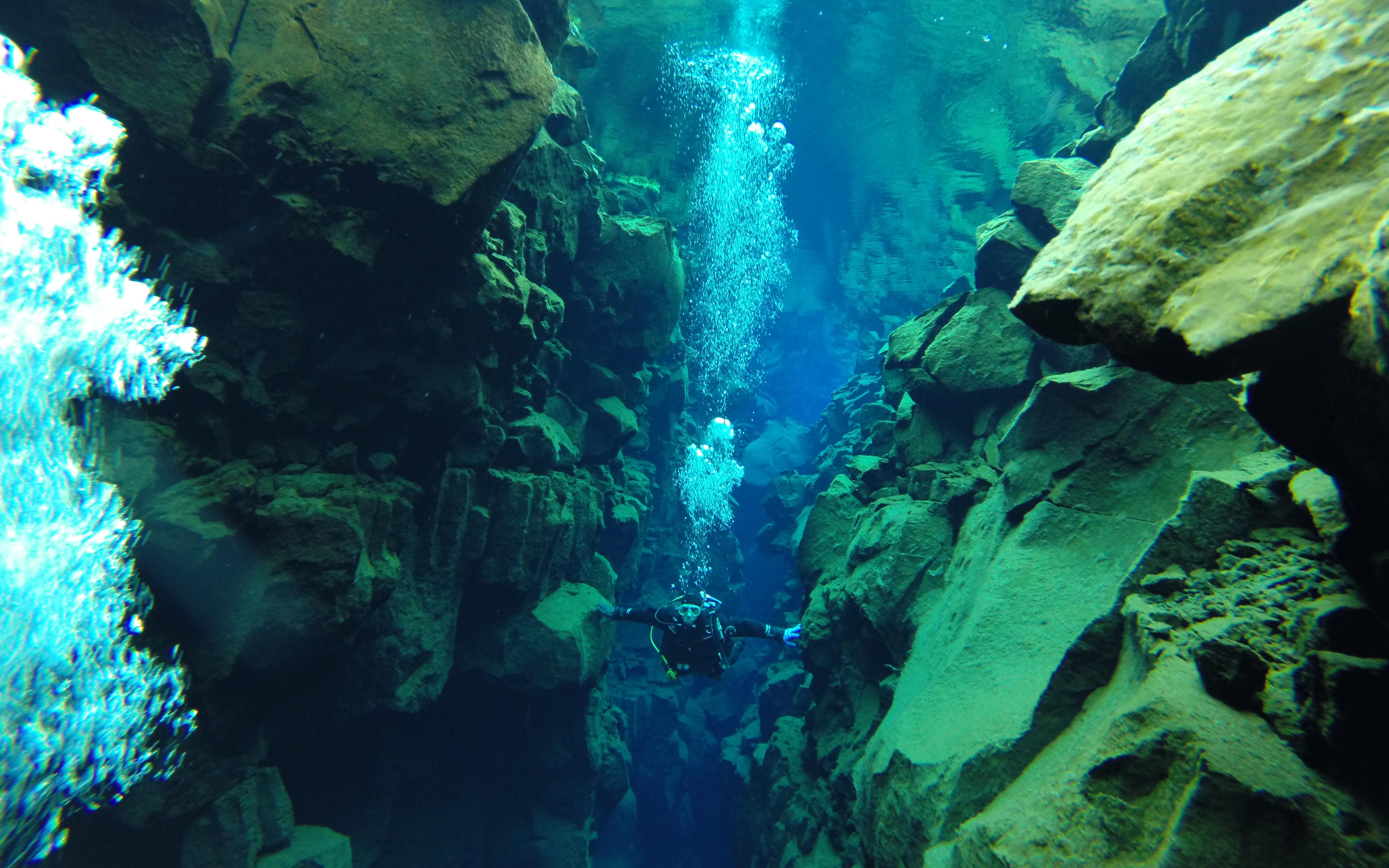
The dive takes about 35–45 minutes and leads through the four main sections: Big Crack, Silfra Hall, Silfra Cathedral and the lagoon. In the first section the rocks are still relatively narrow and you can touch both sides. In Silfra Hall the space opens up, and with plenty of sunlight streaming in you get wonderful images in that characteristic deep blue. Cathedral is the most impressive part, because there is loads of space here and you can see extremely far. Every now and then you will have snorkelers above you, casting shadows onto the bottom 16m below. The dive ends in the lagoon, at a depth of about 4–5m with a very fine floor. Great visibility is possible here too, but the mood is completely different, as the bright sand now dominates instead of the rock bathed in blue.
Silfra is certainly the highlight of any diving trip to Iceland and definitely always worth a visit. There are all kinds of tours for diving or snorkeling in Silfra.
Strytan – Hydrothermal vents in the north
In a small fjord near Akureyri, Erlendur Bogason one day made the discovery of his life. During a dive he noticed a rock formation, and on closer inspection he realized that hot water was escaping from the rock in several places. A hydrothermal vent, of the kind otherwise only found at depths of thousands of meters, right on his doorstep. Together with the local university he solved one mystery after another and by now knows the vents like the back of his hand.
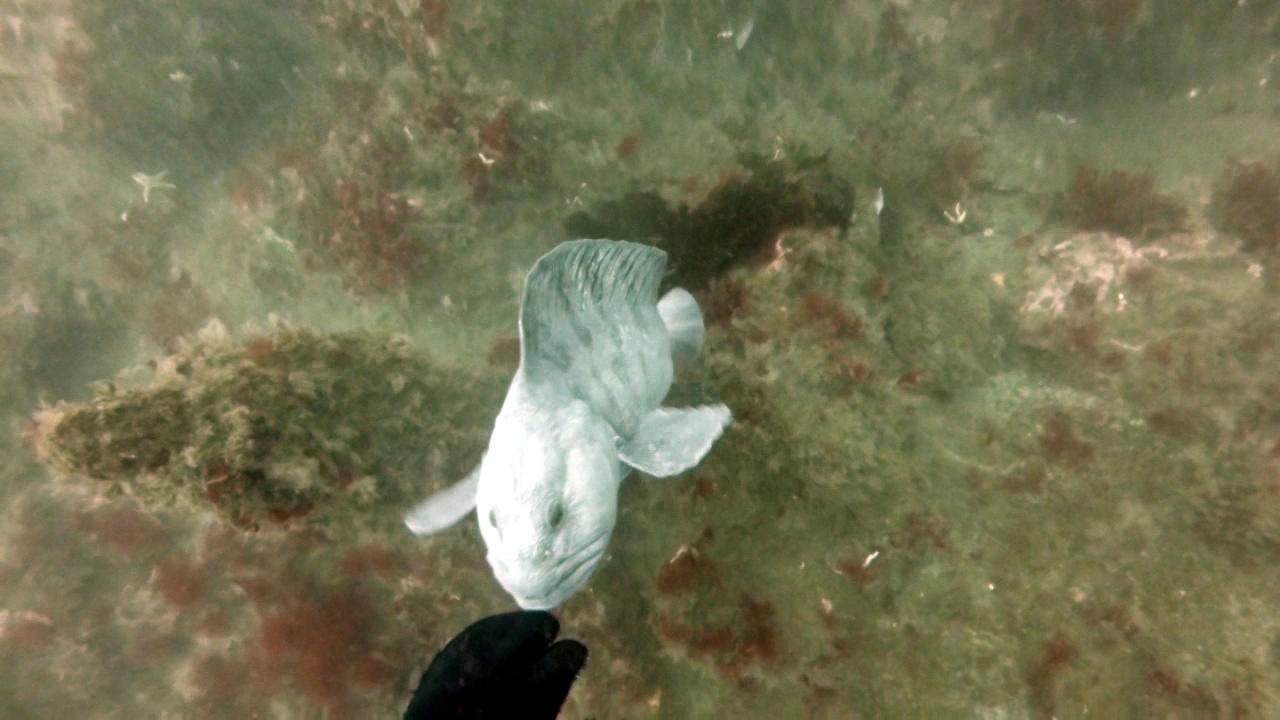
The smaller of the two rocks lies at a depth of about 20m and is home to Stefania, a wolffish who always waits at the end of the line for Erlendur when he comes by for a dive. Mostly, no doubt, because of the mussels he regularly brings along. But Stefania is generally very tame and usually accompanies the divers on their tour. She even likes having her belly stroked.
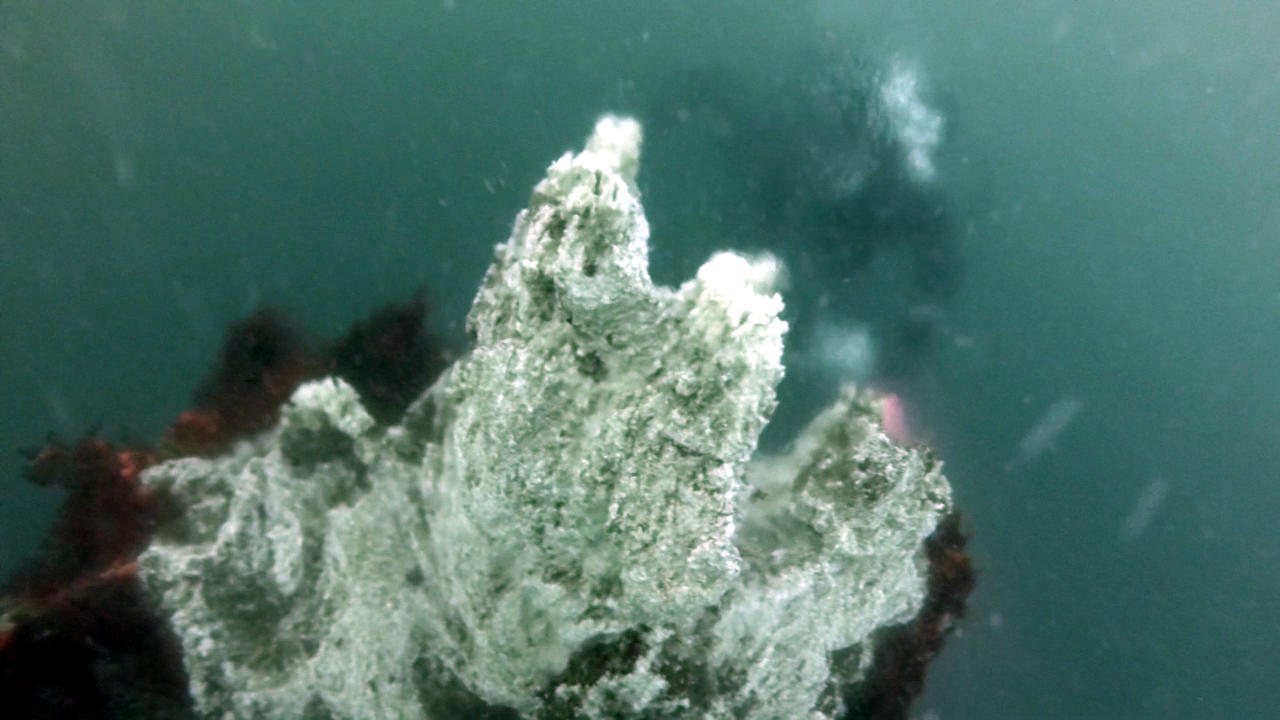
The big Strytan rises more than 50m up from the seabed at a depth of 70m. The dive usually starts at about 30–35m and from there leads in circles up to the top. Then you descend again and follow the boat line back to the surface. You only realize the massive size of this rock as you descend, and even then you have only seen the upper half. Small fish often gather around the hot vents here, and the rock is covered with plants and small crustaceans.
You will also regularly find whales in the fjord, so it is worth looking up every now and then to see whether one is swimming right above you. You can book at the Divecenter Strytan — say hi from me 🙂
Davidsgja – Diving in Iceland’s largest lake
In Thingvallavatn, Iceland’s largest natural lake, in Thingvellir National Park, you will find the Davidsgja fissure. A rock fissure similar to the one in Silfra, but this one lies in the middle of the lake, at a depth of about 4–5m. Here you often get the effect that the water in the lake only allows very limited visibility, often less than 5m, while inside the fissure itself you get visibility of 30m and more. That is because the cold glacial water, which also fills this fissure, stays at the bottom and does not mix with the warmer water of the lake.
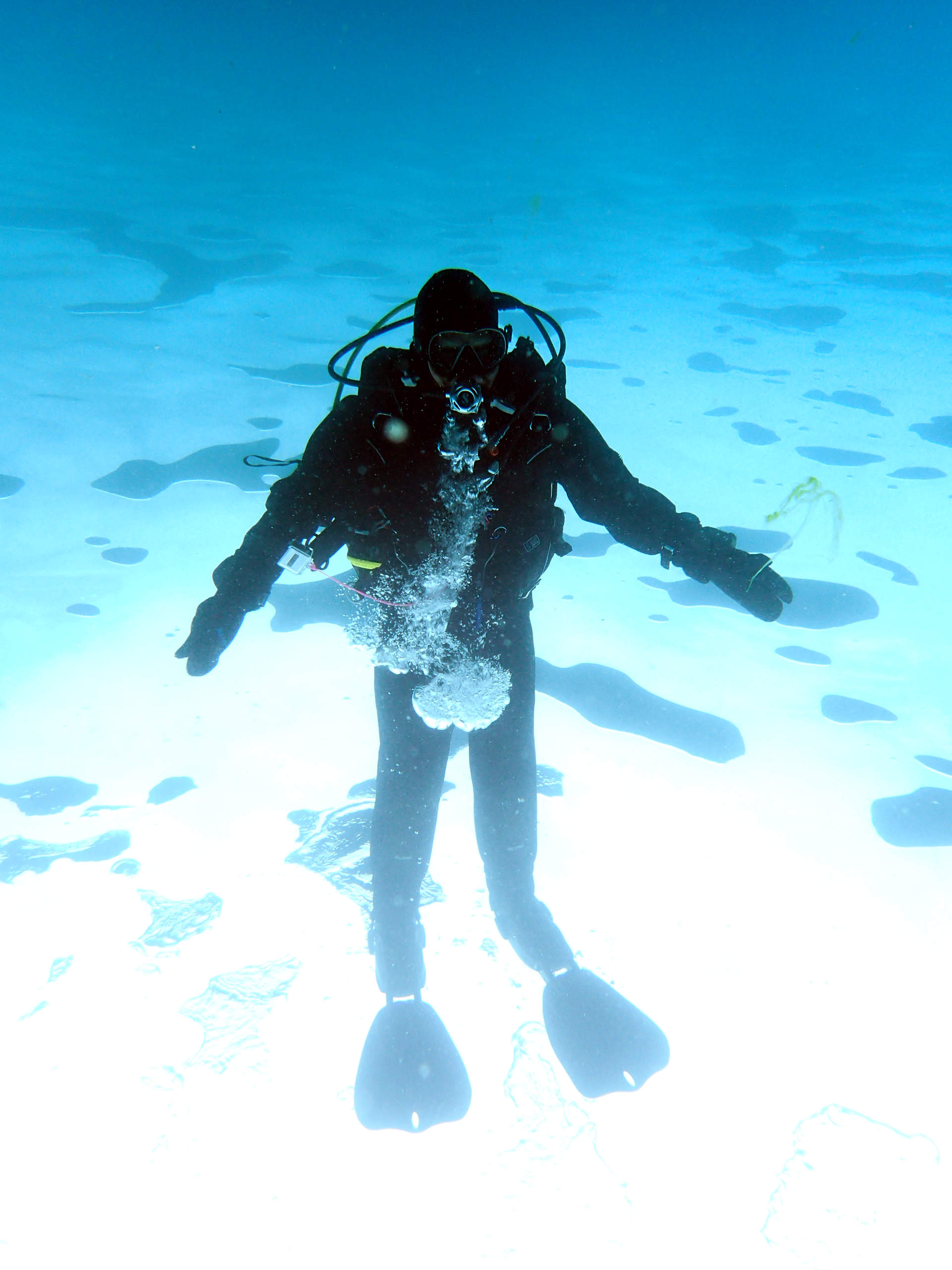
Compared to Silfra you will find mainly more algae here and occasionally larger fish. On the bottom you often still find things people have left behind: bottles, other rubbish and above all fishing gear. This spot is especially promising in winter — when the frozen lake starts to thaw again and you catch the right moment, you can dive along the edge of the ice and enjoy the unique atmosphere that comes with it.
Bjarnagja – The bear gorge in the south
Bjarnagja is probably the most bizarre dive site I have seen so far, and for me it compares to nothing else I have ever seen. The small rock fissure in the south of the island stretches over a length of about 30–40m and a width of only 5–10m. At each end there is a small and a large cave, and in between you find all kinds of junk. From sneakers to an old broom, from an old steel staircase to a washing machine, all sorts of bizarre objects lie here, tempting you to explore.
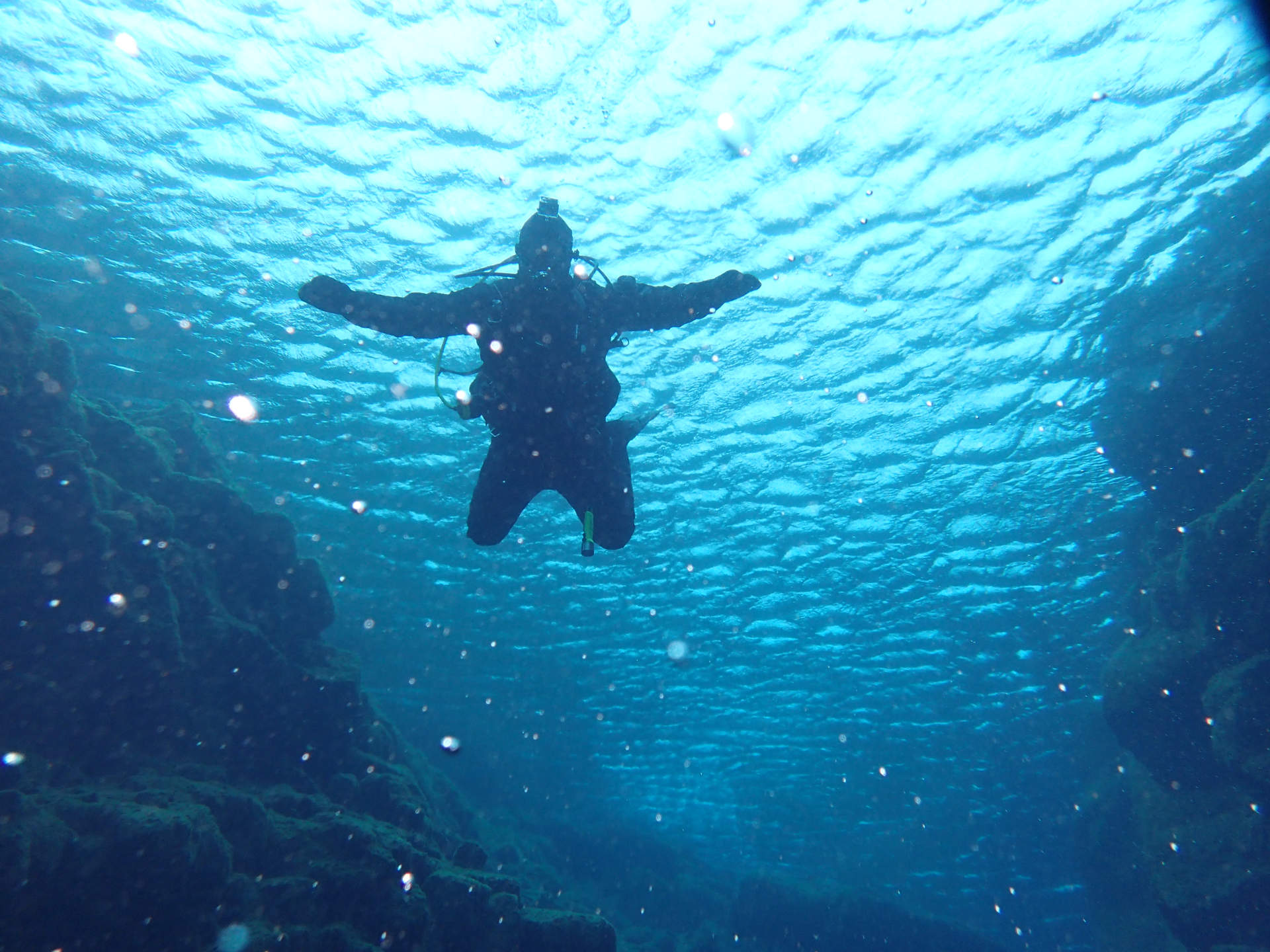
On the abandoned site you will find two buildings, or rather their foundations, lots of washed-up tree trunks and a few empty shotgun shells from clay pigeon shooting. After entering the water you sink to a depth of about 20m and can then swim from the east end to the west end and back. At the east end there is a large cave, which is safe to dive for a few meters even for beginners. After about 10m the cave narrows, and from this point on it should absolutely not be dived without proper training. At the west end there is a small recess in the rock. The whale bones inside it will make your hair stand on end, and the ropes hanging down from the rock face raise the goosebump factor even further.
Gardur – Diving in the Atlantic
The most popular spot for ocean diving near Reykjavík is Gardur. About an hour’s drive south of the capital, this small town has a small pier with an adjacent shore entry. Whether you can dive here depends above all on the wind, which very often ruins your plans. If conditions are good, you get a wonderful environment with lots of kelp, plenty of fish such as flounders and sometimes even wolffish. You will also find various kinds of nudibranchs, crabs and other crustaceans here.
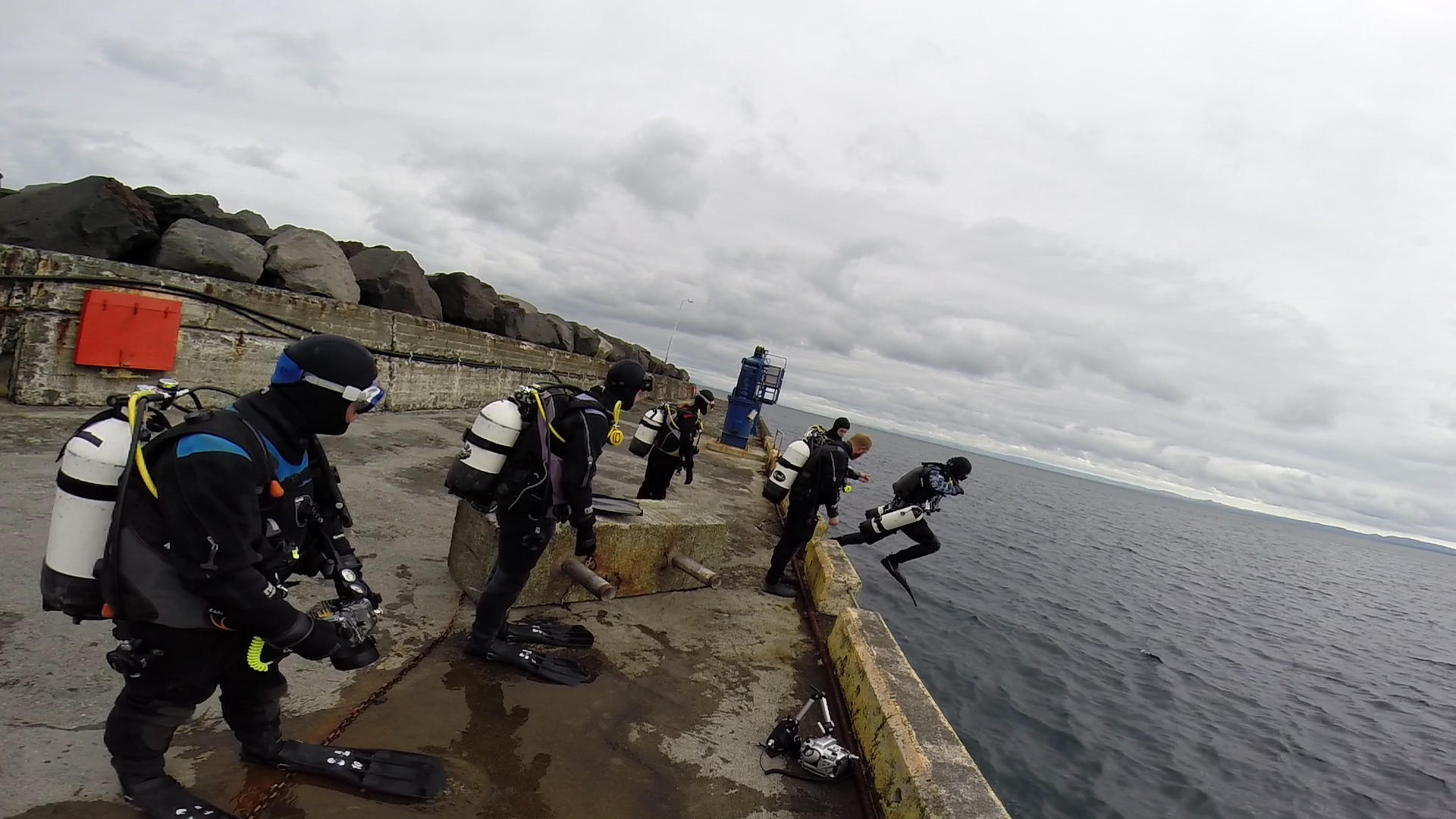
There are also lots of fishing lines lying around here, and it is very easy to get tangled up in them. So it is a good idea to carry a knife or a pair of scissors. Even if there is a guide with you who should be equipped with one, it is always good to be able to help yourself.
Kleifarvatn – Diving in a glass of champagne
About halfway between Reykjavík and Gardur lies lake Kleifarvatn, which borders the high-temperature area of Krysuvik. A few years ago an interesting discovery was made here. In some places in the lake, from a depth of about 10m, there is strong geothermal activity, so small and sometimes larger air bubbles regularly rise up from the sandy bottom.
The lake in general is always in motion and keeps sinking, so every dive here should be one of a kind. Nobody is quite sure where the water disappears to, but in some years the lake level drops by several meters. In winter Kleifarvatn is usually covered by a thick layer of ice, so diving here mostly happens in summer.
El Grillo – The wreck of a tanker in the east
On the east side of the island you will also find the final building block of a great diving destination: a shipwreck. On the opposite side from Reykjavík, in a small fjord, lies the wreck of the tanker ‘El Grillo’, which was sunk here during the Second World War. The ship rests on the bottom at 45m, but the first parts can already be seen on a dive to 30m. So this dive is not for beginners
The best operators for diving in Iceland
There are various providers of dives in Iceland, in particular a lot of resellers who basically just add the dive centers’ services to their tourism programs. Here you can see a list of the three biggest dive centers.
Dive.IS
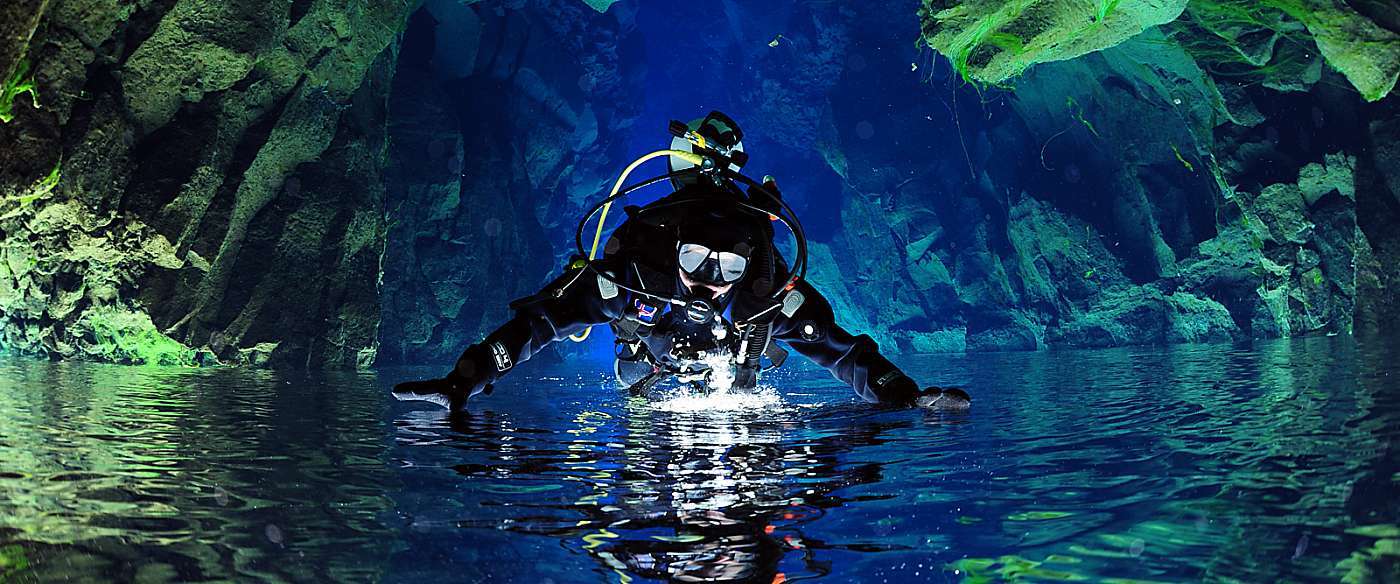
Dive.IS is by far the biggest provider of diving tours in Iceland. The team consists of several dozen employees, there are hundreds of equipment sets, and many of the guides are true veterans of the diving business.
I did my Divemaster here in January 2015, but I was also there as a customer in September 2014. So I can confirm from both a customer’s and an internal perspective that Dive.IS is very customer-focused and thorough. A clear recommendation from me.
Magmadive
Another provider is Magmadive. This somewhat smaller team has apparently specialized in exclusive tours and tends to guide customers in small groups and away from the rush hour through Silfra and other dive sites. I often talked to these colleagues while I was working in Silfra, and I can well imagine that as a diver you are in very good hands here. Perhaps an especially good recommendation if you are traveling with special equipment (rebreather or sidemount).
Scuba.IS
The third of the bunch is Scuba.IS. Also a larger provider and likewise specialized in diving and snorkeling tours in Silfra. I also met these colleagues regularly in Silfra, and there was never anything to complain about here either.
Coldwater diving – Equipment and tips
If you come from Germany and got your diving certification there, cold water diving is nothing new to you. If you learned in a drysuit, you will feel right at home. In Iceland, diving is done exclusively dry, apart from a few crazy freedivers. Suits are provided by the operators; if you have your own and want to bring it, you can, and you usually get a few € off the price of the dive.
Dry gloves are generally not used here, because at 3°C they simply get too cold. Instead, extremely thick neoprene gloves are used, in which the thumb and index finger go in separately and the other fingers go into the glove together. A bit like an oven mitt. These restrict your movement so much that, if you are not used to them, you cannot do anything by yourself once the gloves are on. But the guides are happy to help you.
Under the drysuit you wear a kind of racing overall made of thick, insulating material. It keeps you nicely warm, and most people find it cozy even in the water. You will only get cold on your hands and face.
A few small tips for your comfort: when you get into the water, water naturally enters the gloves and it gets cold. But you want to keep this water inside the glove and not let any new water in. So from this point on, it is best to keep your hands extremely still so no new water gets in.
Under the overall you should wear only a very thin layer of thermal underwear — no cotton, let alone jeans & sweaters.
Only on your feet can you almost not have enough layers: 2 or even 3 layers of socks are actually a good idea. On cold days I wore thin sports socks, thick wool socks and slippers on top. Cozy!
Individual diving trips to Iceland
If you are coming to Iceland just for the diving, you might consider an individual diving trip. Feel free to contact me about this — I am happy to give you a few tips on where and how to book, which route to drive by car if applicable, and what else you need to keep in mind.
Organizations and certifications
In Iceland, training is mostly done through PADI, and most guides are PADI Open Water Scuba Instructors or, more rarely, PADI Divemasters.
I would rather advise against getting your diving certification in Iceland if you are not 100% sure that diving is for you, or if you are unsure whether the environment is right for you. The temperatures in Iceland are often a challenge even for seasoned divers, and even naturally well-padded divers often wanted to do only one dive instead of two. Apart from that, the certification here is very expensive compared to places like Spain or Italy.
If you are sure, though, in Iceland you will certainly get one of the best trainings you can receive in scuba diving.
A sensible certification is the drysuit specialty. If you have never dived in a drysuit and are booking a longer tour, you should complete this course beforehand. For a single dive in Silfra it is not necessary; for a multi-day tour it absolutely is.
Update 2017: For diving in Silfra, a Drysuit Speciality or proof of at least 10 drysuit dives is now required.
[…] Ambitious. If that were true, the photos from Silfra would look strikingly different every year. They don’t. I worked there for three months and heard […]
[…] you’re here, you should drop in at Dive.IS and find out about diving in Iceland. The tour operator offers diving and snorkelling tours in Iceland, especially to the world-famous […]
[…] men shiver at Silfra! Anyone who still has enough motivation at sub-zero air temperatures to go diving in Iceland is a true adventurer. If you don’t have a diving licence, you can also go […]