
The Lava Center in Iceland tells the story of the youngest landmass in the world, at least of this size. It only came into being around 15 million years ago, when the North American and Eurasian continental plates began drifting apart. The island is covered with volcanoes and geothermal areas, and magma regularly finds its way back to the surface.
In 2010, Eyjafjallajökull hurled tons of ash into European airspace and paralyzed air traffic worldwide — which, ironically, would push tourism (and air traffic) in Iceland to whole new dimensions in the years that followed.
Reason enough to educate people about volcanoes right in its neighborhood, someone thought, and so the first Lava Center in Iceland was built in the little town of Hvolsvöllur, at the foot of Eyjafjallajökull. Here you can learn everything about Iceland’s wild underground, volcanoes and their eruptions, earthquakes and geology.
The exhibition on the south coast, in Hvolsvöllur right on the Ring Road
In the summer of 2017 the first Lava Center in Iceland opened its doors (homepage) and has been welcoming plenty of visitors traveling along the Ring Road ever since. It is ideally located in the small town of Hvolsvöllur, right on the Ring Road. A perfect stopover that is really worth it.
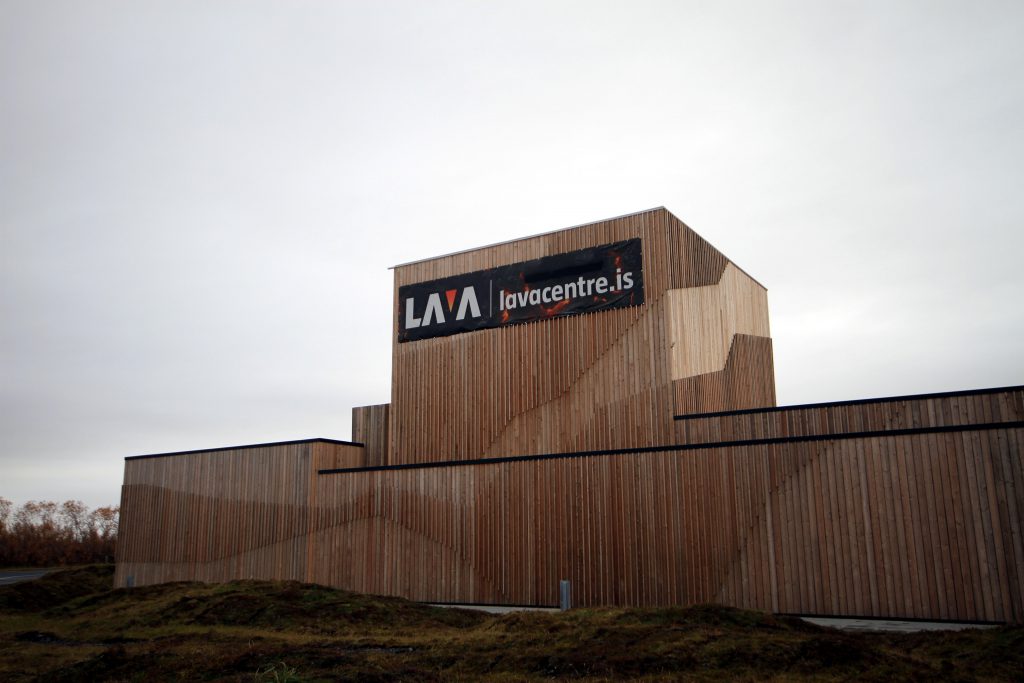
I visited in October 2017, passing through on my way to the Westman Islands. I got up an hour earlier for it, because I wanted to be there as early as possible. That paid off: I was the first visitor and had the whole exhibition to myself for a while. Later I learned that this wasn’t even necessary: visitors are apparently guided through the exhibition in groups, which keeps the groups in each area small — a clever concept.
So let’s take a closer look at the individual areas…
The corridor of volcanoes
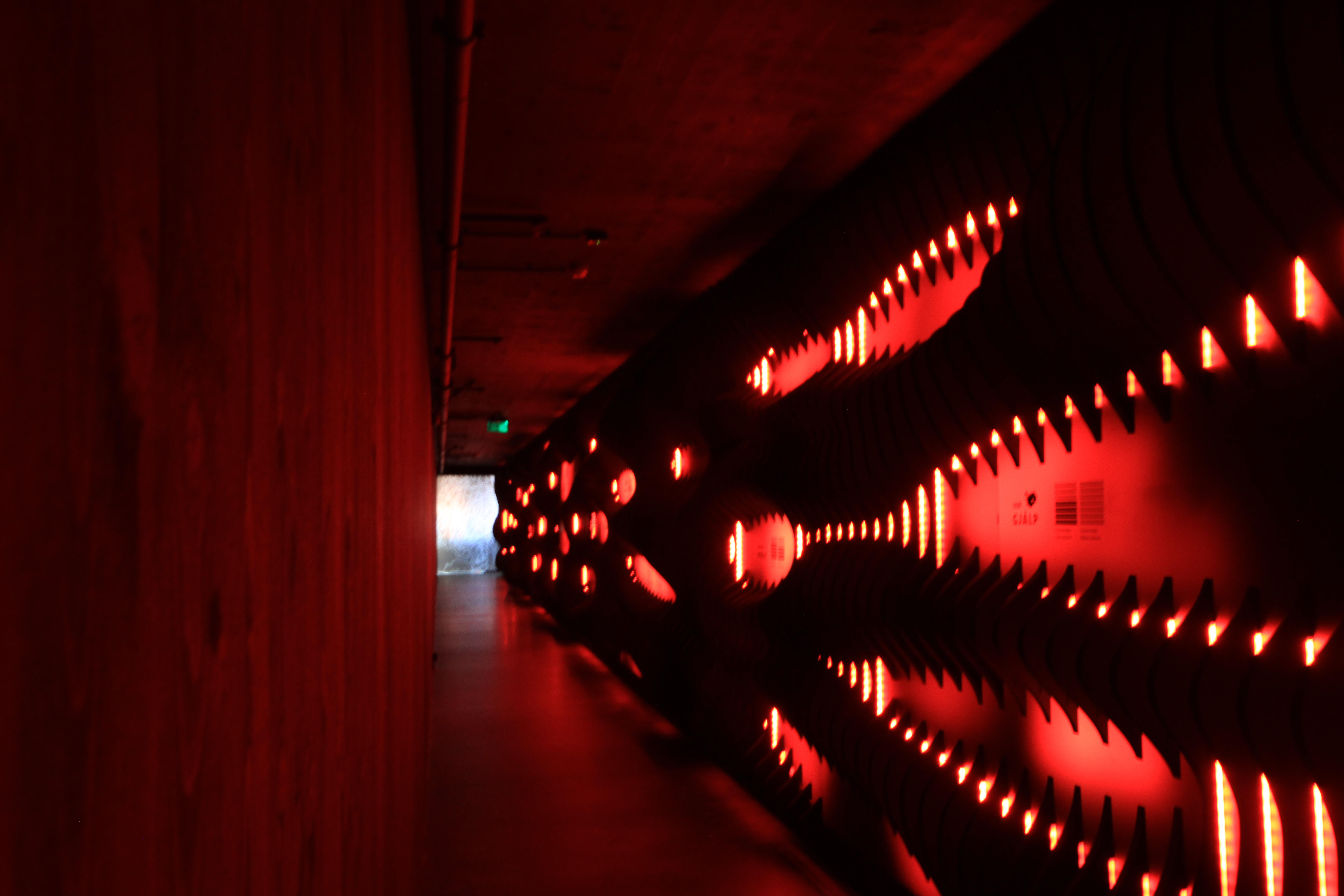
In the entrance area there is a long, wonderfully lit corridor that makes you feel like you are diving into a volcanic system. Colors, light and the soundscape draw you in immediately and let your imagination run free. On the left wall, all eruptions since 1900 are listed and categorized by their size. You will be surprised how many eruptions there actually were in such a short time!
The formation and growth of Iceland
In the second area you will see a half dome on the floor, illuminated from above by a projector. You see Iceland over the course of the years and can follow how the island was formed and how it is still growing today.
Experience what an earthquake feels like
In this small corridor you get to experience what an earthquake feels like. Plates embedded in the floor move against each other and give you a proper shaking. The soundscape does the rest.
The mantle plume
In this room you stand in front of a huge, black and red column of molten rock. Well, a replica of one at least. These so-called mantle plumes exist all over the world and form a direct channel between the earth’s surface and the earth’s core. Where they reach the earth’s crust, volcanoes and geothermal areas emerge, like everywhere in Iceland. Other well-known places include Yellowstone National Park in the USA, the Azores and the Eifel region in Germany.
The sound of magma
Molten rock is called magma as long as it is still below the earth’s surface. This corridor is designed to make you feel as if you were inside such a flow of magma.
Introduction to volcanology
In this room you get an overview of volcanic and geological processes. Each station explains and visualizes a specific process. You can control the timeline manually with your finger, which makes it easy to picture what is being explained. Many of the topics also come with matching rock samples. It’s worth taking a closer look here if you are heading into a volcanic area afterwards — a lava field, for example, like the ones on the Westman Islands.
The walk through the ash
This corridor simulates the ash rain during or after a volcanic eruption. Fog and ultrasound take away your sight and you can only feel your way along the walls in the (hopefully) right direction. A strange feeling!
The hall of volcanoes
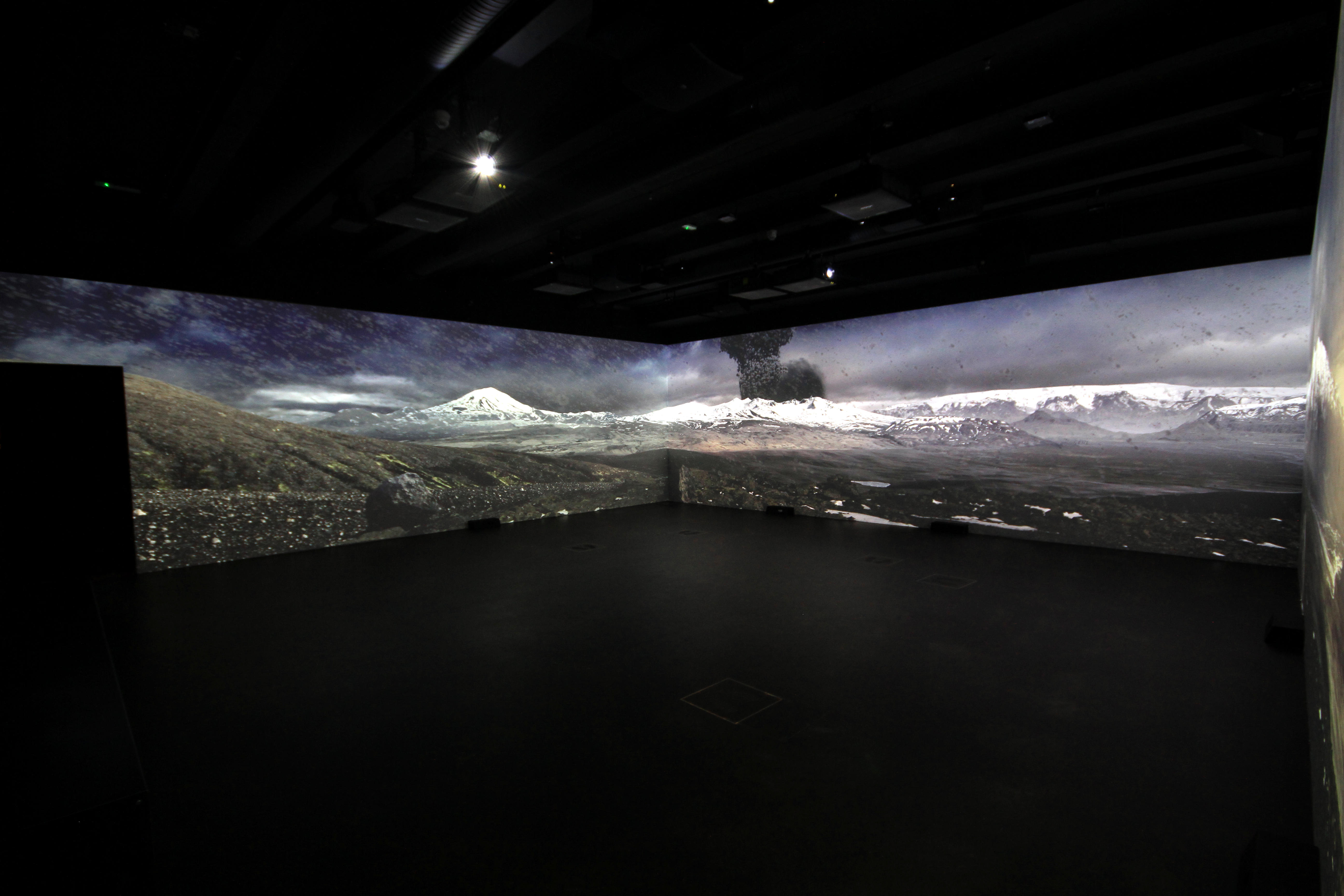
In this large hall, a giant panorama of Iceland is projected onto three of the four walls, showing the island’s biggest volcanoes: Hengill, Hekla, Katla and of course Eyjafjallajökull.
The cinema
At the end of the exhibition, the cinema awaits you, where a roughly 20-minute documentary about volcanic eruptions is shown. There is little narration — you can just lean back and let the images sink in.
How to get to the Lava Center in Iceland
The Lava Center sits directly on the Ring Road (1), just before the small town of Hvolsvöllur. It’s a perfect stop if you are on a tour along the south coast, for example on your way to the waterfalls Seljalandsfoss and Skogafoss or to the glacial lagoon Jökulsárlón. I would recommend getting here as early as possible, ideally right when it opens at 9 am: with a bit of luck you will beat the tour buses — one of the big advantages of exploring Iceland with a rental car.
Lava Center in Iceland: my verdict
The Lava Center is one of the best exhibitions in Iceland I know. Above all, the brilliantly produced multimedia exhibition got to me on an emotional level: you get a genuinely uneasy feeling in the glowing red corridors, and at times the soundscape makes your hair stand on end. The animations are first-class, the video presentations are wonderfully put together and neither too long nor too short.
I am very impatient and usually rush through exhibitions rather quickly — this was no different here. But I never felt like I was missing something. Still, an audio guide would have been a nice little bonus.
All in all a truly recommendable museum — I can wholeheartedly recommend a visit.
Have fun in Iceland!
No Comments Yet