
A road trip around Iceland — I assume you want to know more about exactly that, because that is probably how you ended up here? Great: Without beating around the bush, I want to give you everything you need to plan your perfect trip around Iceland!
Driving once around Iceland is always a good idea. There is not a lot, but there are a few important things to keep in mind. Especially if you want to do an independent round trip — meaning you pick your route, your accommodation and the sights yourself, entirely according to your own wishes. Your budget is an important factor too, because Iceland is an expensive country to travel in: We will show you where and how you can travel on a budget. We will also show you the best time of year for a trip around Iceland and give you tips for stays of different lengths, whether 5 days, 10 days, 14 days or several weeks.
Sounds good? Then let’s get started!
Iceland Ring Road Trip: General Information & Tips
Before you plan your Iceland trip in detail, we would like to give you a general overview of the country and, starting from that, split the planning into several different aspects.
Iceland is relatively cold, relatively expensive and has some pretty spectacular nature to offer: If you do not mind the cold, your budget allows it and you love nature, you are exactly right here. We will go into each of these points in detail, so if one of them sets off your inner alarm bell: Read the relevant information carefully — I hope our tips will help you.
Package Tour or Independent Trip Around Iceland?
The crucial question: Do I book a package tour to Iceland, do I put my adventure together independently, or is there perhaps a compromise?
Everyone has to answer that for themselves, but of course we want to try to make the decision easier for you. The advantages of a package tour are fairly obvious: All the work lies with the tour operator. Logistics, planning and support come from a single source and you usually have to take care of little to nothing. If you work full-time and simply want to switch off during your vacation in Iceland, this is a good choice. The downside is a rather tight straitjacket: Staying one more night in a place you love is not possible, and neither is extending or shortening a day trip. That said, these tours are also well suited for a first impression, and you may well return home hungry for more exploring.
At the complete opposite end stands the independent trip: From the flight to the rental car to the accommodation, you have to research, book and plan everything yourself. In return, you get to decide the route, how long you stay where, and much more, entirely on your own. So far I have always traveled Iceland this way, and that comes down to my personal need for freedom. But I have also cursed more than once, standing in front of the second or even third guesthouse and having to move on because it was fully booked. If you are coming to Iceland for a repeat visit, have perhaps already studied the country in depth and / or are simply an experienced traveler, your chances of being happy with this option are good.
A compromise was recently pointed out to me by a reader: self-drive package tours in Iceland. Here you get a bundle of flights, rental car and accommodation (which you can partly mix and match yourself), giving you a bit more freedom in choosing the building blocks: You can, for example, spend as long at a waterfall during the day as you like, and you are free to choose the route from one accommodation to the next. A big advantage of these trips can be the price: Tour operators usually get significantly better rates from hotels and car rental companies, which they can pass on to their customers. You should also factor in your own research and planning time, and with that in mind, this form of trip around Iceland could be a great option even for long-time Iceland fans.
The Best Season for a Trip Around Iceland
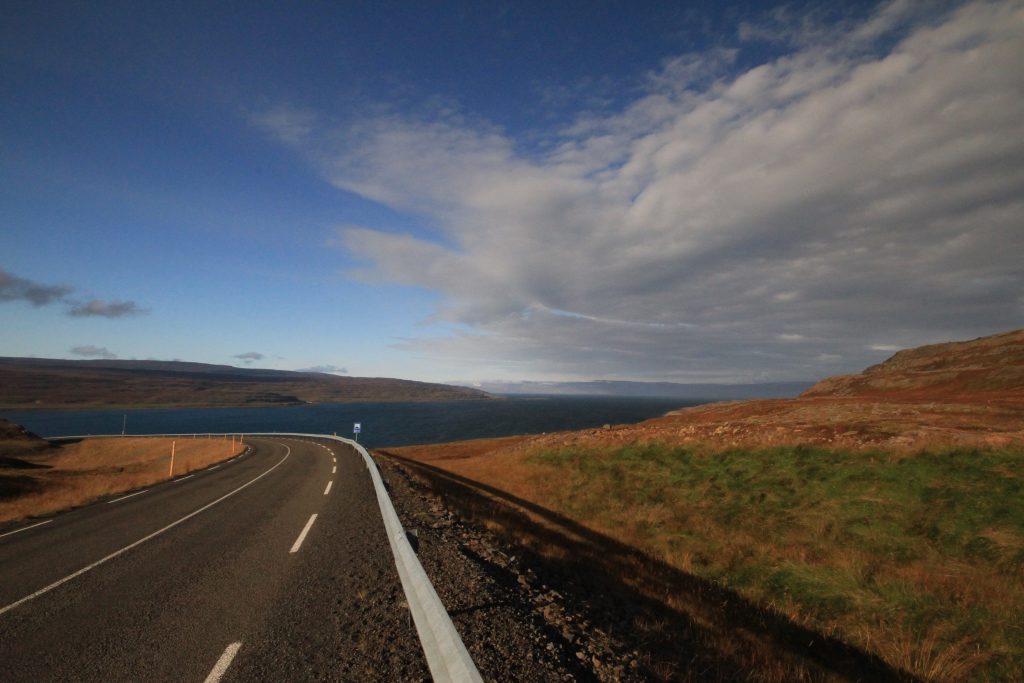
So when is the best time to travel to Iceland: In winter, for the northern lights and ice caves? Or rather in summer, to see the midnight sun and the wonderful colors of the highlands?
And what about the shoulder season for a trip around Iceland?
Driving Around Iceland in Winter: A No-Go?
Many people want to see the northern lights. Understandable! For that you have to come to Iceland in winter, no way around it. But does it also have to be a full trip around the island?
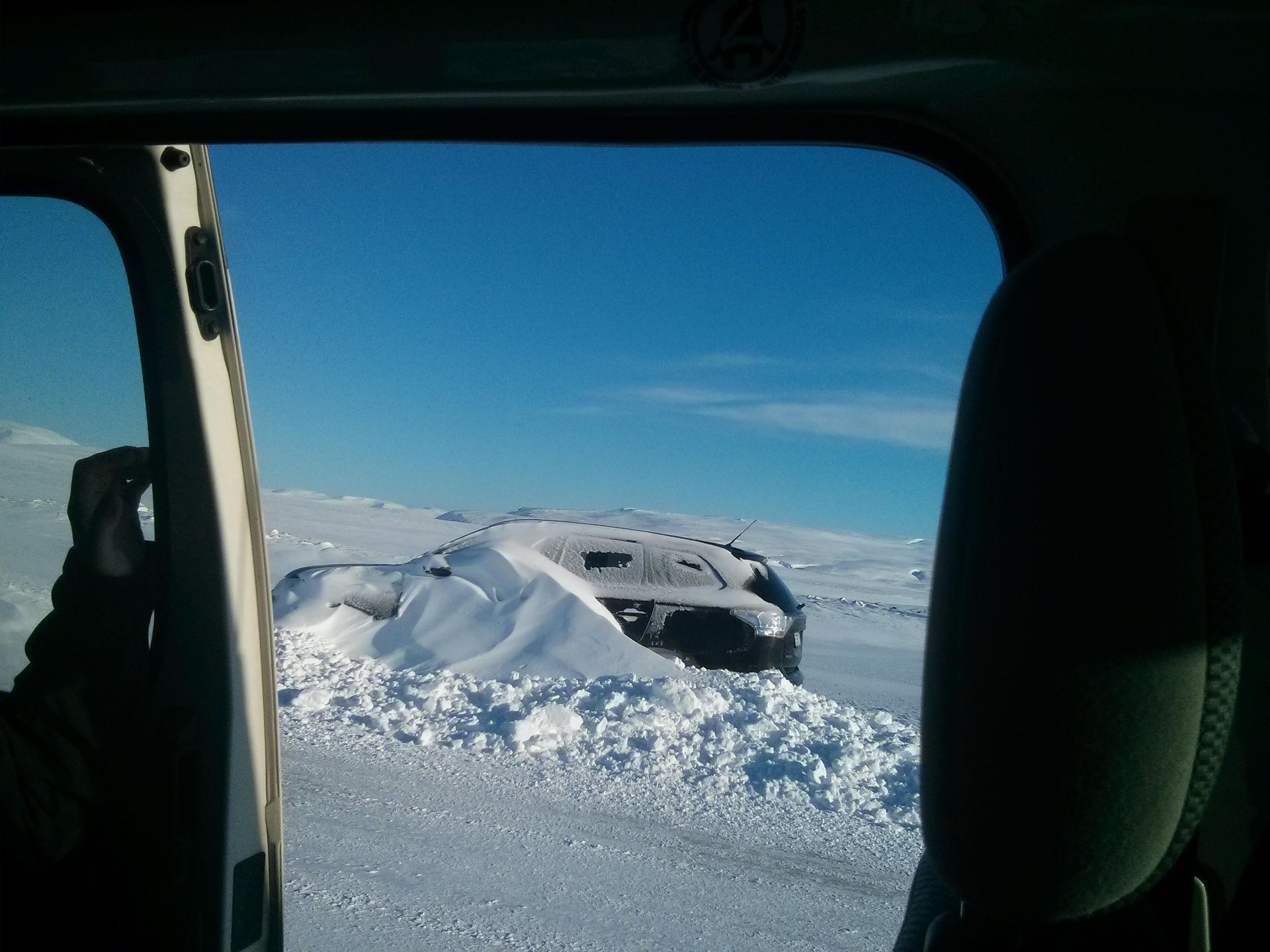
We want to be careful here and say: It does not have to be — please think carefully about whether you want to attempt a round trip through Iceland in winter or not. Winter conditions on this Atlantic island are barely comparable to those in central Europe. Complete weather changes within a few hours are not uncommon, nor are meter-high snowdrifts or heavy storms. Even if you are good at driving on snow, Iceland could quickly show you your limits here. That can get unpleasant and expensive.
So is a trip around Iceland in winter a no-go? Not necessarily: If you bring plenty of experience, time and the right vehicle, you can have fantastic trips in Iceland in winter too (or perhaps especially then). You should know your way around snow-covered roads and feel comfortable on them: I do not mean three snowflakes on a city ring road, but 30cm of fresh snow in the mountains. You should allow yourself enough time, build in buffers and be a calm person: Rushing always leads to problems in the end and must be avoided at all costs. A four-wheel drive vehicle is an absolute must for circling the island in winter. Plenty of ground clearance helps, as does being practiced in handling such a vehicle.
Everything described above applies to a normal winter in Iceland, which comes with a fair amount of snow and storms: You can also get 1–2 weeks of glorious sunshine in a row in winter, but that is the exception and not the rule. The south in particular is often hit by heavy storms, while huge amounts of snow tend to fall in the north / northwest. The highlands are closed off in winter.
Driving Around Iceland in Summer: Road Trip Tips
In most cases, summer is the best option for a trip around Iceland: The roads are free of snow, the days are long and the sky is often blue. You are not quite as alone as in the cold season, and because it is an island in the Atlantic, it naturally rains in Iceland now and then. Still, especially for first-time visitors, the months of June, July and August are the ideal time to get to know Iceland.
There really is not much to keep in mind: You only need a four-wheel drive car if you want to visit the highlands or remote corners: Landmannalaugar, Þórsmörk and large parts of the Icelandic highlands can only be reached via F-roads. Normal cars are useless on these, which is why rental companies prohibit their use there. For comfort reasons, I would also recommend a four-wheel drive vehicle (or one with plenty of ground clearance) if you want to drive to remote parts of Iceland, such as the Westfjords. It is not really about the four-wheel drive itself, which you rarely need, but about a good suspension and tires that are as large as possible. With these you can travel on gravel roads with a certain level of comfort, whereas in a small car you are constantly afraid of ending up in a pothole and breaking something.
We would also rate a pair of sunglasses as an insider tip: The sun often sits at an awkward angle in Iceland too, and instead of constantly flipping the sun visor up and down, you can make your life a little easier here.
The Shoulder Season: An Insider Tip for Your Trip Around Iceland?
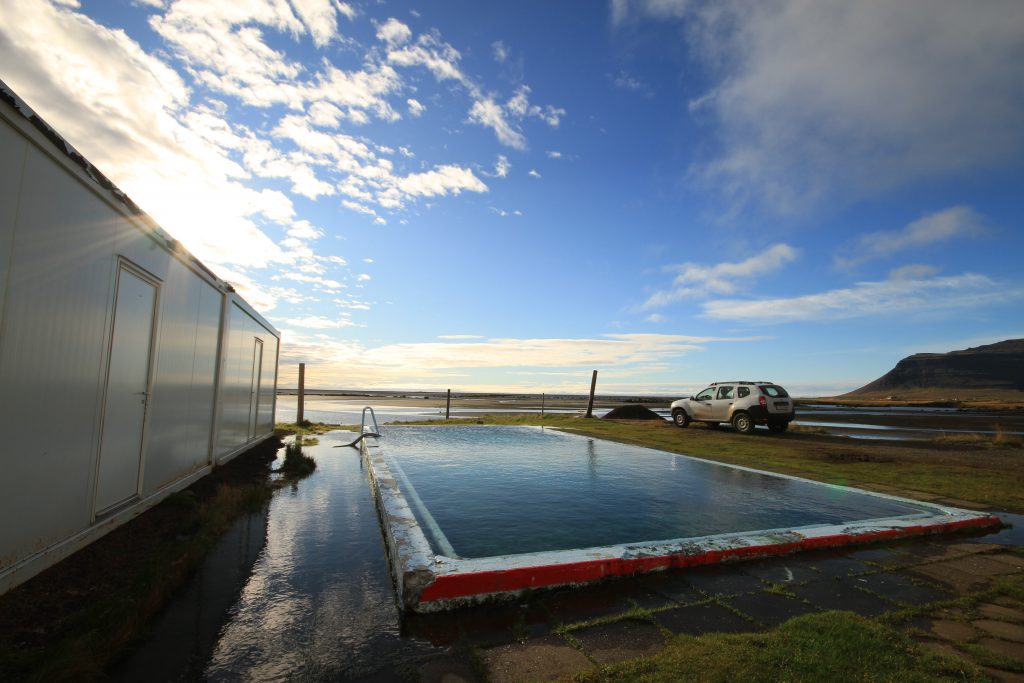
There are also times outside the two main seasons, summer and winter: The months of April / May and September / October are the shoulder season in Iceland and are perfectly suited for round trips. There is less going on, in most cases you get reasonably good weather and prices drop a little. I have always found traveling in the shoulder season very relaxed and have been trying to make it my main travel time for a while now. Of course, the weather can throw a wrench into your plans: On my last trip through the Westfjords I had non-stop clouds in front of the northern lights dancing wildly behind them, and I did not catch a single glimpse of them on the whole trip. C’est la vie — you are only allowed to be annoyed about that to a limited extent 😉
In both periods you normally will not see any snowfall yet, but “normal” is a difficult word in this context. If you absolutely do not want to come into contact with snow, travel in summer. If you absolutely cannot do without it, you have to be here in winter. It is that simple.
The Best Sights on a Trip Around Iceland
You have made up your mind and want to do a round trip through Iceland? Great! You probably do not want to miss anything and want to see the most amazing sights: Volcanoes, glaciers, geysers, hot springs, waterfalls and much more!
Below we will show you the most famous spots, the most beautiful sights and a few insider tips for your trip around Iceland.
Golden Circle
Let us start with the most famous sight — or rather group of sights: The Golden Circle in Iceland.
This day trip from Reykjavík takes you to three special places: First you head to Þingvellir National Park. This is where the first parliament was formed in 930, where the Vikings came together to pass laws and to enforce them too. They convened right on the rift between the North American and Eurasian continental plates. Here you can, for example, go diving and snorkeling in what is probably the clearest water in the world.
Next up is the Haukadalur geothermal area. Most people will associate this place primarily with the geyser Strokkur: This hot spring erupts regularly, hurling boiling hot water several dozen meters into the air every 5–15 minutes.
The last stop is one of the largest waterfalls in Iceland: The golden waterfall Gullfoss. It plunges just over 30m into the depths over two tiers and makes for a fantastic photo backdrop. Please make sure to stay behind the barriers!
Waterfalls in Iceland
There are dozens, if not hundreds of waterfalls in Iceland. I only want to briefly list the best known ones here. For a complete overview, we have written a detailed article about waterfalls in Iceland.
You have already met Gullfoss. Often mentioned in the same breath are the waterfalls Seljalandsfoss and Skógafoss, both located on the south coast. You will automatically pass them on the Ring Road. A bit further to the southeast lies Svartifoss, a particularly beautiful waterfall set in a basalt mountain. In the north you will find Dettifoss, which requires a bit of a hike, and Góðafoss, which in turn sits right on the Ring Road. On the Snæfellsnes peninsula you will also find the picturesque Kirkjufellsfoss, and somewhat remotely in the Westfjords, the Dynjandi waterfall.
Hot Springs in Iceland
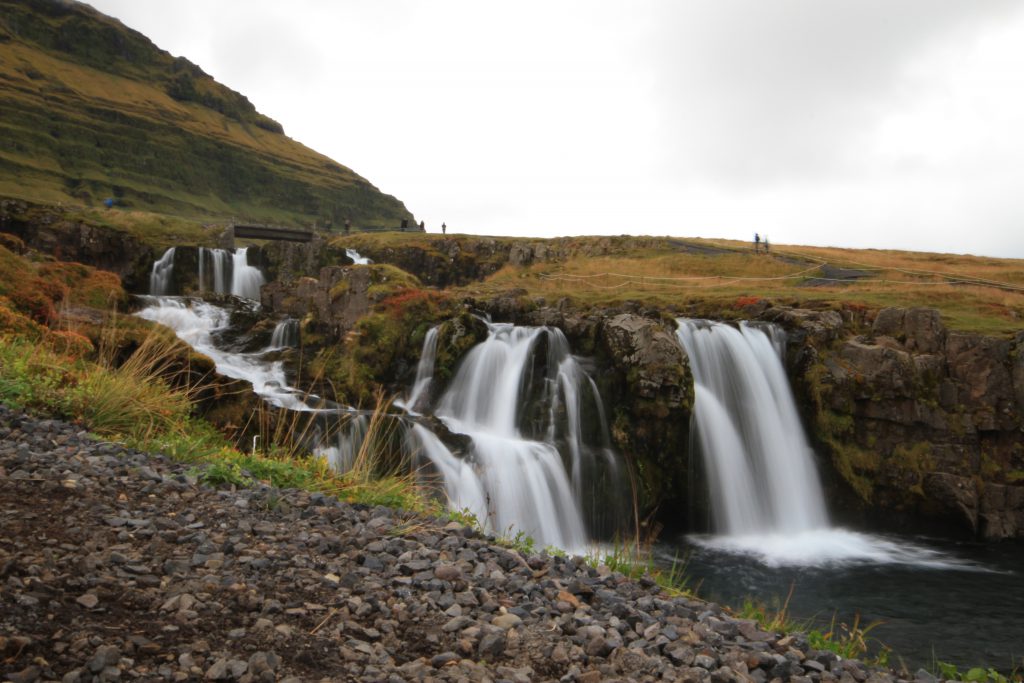
The hot springs in Iceland are a sensation in themselves, and no trip around Iceland is complete without a soak in a hot pot. Besides the many natural hot springs, Iceland also has wonderful pools and swimming baths, which I want to point out here for a specific reason: The natural hot springs were never designed for the crowds of visitors that Iceland sees today, so we would like to ask you to treat them as something special. There are so many great swimming pools that also sit in the middle of nature that you can go for a soak there instead.
Besides the Blue Lagoon, the mother of all hot springs in Iceland, there are for example the Secret Lagoon and the Fontana. Both are great alternatives and well equipped for larger numbers of visitors.
If you want to go hunting for the best hot springs in Iceland, let me warmly recommend our Iceland app. Besides a tour of the best hot springs with their exact coordinates, you will also find tours through Reykjavík, along the Golden Circle and many more, with audio commentary for self-drivers!
You can find more information in our detailed article about hot springs in Iceland.
Other Sights: A Plane Wreck, a Glacial Lagoon and Much More…
Besides waterfalls and hot springs, Iceland of course has endlessly more to offer. In the south alone there is a plane wreck that attracts and inspires photographers from all over the world, as well as the glacial lagoon Jökulsárlón.
The Snæfellsnes peninsula packs many of Iceland’s sights into the smallest of spaces. The Westfjords invite you to explore, and Heimaey in the Westman Islands is a small town with a big and adventurous history. In the highlands there is Landmannalaugar and many other amazing places. If you come to Iceland with your dive mask, you will be surprised to find that besides Silfra there are many more great spots for diving in Iceland.
As you can see, the list is very long, and at this point I will leave it to you to pick your favorites. Using the menu and the search function of this site, you are sure to find plenty of places.
Trip Around Iceland: The Best Routes
So what is the best route for a trip around Iceland? Does it always have to be the Ring Road? Is a detour into the east fjords or the Westfjords worth it, and how much time should I bring?
We want to show you a few routes here that we have driven ourselves or that were recommended to us by others.
5 Days: Not Enough for a Round Trip?
Short and sweet: We think five days are too little for a round trip. With a length of 1339km, you would have to drive more than 250km every day — and at that point you have not seen a single sight. That quickly adds another 50km per day, and then you are spending 3–4 hours a day just driving: You can do it, but we advise against it.
With five days, we would suggest a 2-day drive along the south coast instead: Drive to the glacial lagoon Jökulsárlón, spend a night there or somewhere along the way, and drive back the next day. On the way you can see waterfalls and hot springs and have plenty of relaxed time to take everything in. You can spend one day in Reykjavík, one day on the Golden Circle and one on the Snæfellsnes peninsula (or skip the day in Reykjavík and add an overnight stay in Borgarnes, for example).
That is a great program to get to know Iceland, and you really get to see a lot — so no need to worry about missing out!
7 Days: Around Iceland in One Week?
Seven days are the minimum for a round trip, and even then many people would probably disagree with us: On a trip like this you spend a lot of time in the car, and if you like to take regular breaks, stop frequently and explore the area every now and then, you will not be happy with it.
But to get an overview, to get to know the island and to gain an overall impression, 7 days can be enough.
Whether you drive clockwise or counterclockwise really does not matter. On this tour you can skip large parts of the east, or rather plan longer driving times there in order to spend more time in the south and north. You have to save time somewhere, and the east is a region best explored when you have a bit more of it.
A day trip like the Golden Circle or a stroll through Reykjavík’s old harbour is also something you should save for a later visit — instead, do the things that work best in the more remote areas. Whale watching in Húsavík, for example, or diving at the geothermal chimneys of Strytan.
10 Days in Iceland: A Round Trip with Detours
With 10 days, you can explore the island at your leisure, plan an extra stop in Reykjavík and even make the odd detour into the east fjords or even the Westfjords.
Whether you drive the Ring Road clockwise or counterclockwise is up to you: Here we recommend going counterclockwise, because that way you see the more touristically developed parts of Iceland first and can later enjoy the parts that have so far been somewhat spared by tourism. Namely the northeast and northwest. Here we would recommend detours to smaller villages, or to sights such as waterfalls and the like.
14 Days in Iceland: The Full Round Trip Experience
With 14 days, you have enough time for a big, extended round trip around the entire island, with detours and short stays, and even mini tours here and there.
If you like horseback riding, for example, you could do a tour along the Ring Road and book 2–3 days on a horse farm along the way, with daily rides and exploring in the respective region.
Hiking tours are popular as well and should be planned with plenty of time. The Laugavegur trail, for example, can be built in at the beginning or end of a trip — you could even hand the rental car over to your travel partner and split the trip up a little that way. In two weeks you will not explore all of Iceland, and you will probably return home with a longer bucket list than the one you arrived with. Still, this length of time really is ideal for getting to know the country thoroughly and gaining more than just a rough overview. If you are unsure whether you will visit Iceland more than once, you should come for at least two weeks to get a sufficiently varied impression.
Several Weeks Around Iceland: Full Immersion
If you can and want to spend several weeks or even months in Iceland, you should think about accommodation first and foremost: Hotels are very expensive, and on a stay of this length, accommodation costs will definitely be the biggest item on your list of expenses. A motorhome or campervan for Iceland can be a great option here; camping in a tent will probably get very uncomfortable in the long run.
If you are here for that long, you should not make a plan at all and simply set off. Do your research on each region beforehand, and above all try to strike up conversations with locals. No website in the world has tips as good as a local’s.
Trips like these are also often done by bicycle or by bus. That is a great way to save money compared to an expensive rental car. You can also do a kind of work & travel and work on horse farms, in hotels and guesthouses or for charitable organizations, for example. In return you often get free accommodation and possibly even a salary. There is no better way to get to know a country.
Not Quite All the Way Around: Traveling Only Iceland’s West or East
A nice tip came in via Facebook from our reader Steffi: If you only travel the east or west of Iceland, you can save yourself quite a few kilometers. With a domestic flight you can fly directly from Reykjavík to Akureyri, pick up a rental car there and then explore the north of the country from that base, for example. That way you skip the long drive up (5+ hours). The same applies to Iceland’s Westfjords, which you can reach with a domestic flight to Ísafjörður. If you want to see Iceland’s east, you can book a flight to Egilsstaðir and set off from there into the northeastern fjords, for example.
You can reach all of these destinations by car as well, but if you have already seen the south and west coasts, you might prefer to save the time and spend it at your actual destination instead.
Conclusion: A Trip Around Iceland
For many, a trip around Iceland is a once-in-a-lifetime experience, and the impressions last a lifetime. So you should plan the trip reasonably well, but also not overthink it. If you have little time, you should have the best plan possible — and if you are blessed with many days of vacation, you can let yourself drift a little.
Whether waterfalls, hot springs, glaciers or volcanoes: There is an almost endless number of sights, and everyone should figure out for themselves what they absolutely want to see. Once you know, book your tours and excursions early, because due to the rush many operators in Iceland are fully booked weeks and months in advance.
Hotels and other accommodation should also be booked early in the high season. In the shoulder season this is not quite as important. Always search for and book your rental car in Iceland in advance — on site it gets a lot more expensive.
And then you simply have to hit the road and enjoy.
Have fun in Iceland!
No Comments Yet