
Iceland in winter — I get asked about it again and again, and after a quick survey among our readers it quickly became clear: a detailed post on the topic was overdue! Our goal with this website is to support you as well as possible on your trip to Iceland, whether you come for a winter holiday or at any other time of the year. So in this post I’d like to pass on everything I know that will help you get through the cold season in Iceland.
In early 2015 I spent a full three months in Iceland, during one of the harshest winters the country had seen in a long time. Several heavy storms, enormous amounts of snow and a small solar eclipse were part of my trip to Iceland in winter, so I believe I can give you some solid first-hand advice here.
Here we go…
My personal experiences & tips for Iceland in winter
During my first long stay in Iceland I learned a few lessons that I’d like to share with you:
No big surprise here: Iceland in winter is cold and it often snows. I mention this because unfortunately there are still plenty of people who underestimate it. They buy a thick sweater and leather sneakers and think they’re perfectly equipped for the Icelandic winter. They only realize their mistake once their jeans are soaking wet because they wanted to walk behind the waterfall at Seljalandsfoss, or the wind drives the rain straight past their umbrella onto their cold thighs.
In Cape Town we always laughed about the tourists prowling through the shopping malls in safari outfits. In Iceland that would never happen to me, because weatherproof clothing is absolutely essential here. Forget the umbrella, forget the jeans, and never leave the house without a rainproof jacket, trousers and shoes. That’s true in summer too, but in winter the rain and snow take on a whole new urgency: you can wear the thickest Icelandic sweater Reykjavík has to offer and it will still get soaked through eventually. Once that happens, it obviously won’t keep you warm anymore. The same goes for your trousers and your shoes. We’ll get into the layering principle, which also keeps you warm, in detail later.
Another lesson for me was that moisturizing isn’t only important in summer: at low temperatures your skin dries out incredibly fast. Since I was in Iceland for diving, my hands were also frequently exposed to ice-cold water, and after just a few days I had bleeding cracks on my hands. An extreme situation, granted — but even on my holiday days I often had chapped hands because I had forgotten to protect them. A good hand cream quickly fixes this, and combined with good gloves your hands stay warm and protected.
You’re not supposed to run at the swimming pool because it’s slippery: Iceland in winter is like one big swimming pool. If you still want to run, you should know what you’re doing — or use a little gadget: there are spikes you can strap under almost any shoe to get a secure grip on ice. Even good hiking boots rarely offer enough traction here, and you’ll slip before you know it. These little helpers served me really well in everyday life.
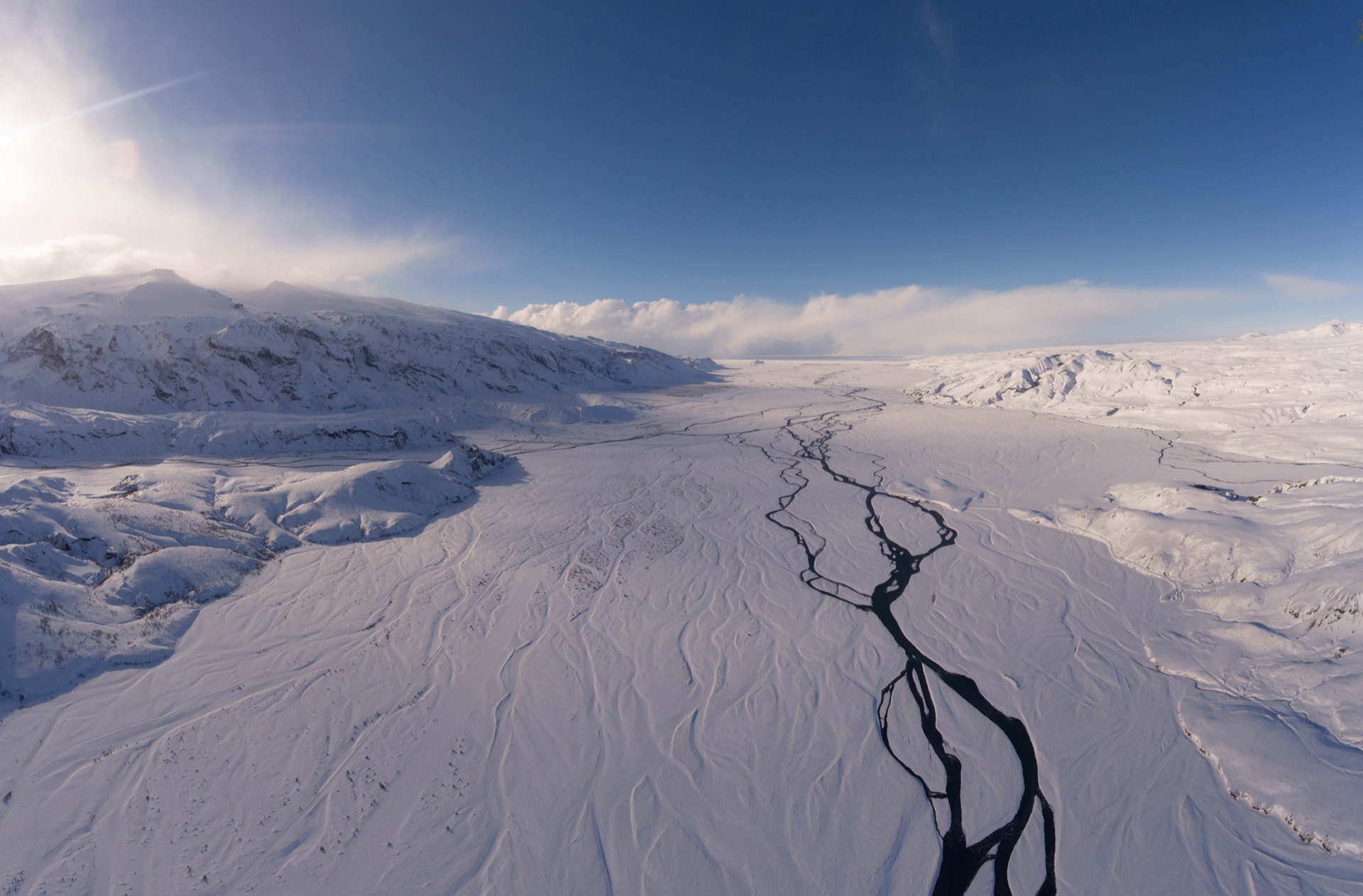
Attack is the best defense: if you’re worried about the cold — especially about catching a cold — use the cold to strengthen your immune system. In my first week working as a dive guide I probably spent more time in the hot pools of Reykjavík’s local swimming pools than in my own apartment. Right next to the hot tubs there are often ice-cold plunge pools, and you can hop back and forth between them. You don’t have to do it all evening, but once or twice does make sense. It gets your circulation going and boosts your immune system. I do this regularly in Germany too and very rarely have to deal with a cold or the flu. Many hot springs in Iceland offer similar setups, like the geothermal beach Nauthólsvík.
My last but perhaps most important lesson: get the right rental car for the season in Iceland! Yes, a 4×4 is expensive and can quickly become the biggest item in the budget of a road trip around Iceland. That’s what I thought too when, in December 2013, I set off in my little Chevrolet Spark to see the Golden Circle in Iceland for the first time. Shortly after Þingvellir it started to snow, and today I would know: time to turn around! But back then I couldn’t read the weather that well and kept driving all the way to Gullfoss. On the way back, for the first time in my life, I was genuinely scared while driving — I had never experienced conditions like these before. Visibility of less than 3 m, storm winds and huge snowdrifts were completely new to me. I even spun a full pirouette with the little car, coming to a stop just a few centimeters from the guardrail. I made it home without breaking anything. But that was pure luck — for me and for the rescue teams that didn’t have to come out for me. I should have informed myself much better about the weather, rented a more suitable car (SUV, jeep), or simply stayed home that day. Alternatively, there are always bus tours to the Golden Circle, where you’re in the hands of professionals.
Winter holidays: Iceland gets cold & dark
If you’re planning a winter holiday in Iceland, you shouldn’t only prepare for the cold. Besides the extremely low temperatures and lots of snowfall, there’s another challenging characteristic of this island in the far north: the sun only comes up for a few hours a day. In the depths of winter you get just over 4 hours of daylight, while in Germany you still have well over 12 at that time. And those are theoretical hours of sunshine, meaning the sun may well be hiding behind clouds during that time. In fact, that’s quite likely.
If you want to do tours on your own, driving yourself, you’ll have to either plan rather short day trips or be comfortable driving in the dark and possibly in difficult conditions. In winter, for example, I wouldn’t recommend a day trip to Snæfellsnes at all. It’s a good two hours’ drive to get there and accordingly a good two hours back: that leaves you only a few hours on site, and you certainly won’t really be able to enjoy them. A tour like that — the same goes for trips along the south coast and to the glacier lagoon Jökulsarlon — is something I would split up and make easier with an overnight stay along the way.
In this case our Iceland app might help you, as it lets you display many interesting places such as hotels, gas stations and sights in Iceland. That way you can find a suitable hotel along your route, for example.
If you don’t like driving in the dark or feel unsure on snow, you should think about taking a guided tour. There are bus tours along the south coast and bus tours to the glacier lagoon run by experienced Icelanders, so you can sit back and enjoy the view.
You can check exactly when the sun rises and sets here.
Only in winter in Iceland: northern lights
There’s one thing winter has to offer that you simply won’t get to see in summer: Aurora Borealis
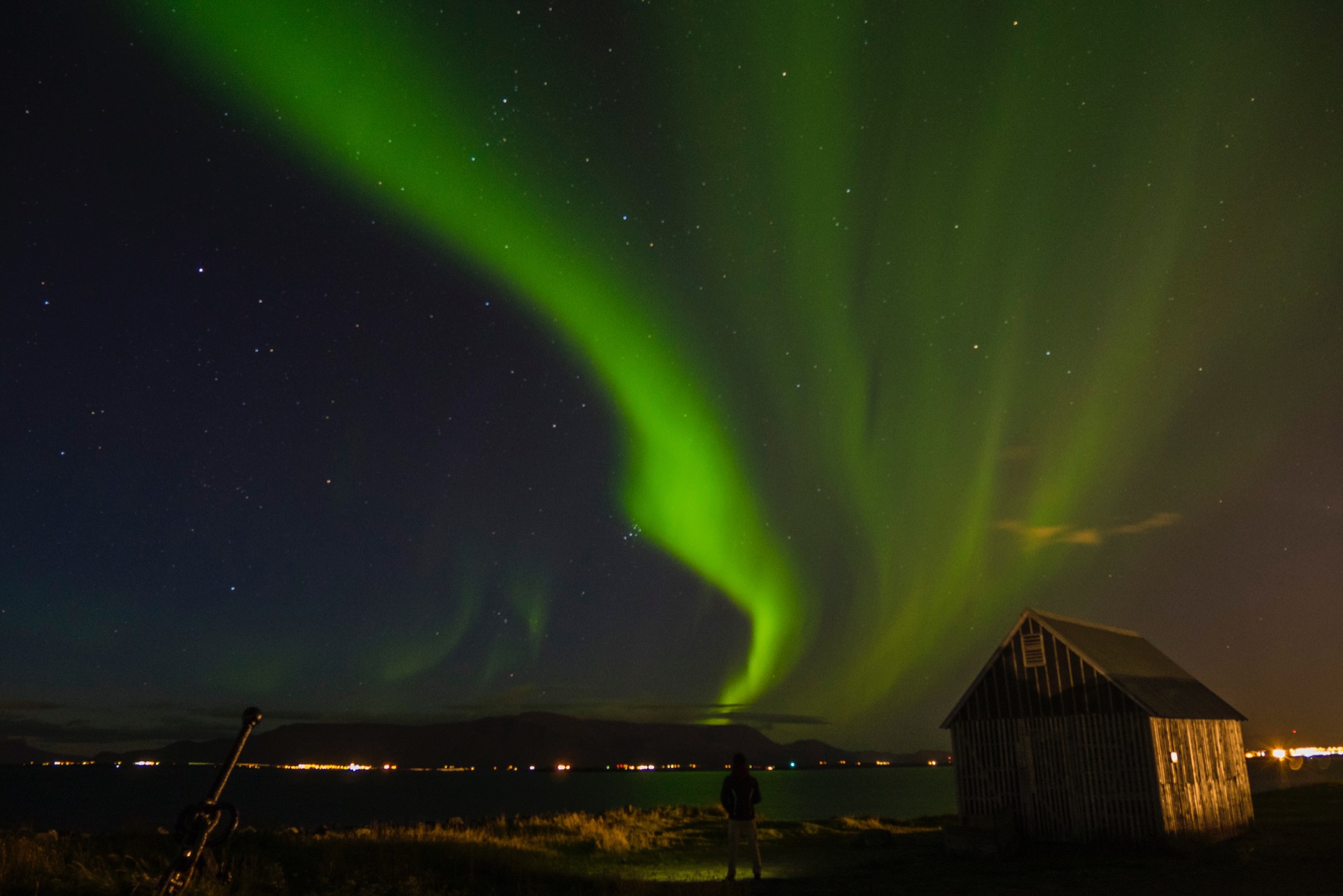
The northern lights only dance over Iceland in winter, not least because in summer the sun barely sets and there’s accordingly very little night sky. In winter, the alignment of the earth and the sun is simply better suited in every respect for these magical apparitions in the night sky. The best time to see the northern lights is early or late winter — more precisely September, October and March. In these months the aurora is at its most active and the chance of a clear night sky is relatively high.
You’ll see the northern lights in Iceland best if you drive a bit out of the larger towns: the less light around you, the more intensely you’ll perceive the displays in the sky. If you can’t or don’t want to drive yourself, you can book guided tours, for example by Super Jeep or even by boat.
Must-sees in winter in Iceland: what you shouldn’t miss
Of course you don’t have to do anything. You’re supposed to have fun and a good time. Visiting the following places might help with that, because they’re especially worth seeing in winter:
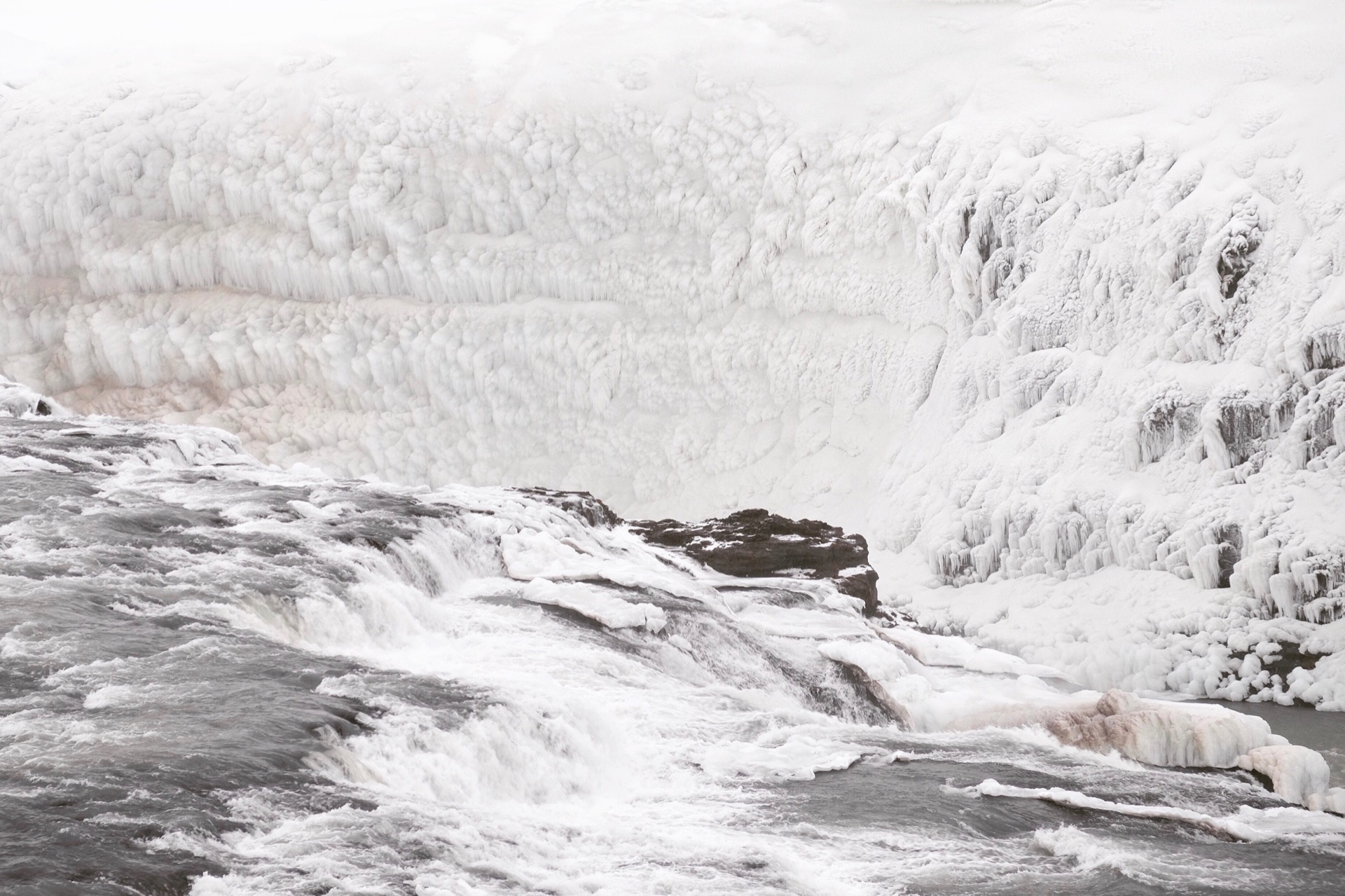
The waterfall Gullfoss is a wonderful sight in winter, because when it gets cold enough it freezes over almost completely (or so it appears). You get the feeling of standing in front of a huge, icy wall of frozen water — and yet you can hear it trickling everywhere. On the way there you pass the geyser Strokkur, which also offers a special view in winter. When it erupts, the hot water wraps itself in steam that keeps forming a column in the cold air for quite a while afterwards.
The glacier lagoon Jökulsarlon is another special highlight in winter. Ideally, with freezing temperatures and sunshine, you get a truly arctic feeling here that you could otherwise probably only experience at the poles. Depending on how cold it gets, the lagoon itself can even freeze over at this time of year.
A highlight for me was visiting various hot springs in winter. Reykjadalur in particular has stayed with me: the steaming valley is a very special backdrop in the cold season and definitely worth a visit. Other hot springs like Fontana, the Blue Lagoon and also the many small hot pots in Reykjavík’s swimming pools are a wonderful thing when the air turns ice-cold and maybe even a few snowflakes are falling. The pools are usually outdoors, so you’re nice and warm in the water while it’s freezing cold all around you.
If you’re in Iceland for diving, you should ask around about the ice conditions at Davidsgja in lake Þingvallavatn: with a bit of luck you can enter the lake the normal way and then dive along the edge of the ice. A very special experience for any diver — and don’t worry: it’s exactly as cold as the Silfra fissure in winter or in summer. The water here always has the same temperature, around 2–4°C.
Christmas in Reykjavík / Iceland
A special winter highlight can be a short break over Christmas (and New Year’s Eve). I’ve now been to Reykjavík twice during the Christmas season — I spent a few days there in the winter of 2013 and again in the winter of 2016, the last time including Christmas Eve.
The atmosphere in Reykjavík around Christmas is very pleasant; it’s calm and the tourist bustle dies down a bit. People focus on time with their loved ones and spend a lot of time at home. If you want to do something during this period, you’ll have to stick to the days before and after Christmas, as most companies don’t run tours on the holidays themselves and many sights are closed too.
If you’re in Iceland at this time, you should look into the Christmas traditions of the Icelanders. These include the story of the Yule Lads and also the eating of fermented fish. We might write a separate article about that some day, because here it would go well beyond the scope of this post.
An insider tip from me: around Christmas there are often small concerts in pubs, small venues and churches. The smaller and cozier, the better, if you ask me.
New Year’s Eve in Reykjavík / Iceland
If you add a few more days, you can spend New Year’s Eve in Iceland. New Year’s Eve in Reykjavík is certainly a special experience. Every year there’s a big fireworks display on the square in front of Hallgrimskirkja, and afterwards you can celebrate your way into the new year in the city’s bars and pubs.
As with Christmas, you should book far, far in advance and still expect extreme prices. If you think Iceland is expensive, you’ll be surprised all over again at these times of year.
Packing list for Iceland in winter: clothing & everything you need to bring
My packing list for Iceland already gives you a good selection of things that make sense for a holiday in Iceland. Here I’d like to go into the winter specifics once more and show you which things belong in your suitcase — and above all, which ones you can safely leave at home.
The most important thing, the absolute essential of a winter trip to Iceland: the right clothing! That means rainproof and breathable, because moisture and wetness are the enemy of feeling comfortable, from the inside as well as from the outside! So dress according to the three-layer onion principle: first breathable base layers, then a warm layer, and then a rainproof protective shell. For the base layer, what matters most is that it transports moisture away from your body and allows your skin to breathe. Cotton, for example, does not do this: it soaks up sweat and holds it, and as a result you get cold. Functional base layers made for winter sports work best. Next comes a warm layer. Fleece works very well here, but so do cotton or other kinds of wool. An Icelandic sweater, for example, as long as it’s not too thick. Last of all comes a waterproof layer — that can be one of those typical yellow rain jackets, rainproof trousers and suitable shoes: rubber boots can actually be a dream sometimes!
I recommend buying all of these clothes at home before your holiday, because in Iceland you’ll pay markedly more for a much smaller selection. If you’d like to buy a souvenir you can of course do so — there I’d rather recommend things like gloves and hats, where the markup doesn’t hurt as much. If that doesn’t bother you, you can of course buy very high-quality clothing directly on site at Cintamani and 66° North.
Something that’s often forgotten: sunglasses. When it has snowed and the sun does decide to show itself afterwards, it can get seriously bright in Iceland. The ice crystals reflect the sunlight in all possible directions, and especially when driving in Iceland this can get really unpleasant!
Anti-packing list: things you can safely leave at home
Whatever you don’t need in winter, you can accordingly leave at home. I know how hard it is for many people to close their suitcase once they’re done packing, so let me help you a little:
Summer jackets, light jackets, anything that isn’t waterproof: out of the suitcase! It’s just dead weight and won’t help you over there. In winter you want something that protects you from rain.
Shoes that aren’t waterproof: back into the closet with them. Once they’re wet — and they will be — you’re stuck with them for the rest of the trip.
You won’t need an umbrella in Iceland either: chances are it’ll be broken before it can keep a single raindrop away from you. It’s typically at least windy in Iceland, always and everywhere. The rain comes at you sideways anyway, not from above. A proper rain jacket and rain trousers make more sense.
In general, I would leave everything at home that doesn’t cope well with rain, or get appropriate protection for it.
Winter weather in Iceland: what you need to know
In winter it’s especially important to engage with the weather in Iceland. That means not only preparing for all eventualities but also getting a feeling for which of them are actually likely to come your way.
Every day — usually even several times a day — I check the weather forecast for Iceland when I’m there. From wind to temperatures to precipitation, the site shows everything, for the current day and for the week ahead.
If you’re driving a rental car, you’re well advised to keep an eye on the website of the Icelandic road administration. In particular, there are webcams for roads in Iceland, which give you a really good picture of the current conditions on the ground. The images are often live or only a few minutes delayed. You can also get this information on the go by calling 1777, for example if there’s no mobile internet. But better to check beforehand than to be left stranded later!
The Iceland app now has several features to keep you up to date on the northern lights, and I hope to expand them further in the coming weeks. A bit more detailed is the information in the aurora forecast for Iceland — besides the activity you can also see the cloud cover and plan accordingly when and where to go hunting for northern lights.
No-gos in winter: things you shouldn’t do
There isn’t much that you absolutely cannot do at all in Iceland in winter. Most things just become more difficult or more unpleasant. So please read what I list here less as a ban and more as a recommendation:
Whale watching makes no sense in winter. The animals are mostly out in more southern, warmer parts of the world. You’ll see few whales, often none at all — and even though you can usually join another tour for free afterwards, your chances only improve marginally. Better to come in summer for that.
Longer tours and remote areas are perhaps better saved for summer. That includes, for example, round trips along the entire ring road, excursions to the Westfjords, the east or the north. The highlands in particular are off-limits — the roads are usually closed anyway. Various guided super jeep tours run to Landmannalaugar, so there’s definitely no need to risk your own car there.
Conclusion: winter in Iceland
Once again, all the essentials for everyone who scrolled straight down here:
- Bring weatherproof clothing and dress in three layers according to the onion principle
- Moisturize enough to protect your skin
- Don’t forget gloves & a hat
- Pack sunglasses, especially if you’ll be driving
- Strengthen your immune system with a healthy diet and maybe alternating hot and cold baths
- Book a rental car that suits the season
- Stay informed about the weather, road conditions and northern lights
I’ve covered all of these topics in detail in this post, and I hope they help you have a great time in Iceland, even when it’s cold and wet outside.
By the way, winter in Iceland is also especially lovely because it invites you to cocoon after discovering this wonderful country during the day. Hot chocolate, coffee and tea help with that — hot springs too. If you keep that in mind during the day, it’s a lot easier to put up with the sometimes unpleasant weather 🙂
Have fun in Iceland!
Photos: Unsplash
No Comments Yet