
Iceland hidden gems are rare these days, but here and there they still exist…
I’ve spent quite a few months on the island by now, and along the way I’ve learned one thing: almost every attraction in Iceland has a counterpart somewhere else on the island — and these places are often far less known and, accordingly, far less crowded.
In this article I want to show you one or more alternatives to many of Iceland’s main attractions. Seasoned Iceland travelers might not find much that’s new here — or maybe they will: I only discovered some of these places myself while researching this topic.
Let’s go…
Hidden gems as alternatives to the Blue Lagoon
The Blue Lagoon in the south of the Reykjanes peninsula is the most famous hot spring in the country. Maybe even in the whole world. The spa is correspondingly busy — hundreds of thousands of people flock here every year. Just a few years ago you could still drop by spontaneously; today nothing works without booking in advance. The Blue Lagoon is part of many package holidays and often included in day tours as well. Good thing the water there is completely replaced every 1-2 days.
If you prefer things smaller, quieter and cozier, you’ll find plenty of natural hot springs in Iceland. But these are often too small — they were never designed for the crowds that show up there today. So I’d like to suggest three alternatives that can handle larger numbers of people but are still nowhere near as crowded as the Blue Lagoon.
The Gamla Laugin, the Secret Lagoon, is only a good hour’s drive from the Blue Lagoon, close to Thingvellir National Park. In summer it’s open from 10 am to 10 pm and in winter from 11 am to 8 pm. The pool is completely natural and has only been extended a little, with changing rooms and showers. There’s no proper restaurant, but you can get small bites like sandwiches. A reservation is necessary here as well!
A little further north you’ll find Fontana, a small spa right in the middle of the Golden Circle and therefore also very popular. Besides various pools and saunas, Fontana also has a small restaurant where you can try the delicious lava bread. Open from 11 am to 10 pm in winter and 10 am to 11 pm in summer, you might even get lucky here and watch the northern lights from the steaming pool.
Tip number three lies a bit further north in the Myvatn region. Far away from touristy Reykjavík you’ll find the Myvatn Nature Baths. Besides the swimming pool itself there are steam baths and a small restaurant. The whole thing is a little over an hour’s drive from Akureyri and a 2-day trip from Reykjavík. In summer the baths are open from 9 am to midnight and in winter from 12 pm to 10 pm, so here too — especially in September — you might get lucky and combine bathing with northern lights.
Hidden gems and alternatives to Iceland’s Golden Circle
The Golden Circle in Iceland is probably THE sight that defines the country like no other. Almost every visitor to Iceland books a tour along this route or drives it themselves in a rental car.
Accordingly, there’s a lot of traffic here nowadays, and if you look at the Street View images on Google Maps you’ll quickly get an idea of how packed it can get at peak times. I still gladly recommend the route though, because like most tourist trails, there’s a reason the Golden Circle is so popular: you can see a lot of Iceland in a small area.
If you’ve already seen the Golden Circle or are simply looking for an alternative, you’ve come to the right place — there are several routes in Iceland that also combine great sights and don’t need to hide behind the golden circle:
North of Reykjavík, a little more than two hours’ drive away, lies the small peninsula of Snæfelsnes. This region is also called “little Iceland”, and for good reason: here you’ll find many of the things that make Iceland special packed into a relatively small area — rugged nature, hot earth, ice and waterfalls. Unlike the Golden Circle, you should plan either a very long day or a tour with an overnight stay. Within the first few meters onto the peninsula you can make a short stop at the small hot pot Landbrotalaug and relax there for a few minutes. (Update: The hot pot is apparently on private property and no longer open — please follow the signs you find on site!) From here you can head to Ytri Tunga beach, where you can regularly spot seals. An absolute highlight of the region is the Vatnshellir lava cave. The Kirkjufellsfoss waterfall in the north of the peninsula then offers the alternative to Gullfoss and rounds off the tour. Read everything about Snæfellsnes here.
In the far north, where relatively few of Iceland’s visitors make it, you’ll find the rarely mentioned Diamond Circle. In its vicinity you’ll find not only the Myvatn baths but also the Goðafoss waterfall and the geothermal area around the mountain Námafjall. (Info) Depending on how you define it, there are many more places to reach here — just like with the golden circle in the west, everyone has their own definition of what a tour should include. The Dettifoss waterfall is just as easy to reach as the beautiful Asbyrgi canyon. Whale watching tours from Husavík also promise unforgettable experiences.
In the south of the country you can also put together an alternative to the Golden Circle if you pick the right stops: seen from Reykjavík, there are two great geothermal areas in the south: Krysuvik and Gunnuhver. Both offer plenty of steaming mud and smelly air, but also info boards where you can learn a lot about Iceland’s underground. From here you drive further east to take a little break at the geothermal river in Reykjadalur. Here you can bathe in a small river that is fed with hot water by hot springs at several points. Afterwards you can visit the waterfalls Seljalandsfoss and Skogafoss, both of which are among the most beautiful in the country.
For the sake of completeness, I should mention that one special sight can only be seen on the Golden Circle: the geyser Strokkur erupts here every 10-15 minutes, spewing boiling hot water up to 100m into the air — you can’t experience this anywhere else in Iceland.
Alternatives to the Jökulsárlón glacier lagoon
Jökulsárlón is perhaps the most popular of all the sights in Iceland. Large crowds of visitors now regularly make the pilgrimage to the glacial lake in the south-east of the island, admiring the Diamond Beach as well as the icebergs drifting in the lagoon.
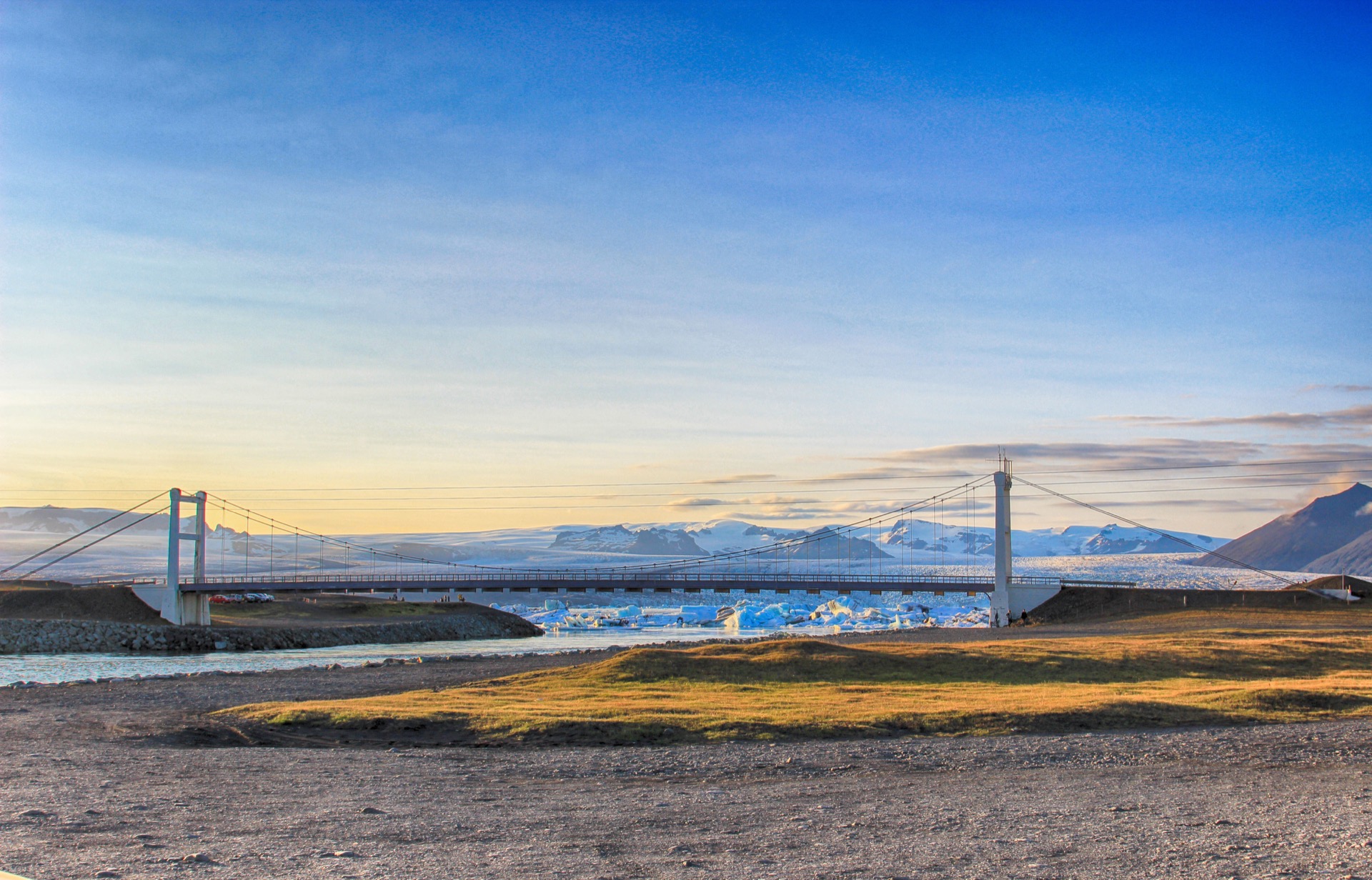
Not quite as famous yet, but very close by: Fjallsárlón and Heinabergslón. These two small glacial lakes lie to the west and east of Jökulsárlón respectively. There are no boat tours here, but a bit more peace and quiet instead.
Please keep in mind that these are areas without tourist infrastructure. That means fewer tourists, but also that those who do come here carry a great responsibility: I’ll simply point you to the Icelandic Pledge and hope you read the words and help preserve these wonders of nature for everyone. In winter these lakes are often frozen over, so a visit in summer is usually more worthwhile here too, depending on what you want to see and experience.
Hidden gems for diving in Iceland, away from Silfra
I spent three months working as a dive guide in Iceland and got to dive some of the most beautiful dive spots in the country. Some I haven’t seen yet, and one day I’d love to be able to claim I’ve jumped into every single puddle in the country with my gear on. Until then, here are a few alternatives that I’ve tried myself and consider well worth recommending:
Right next to Silfra, the most popular dive spot in the country, is David’s crack, Davidsgja. You can dive here in summer and winter and will find surroundings similar to Silfra. However, the crowds are not quite as big, and depending on the day you might even have the place all to yourself. Most dive operators only offer trips here as extra tours or private tours. The fissure is part of Þingvellir National Park and is therefore subject to the same restrictions as Silfra — among other things, you’re not allowed to dive deeper than 18m.
If you like it deep and dark and cold — so perhaps one or two technical divers among you — there’s something for you in the north. Strytan are the only hydrothermal vents that divers can reach, at depths of 15-20m or all the way down to 70m. Erlendur Bogason discovered these formations and has been guarding them like his own eyeballs ever since. An absolutely unique dive that will take your breath away! With a bit of luck, even in the company of whales — the gentle giants feel very much at home in the fjords and visit accordingly often.
And now a real hidden gem: the bear crack Bjarnagja. My absolute favorite dive spot in Iceland and, for me, a must see if you’re here to dive! The inconspicuous little fissure in the middle of nowhere near Grindavik packs a punch: fresh water and seawater mix here, creating bizarre views, and the relative narrowness does the rest for a wonderfully strange diving experience. On the bottom you’ll often find crabs, sometimes small fish and quite a bit of trash. In one corner lie the bones of a whale, apparently dumped here by fishermen. On the other side there’s a small cave.
Alternatives to whale watching in Reykjavik
The waters around Iceland are a beautiful area — not only the Vikings noticed that, but various whales did too. From the small minke to the giant blue whale, all sorts of marine mammals romp around in the Atlantic surrounding the island. Several operators offer tours from Reykjavík, but there are better places to go on a sightseeing cruise, and alternatives for days with rough seas…
If you’re planning a round trip or are in the north anyway, you should schedule your whale watching tour in Husavík. Up here, not only are the chances of sightings higher, but the surroundings are also a bit more beautiful: the wonderful fjords in the north are a joy to look at, and depending on the tour, the boats also pass the small islands where the puffins give birth to and raise their young. In summer the chances of sightings are best; in winter the big animals are sluggish and prefer the warmer south.
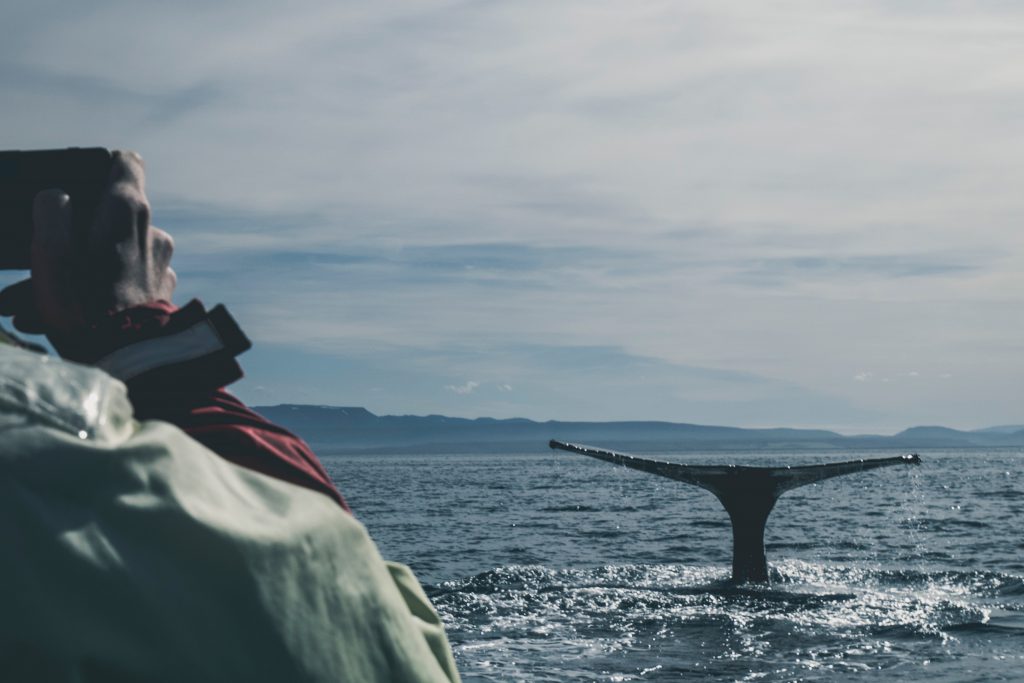
If you’ve always wanted to dive with whales, Strytan offers a great combination right next door: not only is the dive spot one of the best in the country, but the fjords surrounding it are also particularly popular with whales. It’s not uncommon to spot the animals on the way to the anchorage. With a bit of luck you’ll meet again underwater, or at least hear them. If you dive there, I definitely recommend looking around regularly: a friend of mine was quite astonished when she copied the pictures from her GoPro to her computer and saw two humpback whales in the background of a selfie — she hadn’t noticed the giants underwater at all!
If all else fails — because the swell is too big, the sea is frozen or the sky has fallen on our heads — there’s one more alternative to whale watching: the life-size whale models at Whales of Iceland. More than 20 whales found in the waters around Iceland are on display here. From the orca to the humpback to the blue whale, there are all kinds of models, and audio guides in various languages deliver information about the giants straight to your ears.
Speaking of ears: in the Iceland App you’ll find various tours that also stop at Whales of Iceland. So you can combine the visit with a tour of the old harbour or a city walk through Reykjavík, for example.
Alternatives to Hallgrimskirkja
The big church in the center of the city is one of the most-visited sights in the country. Many people are drawn here almost automatically because the tower is clearly visible from all over the city. Accordingly, it also offers a great view over the city and its surroundings. Lots of people want to see that, so longer and longer queues form at the elevator that takes you up the tower. But for great views and impressive buildings, there are alternatives…
Perlan is one of them. The building complex just outside the city center is packed with attractions worth seeing, although they probably won’t open to the public until 2018. Besides exhibition rooms about Iceland’s glaciers and their ice caves, you can also explore a planetarium and learn about the northern lights in Iceland. The observation deck around the glass dome is just the icing on the cake. From here you have a great view over the city, all the way to the mountains in the north.
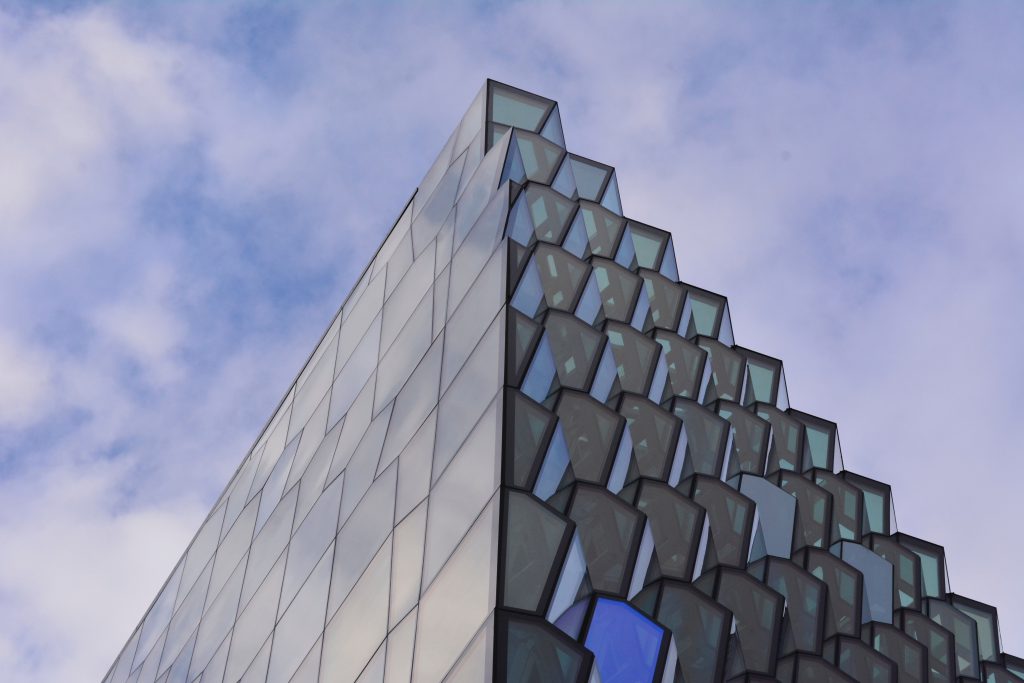
Not particularly high, but still offering a great view, is the concert hall Harpa. Yes, I know, that’s not a hidden gem even for first-time Iceland visitors, but it’s definitely an alternative, and if you use the Iceland App on the way there you can even tick off a little city tour along the way. On site, besides the impressive architecture of the building itself, you’ll find lots of small shops and cafés where you can easily pass the time.
If you’re looking for churches, you’ll find quite a lot of them in Iceland — maybe I’ll write a separate article about that one day. In short: there are some very special churches in Thingvellir and on Snæfelsnes.
Alternatives to overpriced hotels in Iceland
Hotels in Iceland are not a cheap pleasure — few things make it as obvious how expensive Iceland is as the check-in desk of a hotel. I regularly get messages from people who would love to visit Iceland but simply can’t afford it. That certainly won’t get better in the near future, but it doesn’t have to be that way:
People who come to Iceland often come for its rugged, untouched nature. So what could be more fitting than experiencing it up close — by camping? Iceland is full of great campsites, and they’re pretty well equipped. In summer you can really enjoy being outdoors here. You quickly save several hundred euros on a multi-day holiday this way. Especially if you’re traveling alone, you can save a lot. In that case, a bus ticket instead of a rental car is also worth considering, where you can save large sums once again.
Controversial and not necessarily cheaper than a hotel: AirBNB. Here, private individuals offer their apartments or rooms so travelers can book them. Depending on what and how you book, you stay right with the locals and get to know Iceland in a completely different way than in a hotel. More and more people have professionalized renting out apartments via AirBNB, which has led to housing shortages and high rents in Reykjavik. I still like the AirBNB concept and gladly support it, in the hope that the Icelandic government will create proper regulations for it.
Another way to stay in Iceland without checking into a hotel is house-sitting or home swapping. With the former, people from Iceland look for people from anywhere in the world to take care of their home while they’re away. This is usually, but not always, combined with pet sitting. So if you like dogs, cats or hamsters and aren’t afraid of a bit of housework, this can be a very cheap way to travel. With home swapping, you trade your home for someone else’s. If you have an apartment in New York, for example, and want to go to Reykjavík, you can offer it — and if someone from Iceland happens to want to visit America, they might just contact you.
There are various platforms for both options, here are just a few examples:
I’ve still put together a few good hotels and hostels in Iceland for you. For example, I like to do it this way: I stay as cheaply as possible for most of a trip and then treat myself to 1-2 nights in a good hotel at the end. That makes for a relaxed ending to a journey.
Alternatives to overpriced bus tours in Iceland
First things first: bus tours are usually not really overpriced — at least not in relation to what’s on offer. Especially for solo travelers, they’re a genuinely affordable way to get around Iceland. But for couples or groups, they often no longer pay off. On top of that, the tours are usually inflexible: you drive a fixed route and stop at each place for a set amount of time. If that’s not for you, there are plenty of other options…
The classic: traveling Iceland by rental car. Especially if you’re not traveling alone, the cost of a rental car quickly pays for itself compared to bus tours. What might be the biggest item on a solo traveler’s bill can quickly become the biggest saving for couples and groups. A Golden Circle bus tour costs 80-90€, for example, while a small rental car including fuel comes to around 90-100€ if booked early (varies depending on exchange rate and season). Of course, you have to keep in mind that you’ll be driving yourself, finding the way and possibly braving the weather. But as you can easily see, from two people onwards the rental car is cheaper per person, and the savings grow with every additional traveler.
You won’t have a guide in a rental car, but we’ve put together a few tours for you in the Iceland App. With it you can find the best places yourself and get some information about them from us via audio commentary.
If you’re traveling long-term, for example, and therefore not tied to a fixed schedule, you can get around Iceland here and there with carpooling. This website collects offers and requests around carpooling, bringing together people who either offer or are looking for a ride. If you want to travel to Akureyri, for example, you’ll find offers from people driving there almost daily, and the same goes for the larger towns in the south of the country. If you have a rental car and are thinking about taking someone along, you should check your rental contract carefully first: most providers generally prohibit taking passengers — and that applies not only to hitchhikers by the roadside but (especially) also to those from such platforms.
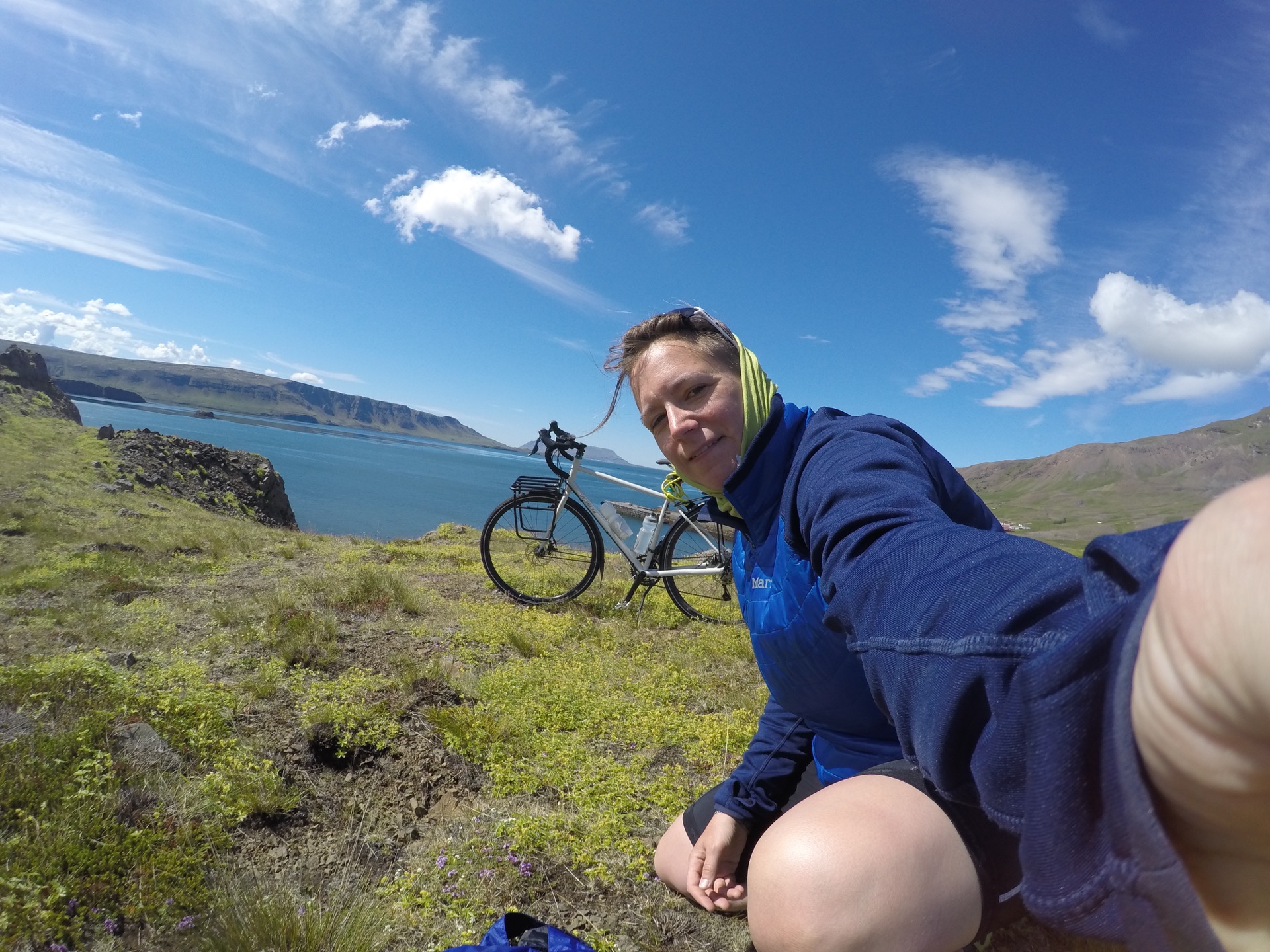
Last but not least, a form of transport that costs (almost) nothing: the bike. If you travel through Iceland by bicycle, you pay neither rent for a vehicle nor a bus driver, and certainly no fuel. For transport, there are extra costs for oversized luggage on the plane — usually no more than 100€ per flight — and that’s it. Plus, you have ultimate freedom: no matter where you want to go, whether ring road, gravel track or F-road, on a bike you have very few restrictions. But the same rule applies on a bike: off-road riding is forbidden! That’s because of Iceland’s fragile nature — moss in particular often needs decades to recover once it’s been destroyed. Tanja traveled around Iceland by bike and was apparently quite taken with it.
Conclusion: off the beaten path and into the adventure!
In short: the tourist trails in Iceland are long and wide these days. Getting off them has become difficult, and above all you should always weigh up whether it even makes sense: on the one hand, routes like the Golden Circle are popular for a reason — their sights are simply among the best in the country, and I would still recommend them to anyone traveling here. On the other hand, these places are now better and better equipped for the large numbers of visitors, for example through the construction of paths, the installation of warning signs, and safety measures provided by rangers and guides.
Still, every now and then — especially if it’s not your first time in the country — it’s really nice to discover places that lie a little off the paths everyone else is walking on. I hope I was able to show you a few of them here, and I’d be delighted if this helps you plan a great trip!
Have fun in Iceland!
No Comments Yet