
Visiting an ice cave had been on my radar for quite a while, but on my previous trips it just never worked out. Either the caves had already closed for the season or I wasn’t in the right part of the country. On this trip I hadn’t planned an ice cave visit either — and ended up in one anyway.
The ice cave at Langjökull – man-made and open all year round
Most ice caves in Iceland form in or at the edge of glaciers. They are surveyed anew every year and then opened to visitors for just a few weeks or months. If you don’t happen to be in the right place at the right time, you simply miss your chance. Most of these caves are located along Iceland’s south coast or in the highlands, so they are well placed and easy to reach on a typical round trip around Iceland.
Timing is a different story: since the caves change constantly, the ice melts, and you have to be careful not to funnel too many heat-emitting humans through the ice tunnels, tour slots are in high demand and rather scarce.
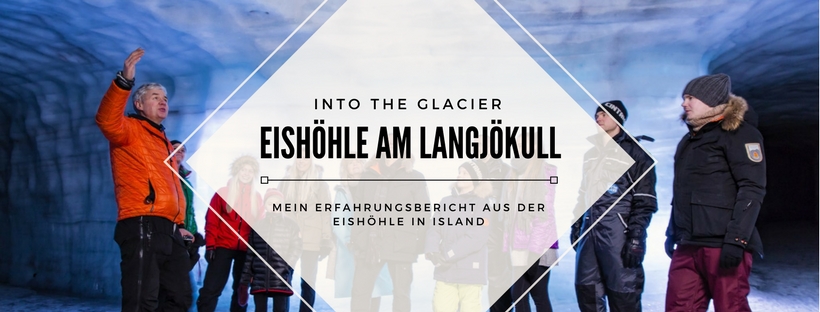
At Iceland’s second-largest glacier, Langjökull, Baldvin Einarsson and Hallgrimur Örn Arngrímsson put a bold plan into action in 2010, driven by curiosity and research: they wanted to take visitors not just around the glacier or up onto it, but right into its heart. Into the Glacier, quite literally… So they started planning, obtained the necessary permits from the state, and at some point the drilling began. The result is an ice cave more than 500m long, with several chambers and a few surprises…
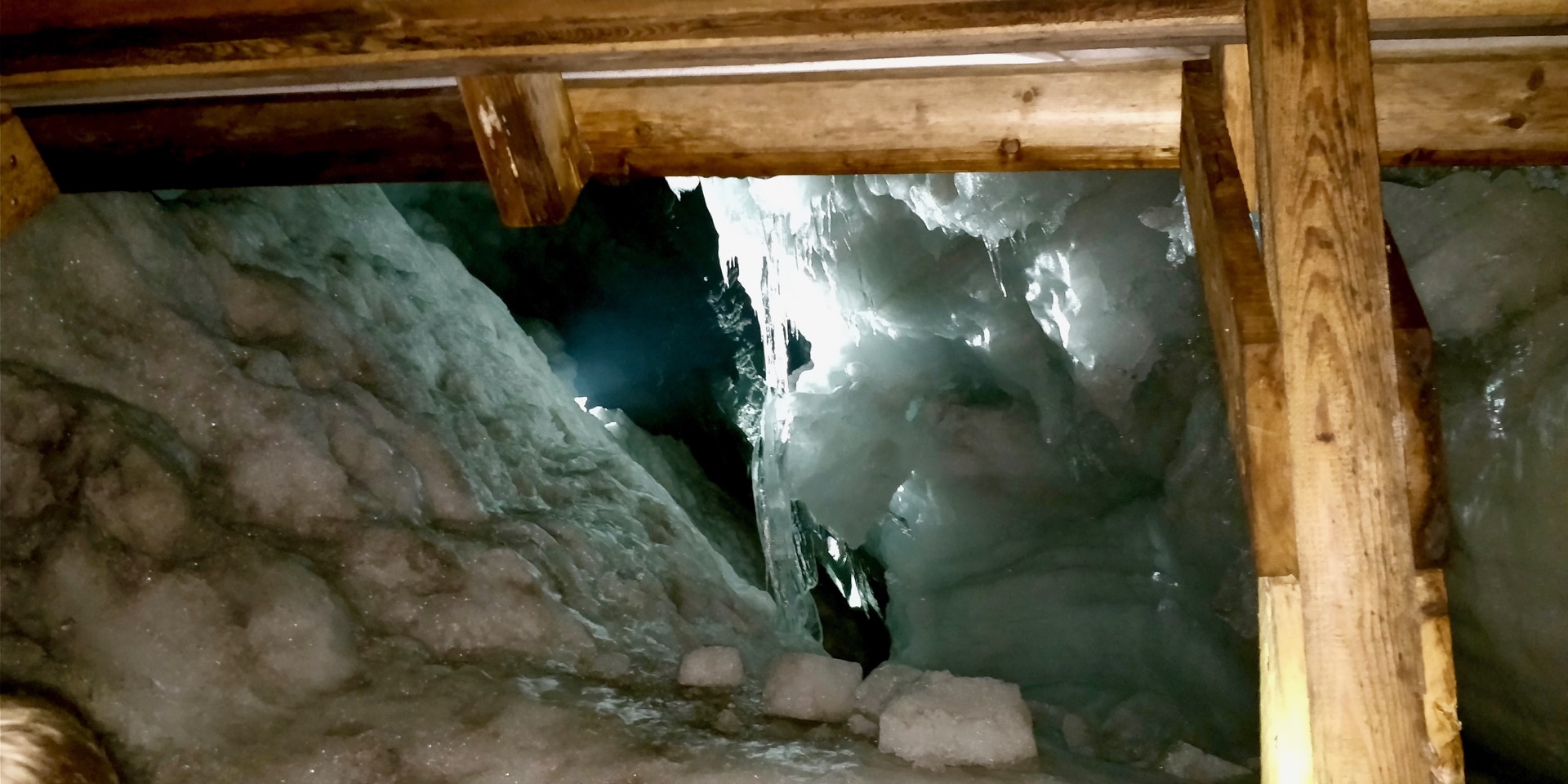
It took over 14 months to carve the cave into the glacier, preceded by a good 4 years of planning. The ice inside the cave is roughly 30 to 35 years old, and in some spots you can see, for example, the black line left behind by the eruption of Eyjafjallajökull in 2010. Inside the cave you are standing beneath about 25m of ice, with another good 200m of it below you. If the entrance weren’t cleared regularly, there would be no sign of the cave at all — it would be just like any other crevasse in the glacier.
There are quite a few of those, and some are dozens of meters deep and hundreds of meters long. They are what makes glaciers so dangerous, because these crevasses are especially common in the outer areas — exactly where you would first set foot when climbing onto a glacier. Most of the time they are covered by snow, but a single step onto them is enough to break through, and you would fall to a certain death. So never go glacier hiking on your own!
Questions and answers about the ice cave at Langjökull
I’d like to answer a few questions here that come up frequently about the ice cave. If you have a question that isn’t answered below, just leave me a comment and I’ll try to find an answer for you.
Is the ice cave natural?
No. The ice cave at Langjökull was carved into the glacier by Into the Glacier. Natural ice caves form mainly at the edge of a glacier, through natural glacial rivers and melting ice.
How does the cave differ from a natural one?
Above all, it is more stable and therefore easier to walk through: most natural ice caves are not suitable for children, but this one is. Wheelchair users can join the tours as well, but should get in touch with Into the Glacier beforehand to plan the visit.
The ice cave sits inside the glacier, not at its edge, which also means the light conditions are different: it is pitch dark in there, so the key spots inside the cave are lit up with artificial light. The photos you may know from the caves at Skaftafell or other places are usually heavily edited and, on top of that, taken under ideal lighting conditions: you won’t find that beautiful blue of the ice from those pictures in the ice cave at Langjökull.
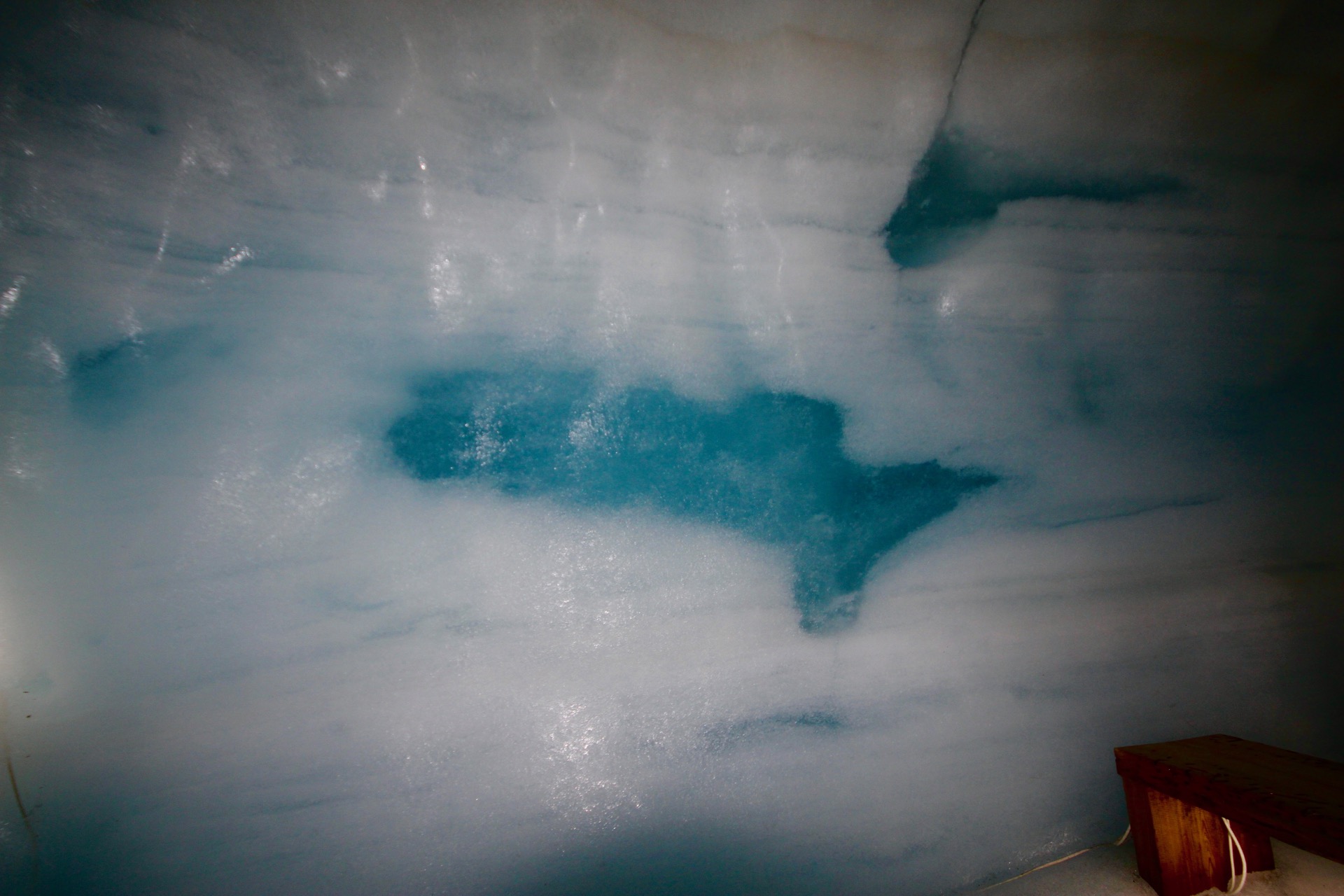
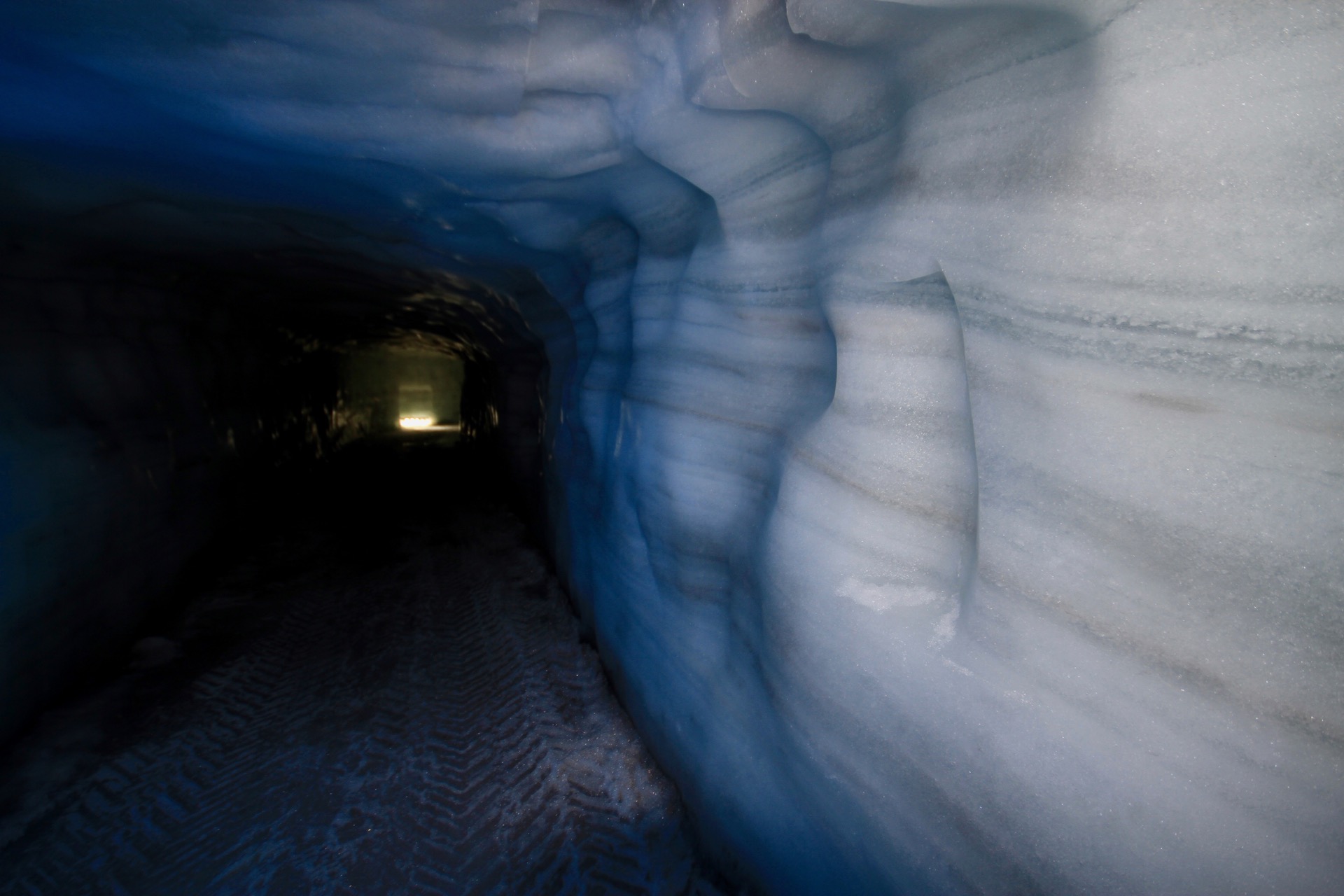
You can also tell from the tunnels that this is not a naturally formed cave. There are, however, some sections where the researchers came across natural openings within the cave. That’s where you really get a sense of being right in the middle of a glacier.
How should I prepare, and what should I wear?
As always in Iceland: layers. Dress in several layers, because especially in summer it is freezing cold inside the cave, yet the moment you step back outside it can be T-shirt weather.
Inside the cave it is consistently right around 0°C, so warm clothing is important and highly recommended within the tunnels. A hat and gloves are a good idea too. You won’t be in the cave for hours, but especially when there’s a big temperature difference to the outside, your fingers and ears get uncomfortably cold quite quickly.
Crampons — slip-resistant covers for your shoes — are provided for every participant in the cave. They keep you from sliding around too much on the smooth floor, but you should still walk carefully.
Waterproof shoes are also recommended. Sneakers get soaked quickly here, because the puddles, some of them ankle-deep, are hard to spot.
The cave is lit, so you don’t need a lamp. The guide always has a backup light at hand, so just stay reasonably close to the group.
Day tours from Reykjavik or directly from the base camp
There are two ways to take a tour to the Into the Glacier ice cave: either directly from Reykjavík as a day tour to the ice cave, or from the base camp in the region around Reykholt. That tour takes about 2–4 hours.
The day tour essentially consists of the transfer from Reykjavík to the base camp with one of the larger bus operators, the regular glacier tour, and then the ride back to Reykjavík. All in all it takes 11–12 hours, and in my opinion it’s only worth it if you have no other option.
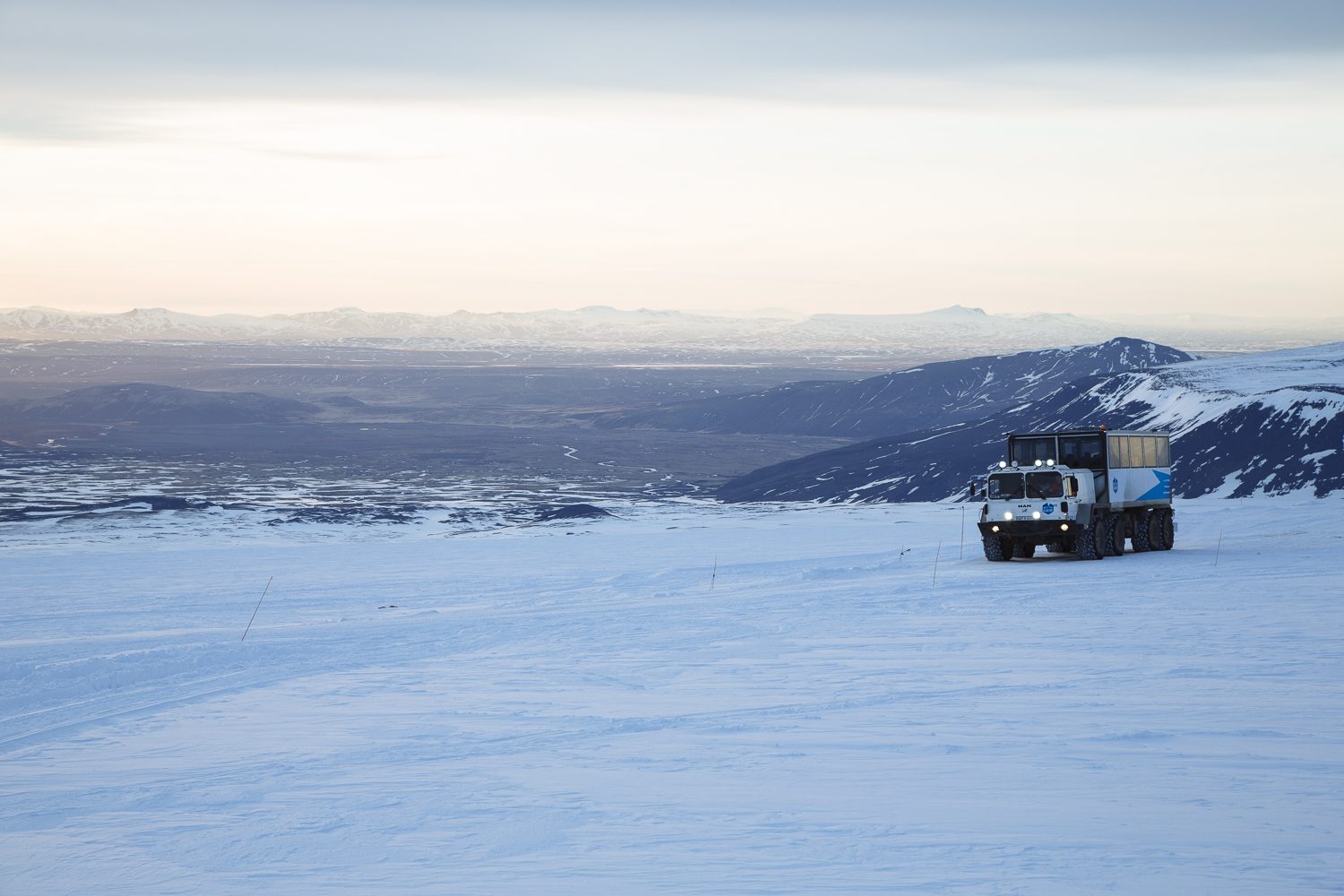
I set aside two full days for the region around Reykholt / Husafell, doing the ice cave tour on one day and a tour of the largest lava cave in Iceland on the other. There are several hotels and guesthouses in the area and plenty of other sights. So it’s definitely worth spending more time here than just a day on a bus.
Sustainability and glacier conservation
Into the Glacier is a joint venture of entrepreneurs and researchers, and its goal is to bring people to the glacier while it’s still possible and to show them the beauty of the ice — hoping to spark something in them.
The partnership with the Iceland Carbon Fund is an important part of the tours and the work on site. For a small extra fee you can make your tour carbon-neutral: a tree is planted in the region in return. Surely everyone can spare the 500 krónur. The company can plant about 5,000 trees every year this way, making a real contribution to conservation.
Another important aspect of the tours is making visitors aware of the impact we humans have on climate change, and how tangibly real it is in Iceland: within our lifetime, Langjökull will most likely disappear. A massive glacier, formed over thousands of years, will simply vanish. An information panel quickly makes it clear that this is not a natural climate shift — the speed at which this change is happening is anything but natural.
If you have visited the glacial lagoon Jökulsárlón — or plan to — you can ask a few questions about it here too, and you’ll probably be shocked by the answers. I first saw the lagoon in 2013, and when I returned in April 2018 I could hardly believe my eyes. Even with my rather fuzzy memories, I could clearly see how much bigger the lake had become and how the landscape had changed. You really don’t need to be a scientist to realize that things are not heading in the right direction here.
Verdict on the Into the Glacier ice cave at Langjökull
I can highly recommend visiting this ice cave, especially if you’re in Iceland at a time when the ice caves at the glacier edges are already closed. If you’re traveling with children or as a wheelchair user, this is also a great option to see a glacier from the inside.
I deliberately left one part of the cave undescribed because I don’t want to spoil the surprise — but if you have reservations about the cave not being natural, don’t let that weigh too heavily. There are some very impressive and very natural spots to see!
Even though I’d still love to see a natural ice cave someday, I can warmly recommend the Into the Glacier ice cave at Langjökull, and I’d also suggest looking into a longer stay in the region. There really is a lot to see here, and it’s much more enjoyable at a relaxed pace than in a rush.
Have fun in Iceland!
[…] experience at Into the Glacier offers a once-in-a-lifetime opportunity to explore an ice cave inside the Langjökull glacier. This […]