
The north of Iceland is packed with sights and attractions, yet relatively sparsely populated with travelers. While most visitors stick to the south coast and the west of the country, the north and east of Iceland remain rarely visited regions. Good news for anyone who wants to enjoy the solitude of Iceland.
In this post I want to show you the most beautiful attractions in North Iceland and give you all the info you need for a trip up north.
Let’s go…
The top attractions in North Iceland
For everyone doing a road trip around Iceland along the Ring Road, I want to list the top sights you should have seen with 1–2 days in the region. You could easily reserve a week or two for all the places described in this post, so here is a compact list.
The most beautiful waterfalls in the north
The north isn’t quite as blessed with waterfalls as Iceland’s south coast, but you’ll find some great specimens here too.
Goðafoss – Waterfall of the Gods
Goðafoss is one of the most beautiful waterfalls in the country. Whether in summer or winter, you can take impressive pictures here at any time of year or simply enjoy the view. More than 150m wide and over 10m deep, the water falls down the big step in a large semicircle to collect in the basin below.
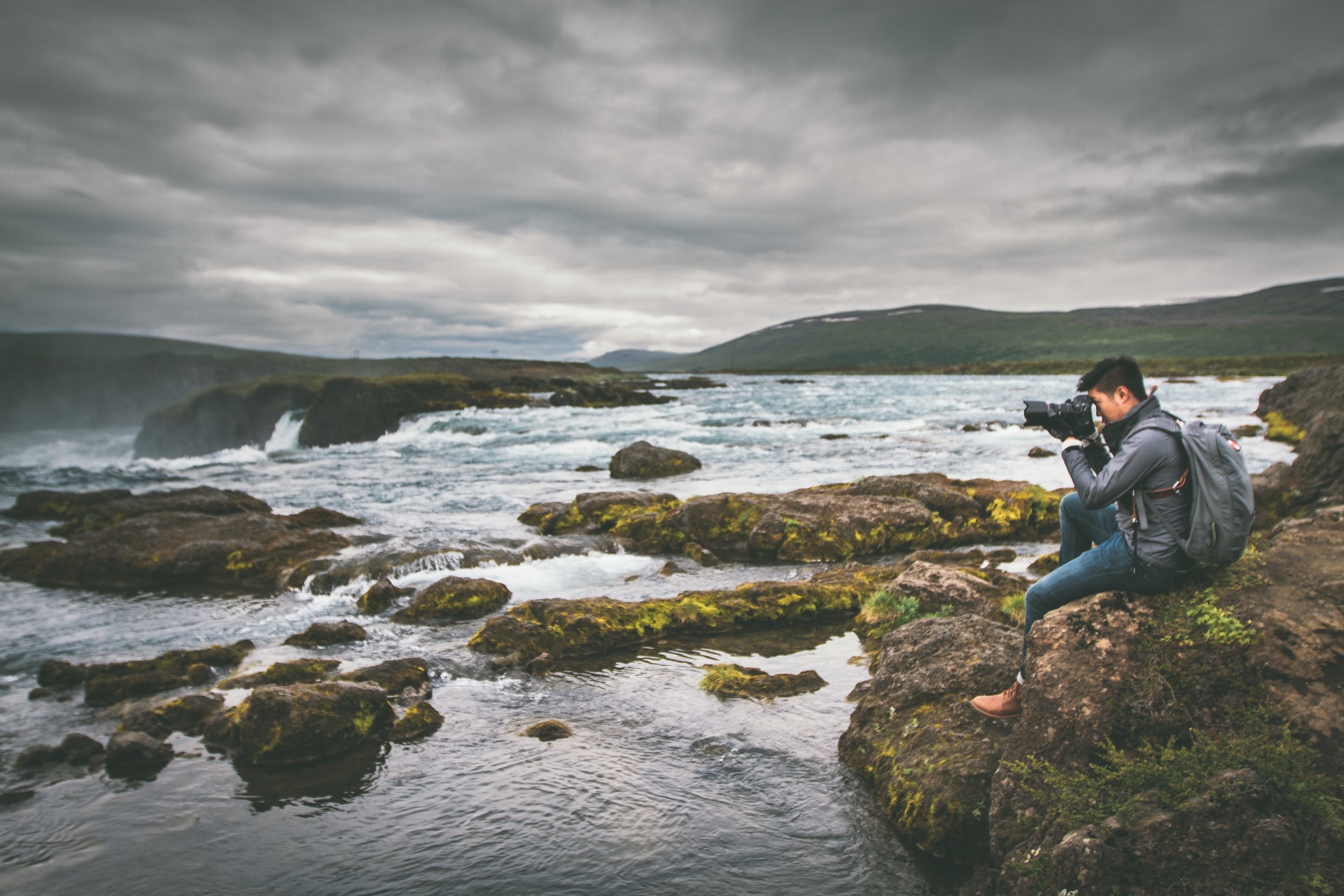
Goðafoss got its name around the year 1000, when the Norwegians imposed Christianity on the Icelanders in exchange for timber deliveries: back then, all the pagan idols were thrown into the waters of Goðafoss.
Dettifoss – Europe’s most powerful waterfall
Dettifoss is not only something special in Iceland, it is the most powerful of its kind in all of Europe. You quickly realize this when you take a look at the edge from which the water plunges more than 100m into the depths. The waterfall gets its enormous power from the huge masses of meltwater that fall over an enormous width.
The name Dettifoss translates to “plunging waterfall” and that describes the scenery very well: the masses of water really do throw themselves down with full force.
Aldeyjarfoss – Possibly Iceland’s most beautiful waterfall
Aldeyjarfoss is a real insider tip and, as is so often the case with beautiful places, you have to put in a bit more effort to get here. It lies on the edge of the highlands and without a 4×4 vehicle you can’t get all the way there: the last spot where you can leave a car is more than an hour’s hike from the waterfall and not an official parking lot. If you have a 4×4, you can drive right up to the waterfall. The route is quite demanding though, especially in winter.
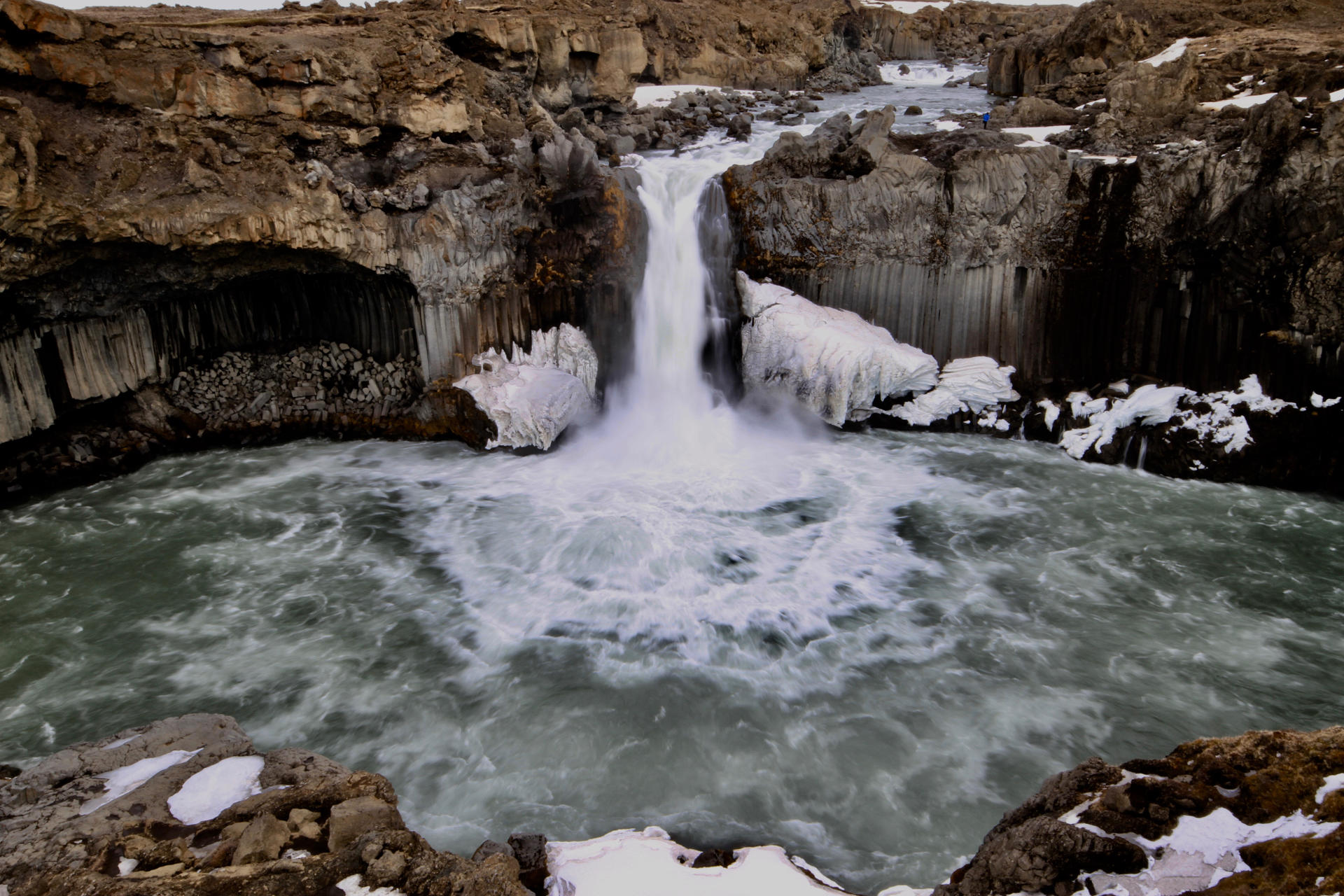
Once you arrive, however, the hardships are quickly forgotten: Aldeyjarfoss is a prime specimen of a waterfall and the whole surrounding area quickly reminds you of the volcanic origins of the country. Chunks of lava lie around everywhere and the waterfall itself is embedded in basalt columns. Similar to Svartifoss, though not quite as tall, but a bit wider.
Interesting places: attractions in the north
Close to the Arctic Circle there is of course much more to see than waterfalls and hot springs. So here we’d like to introduce a few interesting places worth visiting.
The Arctic Henge – Stone circles in North Iceland
Heimskautsgerðið, the stone circles near Raufarhöfn, were erected by Erlingur Thoroddsen. So it is not a historical site, but rather a modern homage to stone circles like Stonehenge.
Ásbyrgi – A glacial canyon in the north
North of the Dettifoss waterfall, on the way to Húsavík, you can make a perfect stop at the impressive Ásbyrgi canyon. It was formed around 10,000 years ago during a huge flood of the river Jökulsá á Fjöllum and was presumably widened again a few thousand years later by a similar flood.
Langanes / Fontur – Possibly the loneliest area in Iceland
At the very top of the north, on the small peninsula shaped like a duck’s bill, you can see the effects of rural depopulation in Iceland like nowhere else. What makes this region worth seeing is probably that there is little to see. Lots of nature, few people. A few abandoned farms, a bumpy gravel road and, depending on the season, plenty of birds. At the end of the long track, a small lighthouse awaits.
The Hverir / Namafjall geothermal area
A short distance east of the small town of Reykjahlíð lies one of the most beautiful geothermal areas in Iceland: Hverir / Namafjall. At the foot of a small mountain you’ll find everything your heart desires: fumaroles, mud pots and smoking (steaming) piles of rock for the perfect selfie! Thanks to the large, flat plain, the area feels like another planet, and even on days with many visitors, people spread out fairly well across the vast terrain.
Stuðlagil – A canyon with a short and a long history
The Stuðlagil canyon offers a fascinating glimpse into Iceland’s eventful history and the impressive nature of this region. With its striking, column-like basalt formations stretching along the Jökulsá á Dal river, Stuðlagil attracts not only nature lovers but also photographers from all over the world. This canyon is not only beautiful to look at, it also has an interesting story: when the river was diverted in 2016, the canyon only really became visible because it was no longer filled with water.
What makes Stuðlagil so unique are the prismatic basalt columns that look like giant organ pipes rising along the edge of the canyon. These formations are the result of volcanic activity and the rapid cooling of lava that flowed thousands of years ago. The columns are not just a visual spectacle, they also tell a story of geological processes that took place over millennia.
Kolugljúfur – The canyon of the troll woman
According to legend, the Kolugljúfur canyon was created by the troll woman Kola. It stretches for several kilometers and cuts up to 100m deep through the landscape. At the bottom, the small river Víðidalsá winds its way through the scenery. The canyon lies a bit off the Ring Road and you have to take a small detour via a gravel road to get there. Fortunately, this deters many travelers in a hurry, so you often have the impressive scenery all to yourself.
Akureyri, Siglufjörður… – The most beautiful towns in North Iceland
In the north of Iceland there are no big cities like in the west (if you want to call Reykjavík a big city) and yet, unlike in the south, there is at least one larger town. Akureyri, with almost 20,000 inhabitants, is the capital of the north and the hub of the region. But there are a few more small towns where you can enjoy the remoteness.
Akureyri
Akureyri is the capital of the north and from here all the places mentioned in this post can be reached within a few hours, so as a day trip. If you like, you can happily set up camp here — whether literally at one of the town’s campsites or in one of the many hotels and guesthouses.
The town has quite a bit to offer culturally. There are many exhibitions and shops in the context of art. A small shopping street with stores and a few restaurants. The selection is certainly not as big as in Reykjavík, but there should be something for every taste.
One of the highlights of the town is without a doubt the wonderful botanical garden, located in the south of the city. It’s best to check the opening hours in advance, because especially in autumn and winter the garden is not always open. The Akureyrarkirkja is the counterpart to Hallgrímskirkja in Reykjavík and really worth seeing, even if the many steps up can seem daunting at first.
Besides several galleries and art shops, Akureyri also has an art museum. There are regularly changing exhibitions to see here, for example by photographers or painters. The museum is located right in the town center, diagonally across from the church.
A little tip: parking rules are taken fairly seriously in town, so make sure to display a parking disc or get a parking ticket if necessary.
Húsavík
Húsavík may have only a little over a tenth of Akureyri’s population, but it has other interesting residents: whales. The small town has made a name for itself as the whale capital of Iceland, and not without reason. In the nearby Skjálfandi bay, various species of whales gather all year round. From the small minke whale to the frequently seen humpback to the gigantic blue whale, you can encounter almost every member of the species here while whale watching.
In the harbor, alongside the tour operators, there are a few small restaurants where you can fuel up before or after your trip. Also right at the harbor is the whale museum, which after a renovation is now quite substantial in size. A lifelike replica of a blue whale and many different smaller whales are on display there. Most tours come with a discount on the entrance fee, so it pays off to buy your boat tour ticket first and then head to the museum.
A little to the north, on the edge of town, there is also a small hot pot: Ostakarið.
Siglufjörður
Siglufjörður is a very special little town in the north of Iceland. We’ve already written a few lines about it in the article linked above, so here it is in a nutshell: Siglufjörður had already seen its best days, because the sudden disappearance of the herring meant the end of the thriving industry that had settled in the town.
For years, Siglufjörður lost its shine and its inhabitants. Today, however, the little town is flourishing again. Companies are settling here, and one of the most beautiful museums in the country can be found right in the town center: the Herring Era Museum shows what it looked like here in the age of the herring and what life was all about, in an impressively realistic way.
In summer you can book canoe tours, go hiking or explore the surroundings. In winter, Siglufjörður becomes the ski capital of the country, as some particularly beautiful and remote ski areas are located here.
Hjalteyri
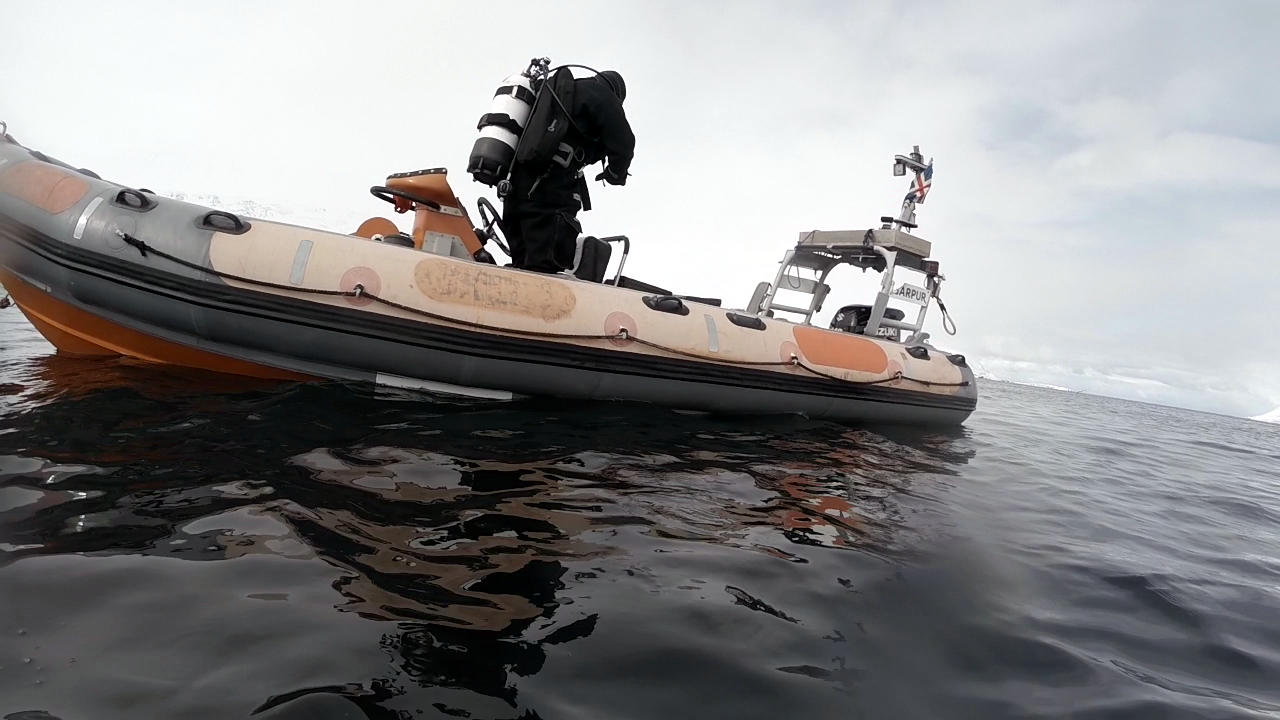
In the small village of Hjalteyri you won’t find much, but as we all know, it’s often not about quantity but quality. For one thing, the Strytan dive center is home to one of the best dive spots in the world. At a depth of just a few meters, you can dive at hot springs in the middle of the fjord here. These are normally thousands of meters deep in the ocean and out of reach for humans. Erlendur Bogason runs the dive center, a small museum to go with it, and you can also rent stand-up paddle boards from him: whales are frequently out and about in the fjord, and with a bit of luck one will surface right next to your board.
A few meters from the dive center there is a pier for whale watching boats, which set off into the fjord from here and offer a great alternative to their colleagues in Húsavík!
Whale watching & whitewater rafting – The best activities in the north
We’ve already described a few activities above, so just a short summary here. But the region has plenty of action to offer.
Whale watching in North Iceland
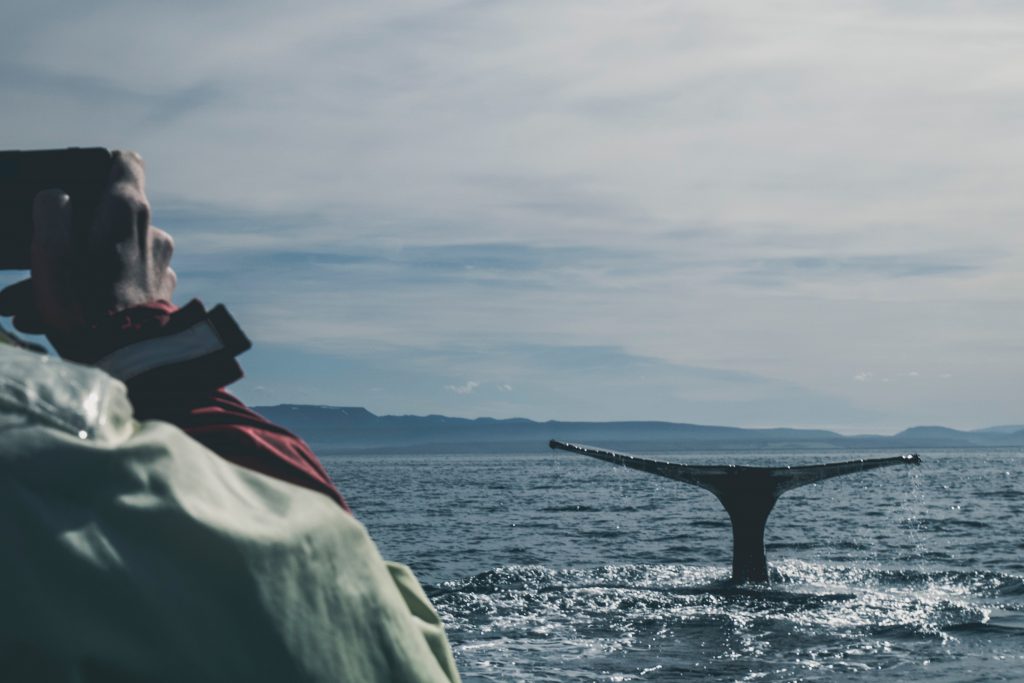
In the north of the country, with Húsavík, Hjalteyri and Akureyri, there are three places where you can go whale watching. All three have an excellent reputation and high sighting rates, so you can’t go far wrong here. You can find more information on whale watching in Iceland here.
Diving in Iceland’s north
With Strytan, the north boasts one of the most impressive dive spots on the planet. But that’s not all: there is also an alternative to the Silfra fissure in the southwest of the country. Nesgjá is the name of the rock fissure, which lies on the same rift zone as Silfra. Ice-cold, crystal-clear water allows visibility of well over 100 meters.
Whitewater rafting in Iceland
About an hour and a half west of Akureyri, near Varmahlíð, there is a small company offering whitewater rafting on the surrounding rivers. I haven’t tried it myself (yet), but I’ll let you know as soon as I can say more about it 😉
Hofsós and Grjótagjá – The most beautiful hot springs in North Iceland
Besides great experiences in cold water, the north also has a few hot springs to offer. First and foremost, one of the most famous hot springs in Iceland, which unfortunately was recently closed to visitors because of its popularity.
Grjótagjá – The hot spring from Game of Thrones
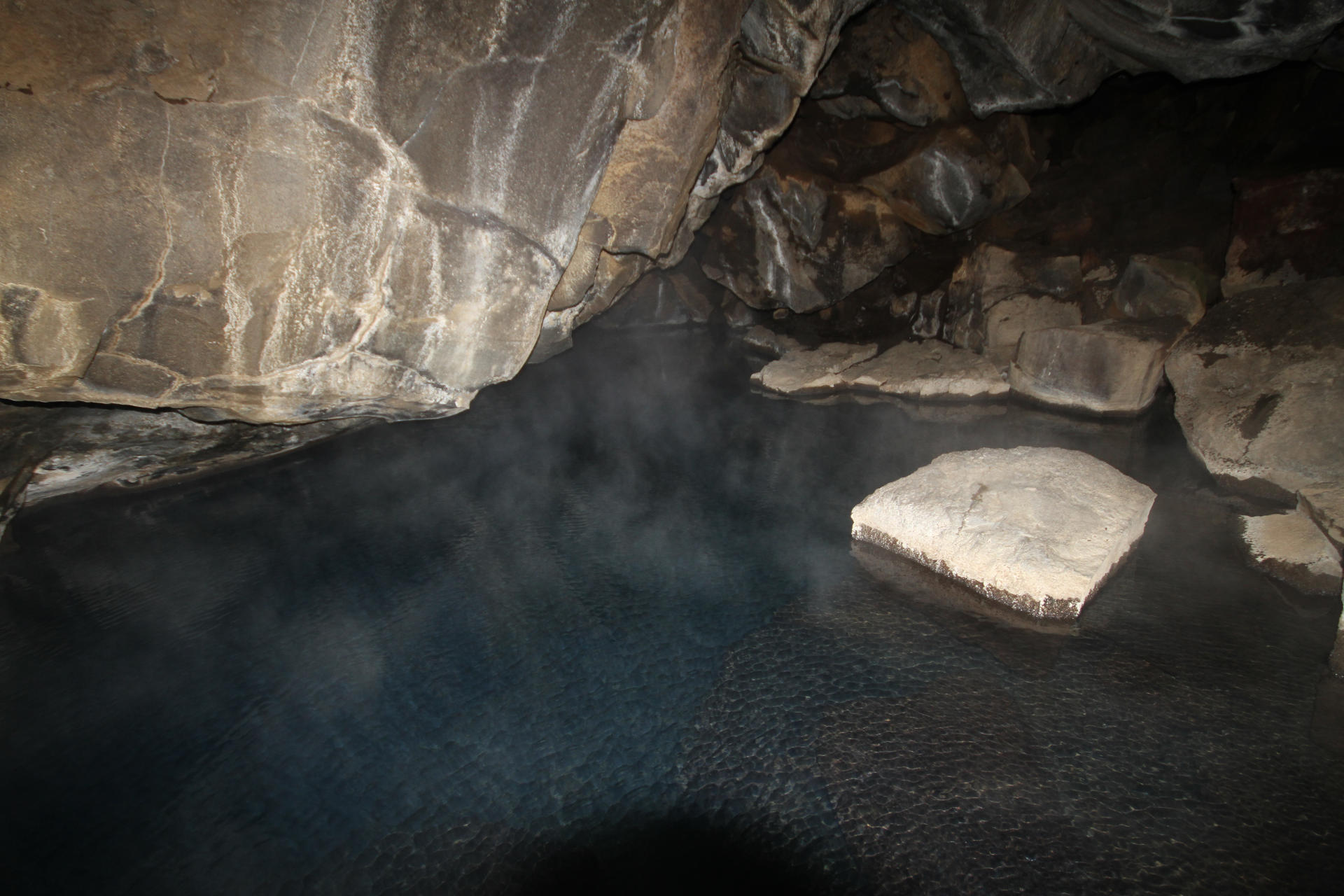
First things first: Grjótagjá is currently no longer accessible to visitors. The owners could no longer stand by and watch the vandalism and felt forced to close off access. Please take this as a hint on how to behave in hot springs in Iceland.
The hot spring in the lava field might look familiar to some of you from Game of Thrones: this is where Jon Snow and Inga Ygritte had their little fling.
The Myvatn Nature Baths
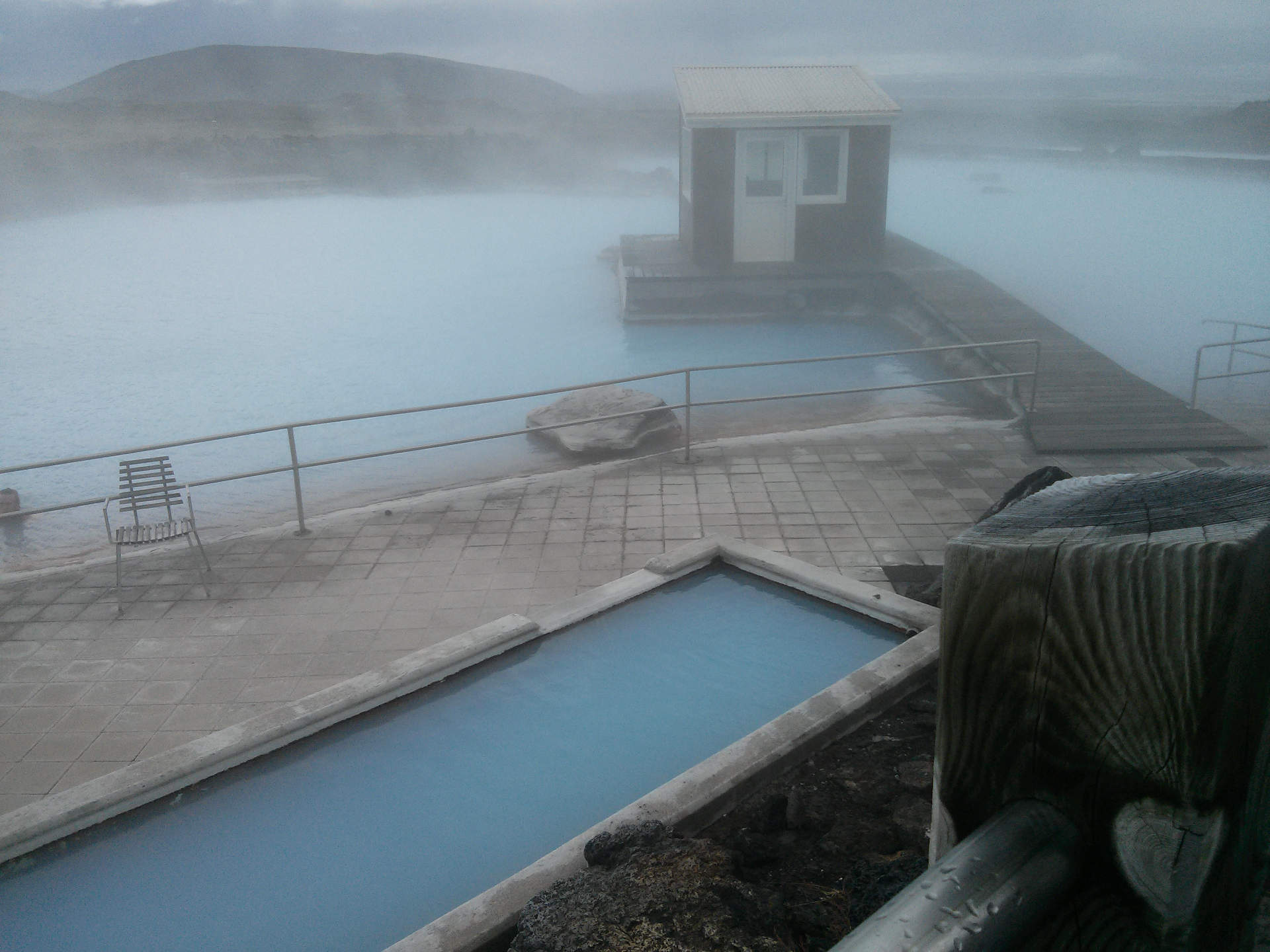
The northern counterpart to the Blue Lagoon: the Myvatn Nature Baths invite you to relax. Not quite as luxuriously equipped as the Blue Lagoon, but also not as crowded and a bit more natural. The baths have apparently been renovated in recent years; unfortunately I haven’t been there in person since.
Sundlaugin á Hofsósi
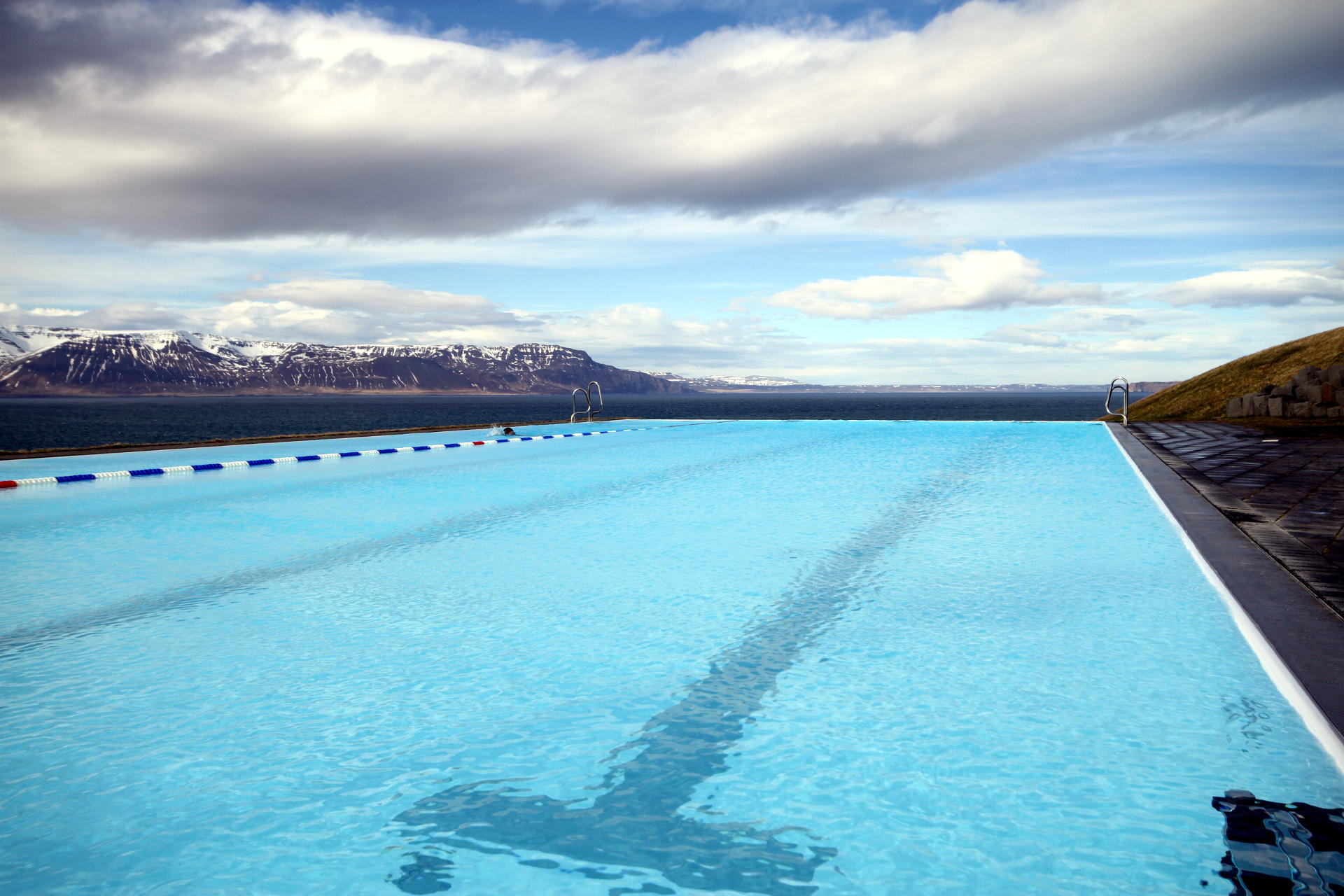
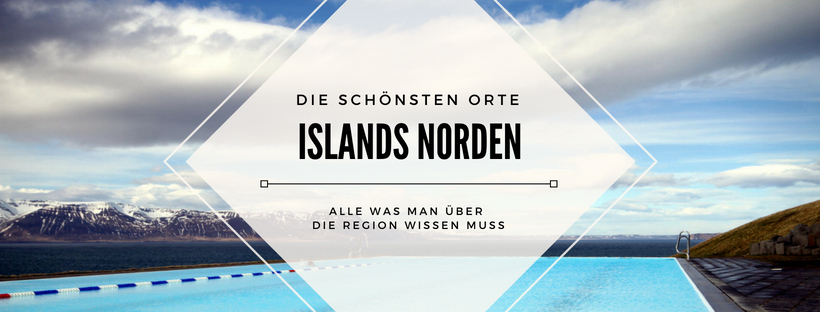
Possibly the most beautiful swimming pool in the world is located in the small town of Hofsós. Besides a regular swimming pool, which faces straight out into the fjord against an unbelievably beautiful panorama, there is also a small hot pot from which you can enjoy the view just as well!
The most beautiful places to stay in the north of Iceland
The north now has many lovely guesthouses, hotels and hostels. You can also find beautiful accommodations here via Airbnb. I stayed at the following three places in April 2018 and can warmly recommend them.
Skjaldarvik
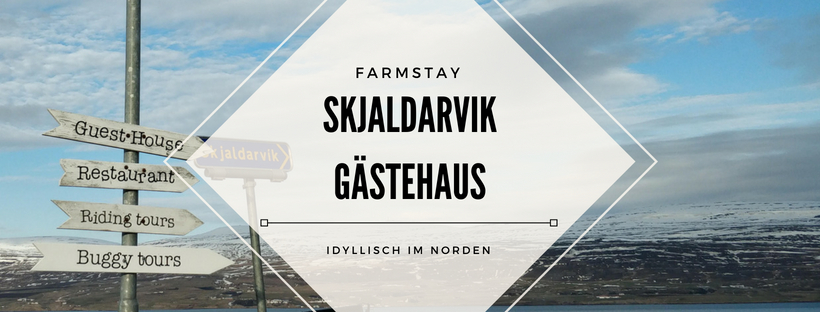
The Skjaldarvik guest house is located just a few kilometers north of Akureyri, on the west side of the fjord. The house is family-run and furnished with great attention to detail. You can go horseback riding with the horses of the adjoining farm, rent buggies to explore the area, or simply enjoy the view of the fjord from the house’s own hot pot. From here you can reach Akureyri and Hjalteyri in a few minutes, and Siglufjörður or the sights in the northeast in about an hour.
Storu-Laugar
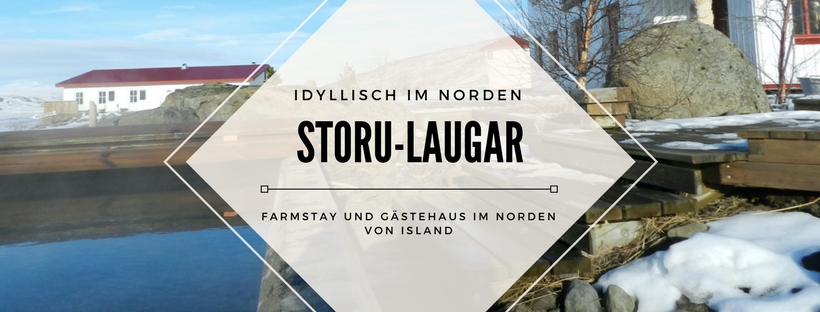
The Storu Laugar guest house is perfectly located in the region east of Akureyri to visit the nearby sights from here. So if you’re coming from the east, this is a great place to spend the first night before continuing west.
The former farm was taken over and renovated by the current owners about 12 years ago. Today there are several buildings with their own hot pots on the property.
Siglo Hotel
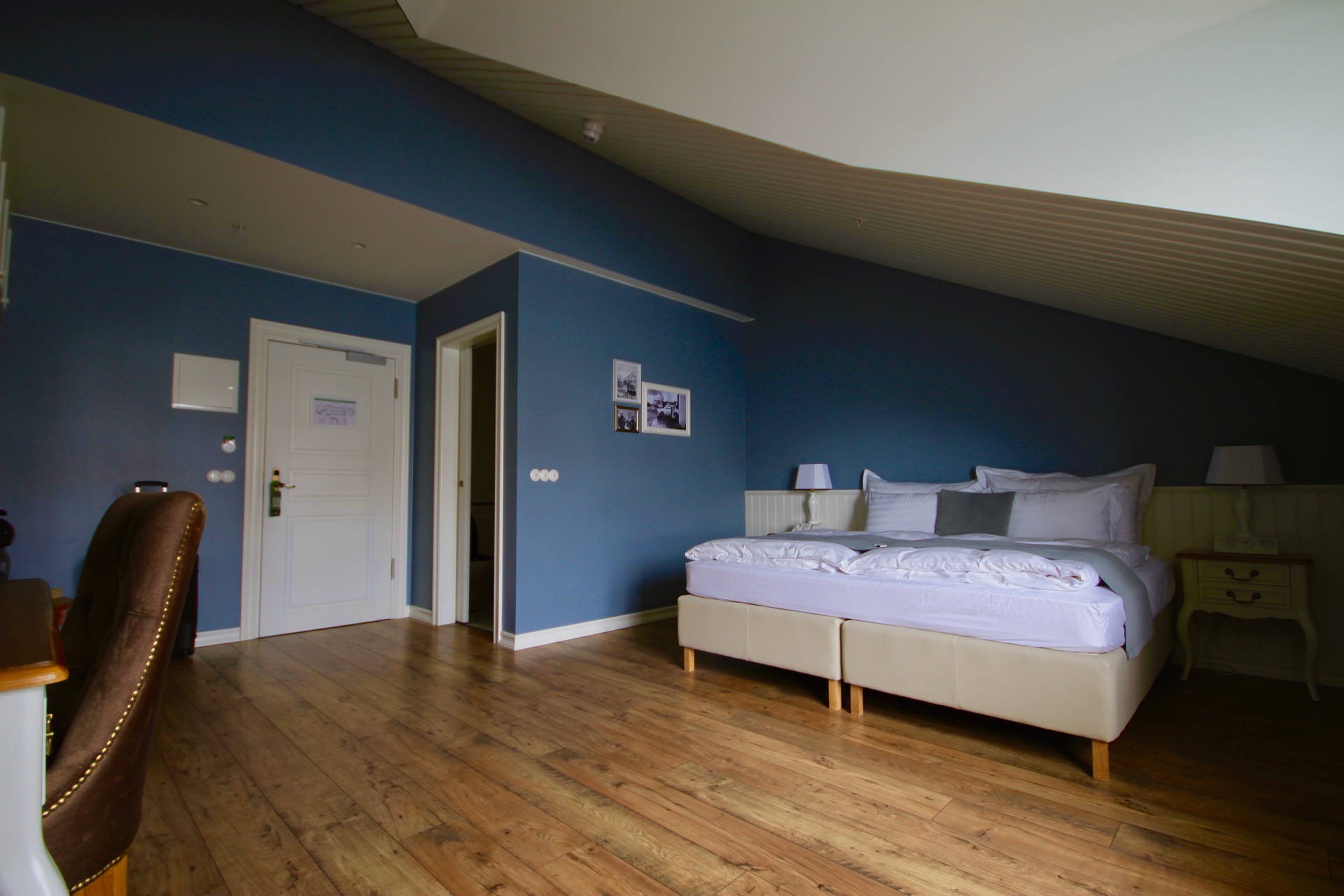
The big, green Hotel Siglo right at the harbor in Siglufjörður is a top address. Not well suited for a tight budget, but if you want to treat yourself to a really great stay, this is exactly the right place. The hotel was only recently completed and offers rooms with sea views as well as a hot pot right in the harbor. You can also take a tour of the fjord on the hotel’s own boat.
Map with all attractions in the north of Iceland
On the following map I’ve marked all the places mentioned in the text above for you, so you can better include them in your travel planning.
Conclusion: Iceland’s north
In this article I can unfortunately only describe a small slice of Iceland’s north. There is so much more to discover and experience up here. I hope you got a good overview anyway. I will probably expand this article over time and keep bringing it up to date.
If you have any questions or comments, I’d love to hear from you in the comments! 🙂
Have fun in Iceland!
No Comments Yet