
My first trip to Iceland was a road trip around the entire island in 2013. I had found a cheap flight in June, booked a rental car and made my way to Reykjavík. The trip was a complete success and I would happily do it exactly the same way again today: For me, though, it was just the foundation of a long love story with this amazing country, and many more “dates” were to follow.
For many readers that’s often not the case — or at least they don’t spend their spare time obsessing over Iceland like I do — so most of the questions I get boil down to how to get the most out of a trip to Iceland. So here are my tips on how to pull that off. Let’s go…
Iceland is expensive
Back then that wasn’t really the case: I got more than 160 krónur for one euro, and the price surge driven by tourism only really picked up speed in the years that followed. But even then, the cost of an Iceland vacation was relatively high for me: The flight cost over 400€, the rental car another 800€ plus, and accommodation wasn’t exactly cheap either back then: All in all, that one-week road trip around the island cost me well over 2000€. A pretty penny for someone who had just quit his job!
Of course the trip was worth every cent, no question about it. Today, however, I know a few levers I can pull to bring a one-week vacation back into affordable territory, even though the króna has become much stronger in the meantime (1€ = 120 ISK) and some prices have risen noticeably:
Saving on the flight would be my first point: These days I rarely fly for more than 300€. I simply look for the connections with the best times and compare on portals like Skyscanner or Opodo. It often makes sense to look at different airports, because fees can make the final price vary quite a bit. Sometimes the difference is big enough for me that I fly from Frankfurt instead of Berlin or the other way around.
The next item is the car, and by now I know pretty well how to save on a rental car in Iceland: Compare, compare, and then compare once more. I use portals like Billiger Mietwagen, Guide to Iceland or Check24 and look around for good deals there. You can filter very well for the things that matter to you and the ones that don’t: Since I’m an old geezer, I can also fall back on providers who only rent to older people (over 25), and if I know I’m not planning a round trip but staying in and around Reykjavík, I book the car at a station in the city instead of directly at the airport. I usually book so that all kilometers are included. As for insurance, the gravel protection coverage has become the most important one to me.
Saving on accommodation in Iceland has become relatively hard by now. AirBNB used to be a good alternative, but today the places there are often just as expensive as hotels, or even more so. So the same rule applies here: Compare! I always use the Iceland app to find hotels in the region I want to visit, and then double-check on AirBNB whether there’s an alternative. If you’re not signed up with AirBNB yet, referral links can at least get you a few euros of credit towards your first night (and the person referring you gets some too, thanks!).
Once I’m there, I usually don’t try to pinch pennies anymore: A vacation is for enjoying, not for counting coins. I mostly eat cheaply (supermarkets / gas stations) and treat myself to a restaurant visit every now and then in return. I prefer hiking and taking in the scenery over doing tours anyway. But some tours in Iceland are simply worth it, and then you just have to skip the flat white here and there in the month after.
Exploring takes time
Again and again I read things like: “Don’t plan anything, just go with the flow” or “Just start driving, you’re bound to discover something beautiful!”.
That’s how I travel myself. But I don’t recommend it across the board, because most people travel under completely different circumstances than I do: They have 30 days of vacation per year or even less, they don’t come to Iceland once or twice a year but maybe once every 10 years, because they want to see other places afterwards. They don’t have four to twelve weeks for their trip, but two.
In my opinion, that advice isn’t necessarily helpful in that situation, because if you want to make the most of a trip to Iceland, you should definitely prepare — and once you’re there, you shouldn’t leave everything to chance either. If you’re well prepared, you can still throw your plans overboard and go with the flow.
By now I research the regions I travel to extensively, pick out places or tours I’d like to experience and write it all down. On the road, the Iceland app helps me by showing nearby points of interest: hotels, gas stations, sights and tours. A feature I’ve been using more often lately: Wikipedia. You can look up Wikipedia articles about places nearby. I do that search every now and then when I stop during a road trip, and sometimes astonishing places come to light that I never would have found otherwise.
Good preparation at home buys me time on the road — and I can spend that however I like!
Icelandic roads are exhausting
On my first trip to Iceland I had booked a small car and got a station wagon: Lucky me, because it made the trip more relaxed. For the same trip, a loop along the Ring Road in summer, I would still book a small car today: Perfectly sufficient!
On my second stay, in winter 2013 shortly before Christmas, I booked a small car again and actually got one. I drove it to the waterfall Gullfoss, where it started to snow, and on the way back I slid from one near-collision to the next. At one point, no more than a cigarette pack’s width separated me from the guardrail.
Routes like the Golden Circle in Iceland or the Ring Road are normally easy to drive with any car, and you rarely need a 4×4 here. In winter, however, I would always advise renting one. Snowfall in Iceland is definitely different from most parts of Central Europe, especially because there is so little sunlight in winter and it’s pretty much always a bit stormy.
But a 4×4 can make sense in summer too: In large parts of the Westfjords and on a few kilometers in the north of the Snæfellsnes peninsula, gravel roads are completely normal. If you’re traveling on those for many kilometers, you quickly start wishing for a car with bigger tires and more suspension.
So I always try to book the right rental car for the season in Iceland, and this is one point where I try not to save money unnecessarily, because in an emergency you’d regret it and possibly pay it back several times over.
Hot springs are not the holy grail
The natural hot springs in Iceland are beautiful, and I seek them out regularly myself. Whenever I’m in a region with a spring I don’t know yet, I try to find it and have a look.
Many visitors do the same — including many who don’t know how fragile these springs are. Some of them cause great damage, sometimes knowingly and sometimes unknowingly.
So for a while now, I’ve been visiting the springs with great caution: If the path there is already too trampled, I’d rather stay in the car. If I’m there and see that the spring is clearly suffering too much from the crowds, I don’t get in — and maybe pick up a handful of trash before driving on.
The Blue Lagoon is not a hot spring to me, it’s a spa: If you ask me whether you should see it, I say: Yes. But only if you’d enjoy spending a day at a very special spa. If you want to see how Icelanders bathe, you’ll get a completely wrong impression there.
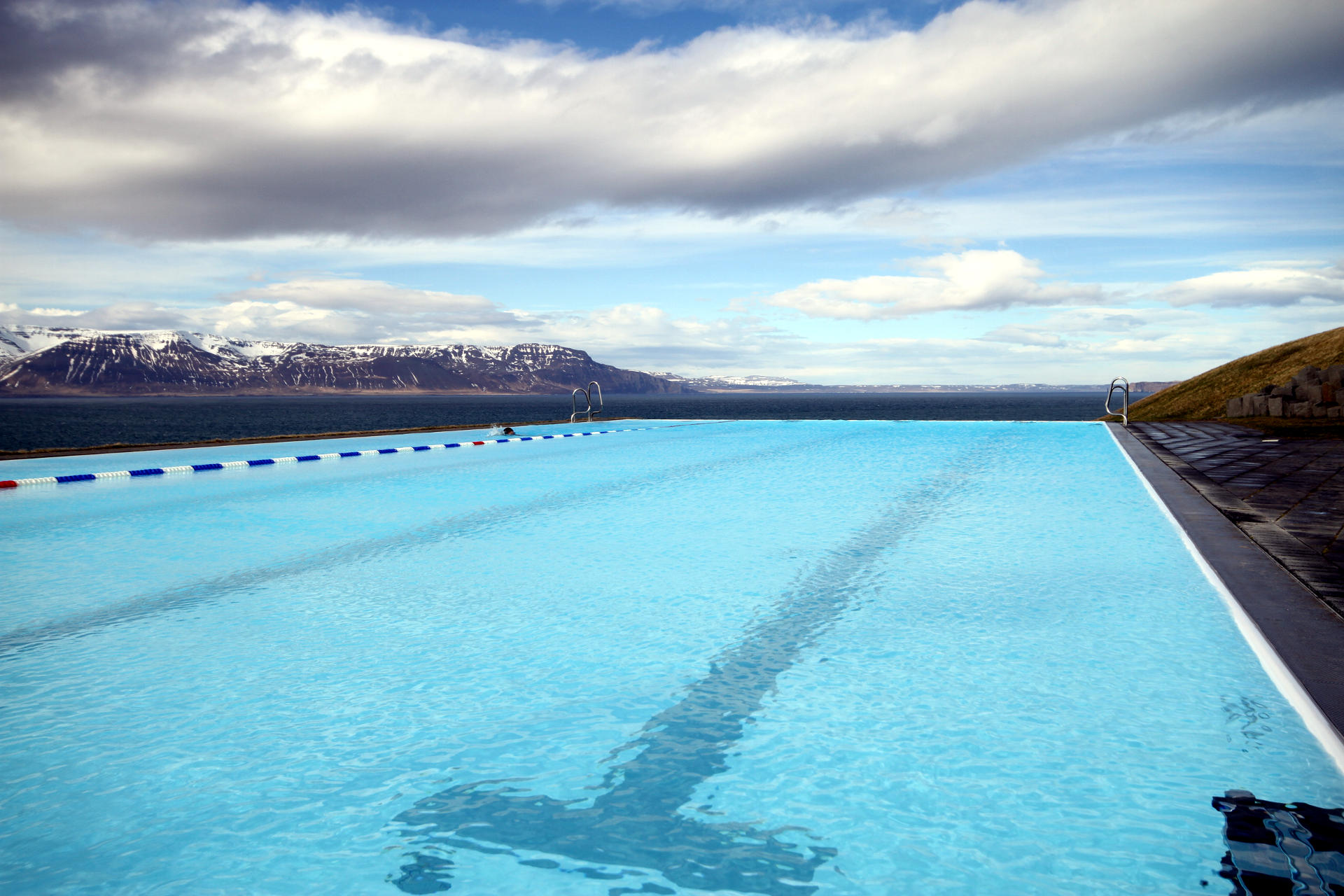
I wish I had known on my earlier trips: There are also incredibly beautiful swimming pools in Iceland, which are designed for higher visitor numbers and which, above all, create jobs through their entrance fees: the jobs of the people who take care of them. I wish something like that existed for hot springs too!
Nobody gets to tell you what a “proper Iceland vacation” has to look like
Especially people who visited Iceland before it was “cool”, and those who have been coming here regularly for decades, keep trying to lecture tourists — including me. That’s fine by me, because I’m happy to learn new things, especially from other people’s experiences.
But just because someone tells me slow travel is the only right way to explore Iceland, that doesn’t have to be the universal truth. I thoroughly enjoyed my first road trip around Iceland — 1500 km in 6 days. I travel differently today, but I would probably do it again. I don’t have to justify that, and nobody has the right to talk down a vacation like that.
I also heard statements like: “You haven’t seen Iceland if you haven’t been to XYZ!” over and over again. Nonsense. Maybe I haven’t seen it the way that person did, but then again, they probably haven’t seen it the way I did either. I recommend that everyone go diving in Iceland, because it’s my favorite sport and a once-in-a-lifetime experience. If people tell me they’re not into that, that’s perfectly OK and they’re not missing out on anything: They probably wouldn’t have enjoyed it if I’d had to talk them into it. And why should I: To each their own 🙂
The rope barriers have a deeper purpose
Almost everyone — from action tourists to sustainable travelers, from influencers to tour guides — has stepped over a barrier at some point. I’ve done it, and you’ve probably done it too, somewhere, at some point.
Since my last stay, I force myself not to think: “Well, it’s just one step, and there’s nobody else here anyway!”, because on several hikes I have seen with my own eyes how fragile Icelandic nature is. In some places the ground was like quicksand, and every step left a footprint you’ll probably still be able to see a year later. I wasn’t really aware of that until I saw it for myself, and even if the barriers sometimes seem pointless because the roped-off patch is already trampled anyway: It’s about the principle!
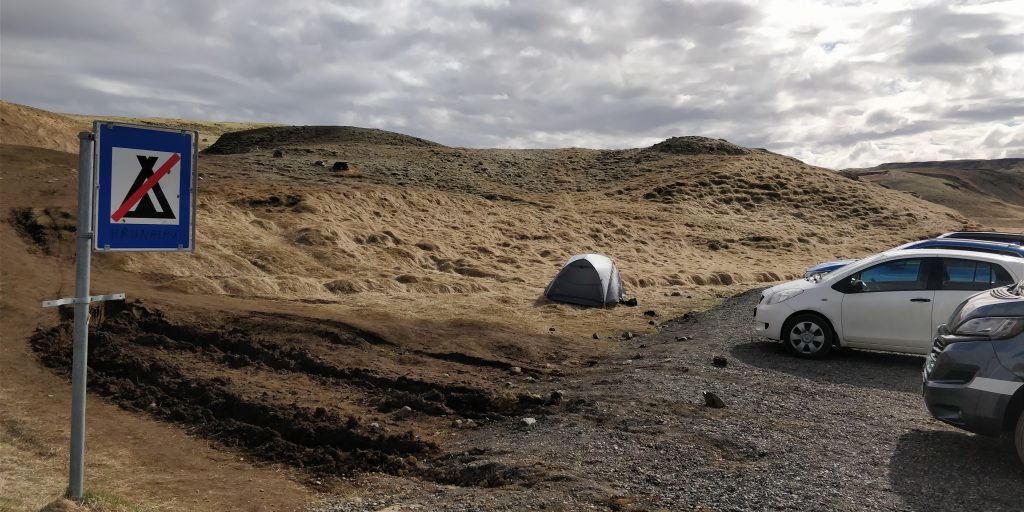
In recent weeks, cases of tourists driving and camping off-road have kept appearing in the newspapers, and in the latest case a fine of over 11,000€ was handed down: It probably achieves little to nothing, and the damage to nature is done either way. In this case, it will probably take years or decades for the ground to recover, and thanks to the tracks that are now there, the likelihood of more clueless tourists romping around in the same spot is many times higher.
A little extra effort often pays off big time
When I’m in Iceland these days, I become both a night owl and an early bird: If you’re at the touristy spots early in the morning, you often have them all to yourself. Around 9 a.m. the first buses and other visitors usually arrive: By then, I try to already be on the road again. It doesn’t always work out, of course, but here and there it has given me some wonderful moments.
In October 2017 I was in the Westfjords of Iceland, on my way to the waterfall Dynjandi. Halfway there I turned around, because a) it was getting dark and b) my route the next day was going to take me there anyway. The following day I met a photographer and told him the story, adding: “…and there were no northern lights to be seen on the way either.” Without a word, he clicked around on his camera and showed me one of the most impressive photos of northern lights I have ever seen. Taken just a few hours after I had started my drive back.
If you want to see the northern lights in Iceland, you need patience. I wish I had known that on my previous trips to Iceland!
Conclusion: I know some things better today
Since 2013 I’ve been coming to Iceland once or twice a year, and every time I learn something new. Through the blog, through the podcast and through readers who get in touch with me, it keeps adding up, and I hope the moment never comes when I feel like I know enough.
I hope the points above help you a little with your trip to Iceland, whether it’s your first or your tenth!
Have fun in Iceland!
No Comments Yet